How to Ship a Full Container (FCL) — Step by Step
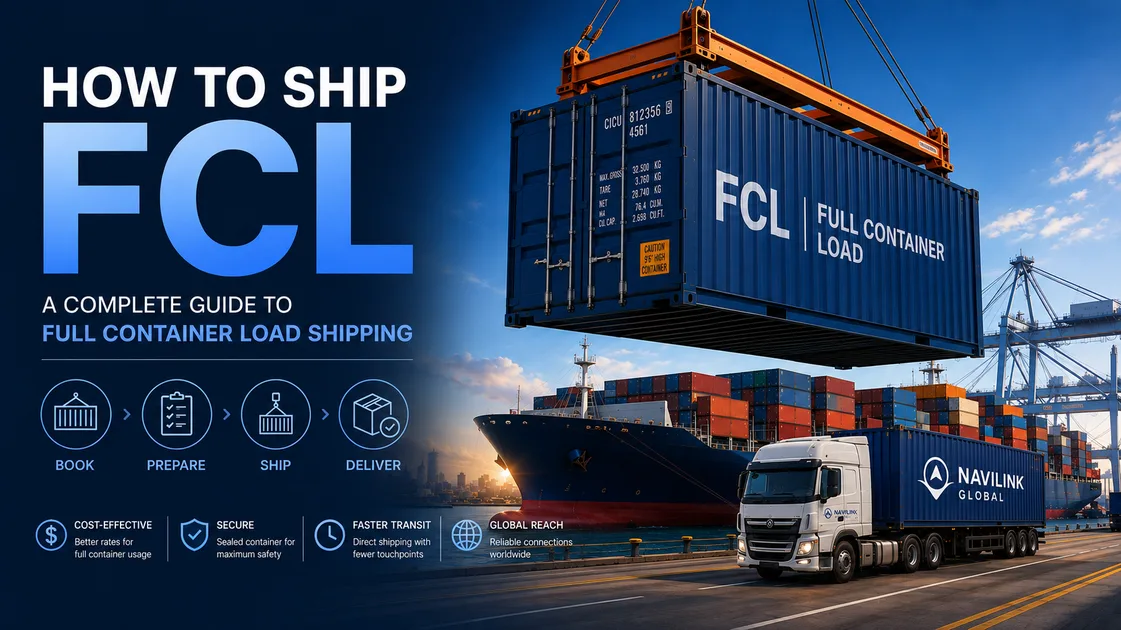
Shipping your first full container can feel overwhelming. This step-by-step guide walks you through the entire FCL process from booking to delivery.
Step 1 — Get Your Freight Quote
Contact 3–5 freight forwarders with your shipment details: origin and destination cities/ports, container size (20ft or 40ft), commodity description, and your preferred Incoterm. Ask for an all-in quote including origin charges, ocean freight, destination charges, and customs clearance.
Step 2 — Book the Container
Once you select your forwarder, they will book the container with a shipping line. You will receive a booking confirmation with the vessel name, sailing date, and container number. Book at least 2–3 weeks in advance for standard lanes; 4+ weeks during peak season.
Step 3 — Prepare Your Cargo
Pack and label your cargo according to shipping requirements. For import into most countries, all boxes must be labelled with commodity description, country of manufacture, and quantity. Ensure packaging is suitable for sea transport — goods will be on the water for 2–5 weeks and may experience humidity and movement.
Step 4 — Container Stuffing
The container will be delivered (dropped) to your supplier's/warehouse's loading bay or to a CFS (Container Freight Station). Goods are loaded ("stuffed") into the container. If your supplier is loading, supervise or arrange an inspector. Once stuffed, the container is sealed with a numbered seal — record this number.
Step 5 — Export Customs and Documentation
Your forwarder handles export customs clearance using these documents: Commercial Invoice, Packing List, Bill of Lading (B/L), Export Licence (if applicable), Certificate of Origin (if required by the importing country). Ensure values on the Commercial Invoice are accurate and consistent across all documents.
Step 6 — Ocean Transit
Once the container is loaded on the vessel, your forwarder issues a draft B/L for your approval. Review it carefully — errors on the B/L cause major delays. Transit time varies: China-USA West Coast 14–18 days, China-Europe 25–35 days, China-Middle East 12–18 days.
Step 7 — Import Customs Clearance
Before the vessel arrives, your forwarder (or customs broker) prepares the import declaration using your Commercial Invoice, Packing List, and original B/L. You will need to pay import duties and VAT/GST before customs releases your cargo. Ensure your HS codes are correct — wrong codes trigger examinations and fines.
Step 8 — Port Release and Delivery
Once customs releases the container, it moves to a storage area at the port. Your forwarder arranges a truck to collect and deliver to your warehouse. Note: containers have "free time" at the port (typically 3–5 days). After that, demurrage charges accumulate daily — arrange truck delivery promptly.
Frequently Asked Questions
Ready to Get Competitive Freight Quotes?
Submit your enquiry to NavilinkGlobal's network of verified freight forwarders. No registration required — get multiple quotes fast.
Get My Freight QuoteFree · No signup · Multiple forwarders
Related Guides
Browse All Guides
- FCL vs LCL: Which Container Option is Right for Your Cargo?
- How to Find a Reliable Freight Forwarder
- Complete Guide to Incoterms 2020: What Every Shipper Must Know
- Sea Freight Cost: What Factors Affect Your Shipping Rate?
- Air Freight vs Sea Freight: Cost, Speed & When to Choose Each
- How to Ship a Full Container (FCL) — Step by Step
- What is a Bill of Lading? Types, Requirements & Common Mistakes
- China to UAE Shipping: Costs, Transit Times & Best Options
- China to USA Shipping: Sea Freight, Air Freight & Costs
- How to Calculate CBM for Shipping: Formula & Examples
- Import Customs Clearance: A Beginner's Guide
- What is a Freight Forwarder and What Do They Do?
- Dangerous Goods Shipping: IMDG Code & What You Need to Know
- How to Negotiate Freight Rates: Tips for Importers
- LCL Consolidation Explained: How Groupage Shipping Works
- Port of Dubai (Jebel Ali): Complete Importer's Guide
- Temperature Controlled (Reefer) Shipping: Complete Guide
- What is a Freight Quote and How Do You Compare Them?
- Top 10 Documents Required for International Shipping
- Peak Season Shipping: How to Plan and Beat the Rush