Dangerous Goods Shipping: IMDG Code & What You Need to Know
Shipping dangerous goods (DG) requires strict compliance with international regulations. Non-compliance leads to refused cargo, fines, and serious safety risks.
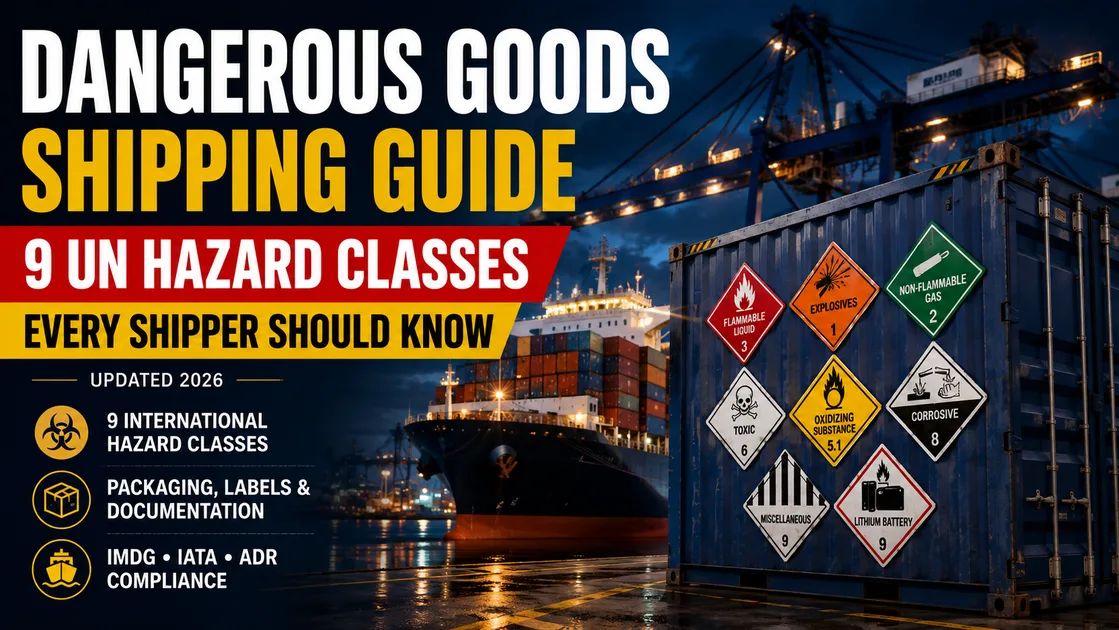
What Are Dangerous Goods?
Dangerous goods (DG) — also called hazardous materials (hazmat) — are substances or articles that pose a risk to health, safety, property, or the environment during transport. This includes obvious items like explosives and flammable liquids, but also everyday products like lithium batteries, aerosols, paints, and cleaning chemicals.
International Regulations
IMDG Code (International Maritime Dangerous Goods Code): Published by IMO, governs sea freight. Updated every two years.
IATA DGR (Dangerous Goods Regulations): Published by IATA, governs air freight. Updated annually.
ADR/RID/ADN: European regulations for road, rail, and inland waterway transport.
The 9 Classes of Dangerous Goods
- Class 1 — Explosives
- Class 2 — Gases (flammable, non-flammable, toxic)
- Class 3 — Flammable Liquids
- Class 4 — Flammable Solids / Spontaneously Combustible / Dangerous when Wet
- Class 5 — Oxidising Substances and Organic Peroxides
- Class 6 — Toxic and Infectious Substances
- Class 7 — Radioactive Materials
- Class 8 — Corrosive Substances
- Class 9 — Miscellaneous Dangerous Substances (including lithium batteries)
Key Documentation for DG Shipments
Dangerous Goods Declaration (DGD): Must be completed and signed by the shipper, declaring the UN number, proper shipping name, class, packing group, quantity, and packaging.
Material Safety Data Sheet (MSDS/SDS): Required for all chemical substances. Must accompany the shipment.
Certificate of compliance: Some goods require independent certification of packaging compliance.
Packaging Requirements
DG must be packed in UN-approved packaging — containers that have been tested and certified to withstand transport conditions. Packaging must display the UN mark, packing group, and test standard. Using non-certified packaging is illegal and dangerous.
Lithium Batteries — A Special Case
Lithium batteries (Class 9) are in almost every electronic device. The rules are complex: batteries shipped alone, inside equipment, or packed with equipment have different rules. Many airlines restrict or ban certain lithium battery configurations. Always check the latest IATA DGR Section II for batteries before shipping.
Frequently Asked Questions
Ready to Get Competitive Freight Quotes?
Submit your enquiry to NavilinkGlobal's network of verified freight forwarders. No registration required — get multiple quotes fast.
Get My Freight QuoteFree · No signup · Multiple forwarders
Related Guides
Browse All Guides
- FCL vs LCL: Which Container Option is Right for Your Cargo?
- How to Find a Reliable Freight Forwarder
- Complete Guide to Incoterms 2020: What Every Shipper Must Know
- Sea Freight Cost: What Factors Affect Your Shipping Rate?
- Air Freight vs Sea Freight: Cost, Speed & When to Choose Each
- How to Ship a Full Container (FCL) — Step by Step
- What is a Bill of Lading? Types, Requirements & Common Mistakes
- China to UAE Shipping: Costs, Transit Times & Best Options
- China to USA Shipping: Sea Freight, Air Freight & Costs
- How to Calculate CBM for Shipping: Formula & Examples
- Import Customs Clearance: A Beginner's Guide
- What is a Freight Forwarder and What Do They Do?
- Dangerous Goods Shipping: IMDG Code & What You Need to Know
- How to Negotiate Freight Rates: Tips for Importers
- LCL Consolidation Explained: How Groupage Shipping Works
- Port of Dubai (Jebel Ali): Complete Importer's Guide
- Temperature Controlled (Reefer) Shipping: Complete Guide
- What is a Freight Quote and How Do You Compare Them?
- Top 10 Documents Required for International Shipping
- Peak Season Shipping: How to Plan and Beat the Rush