Air Freight vs Sea Freight: Cost, Speed & When to Choose Each
Air freight is up to 6x faster but can be 4–6x more expensive than sea. This guide gives you a clear framework for deciding which mode is right for your shipment.
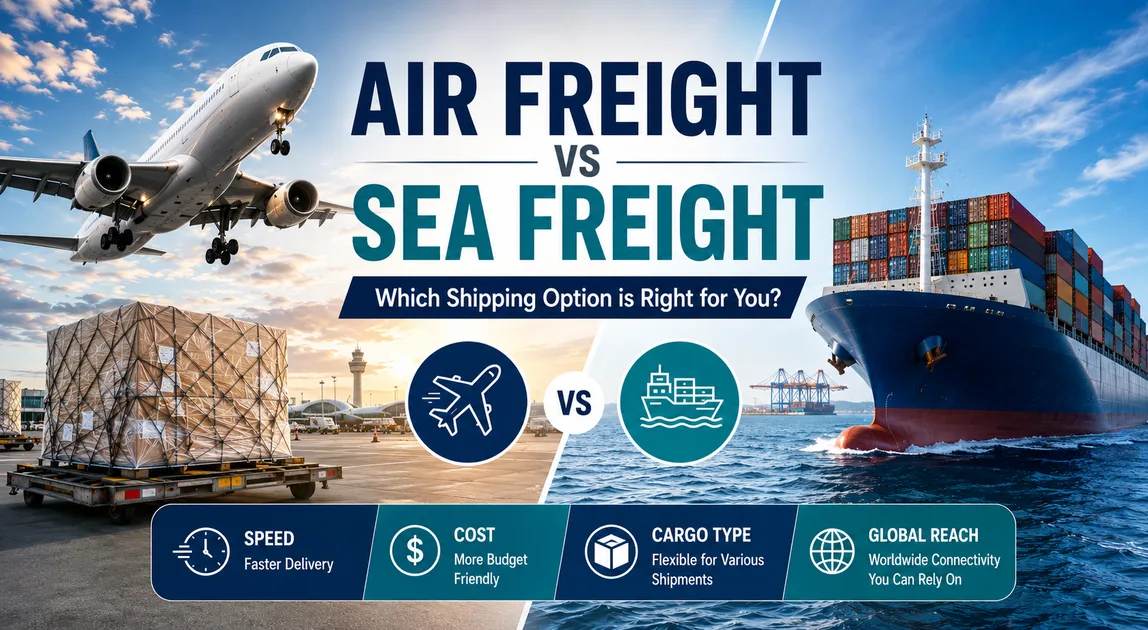
The Core Trade-Off: Speed vs Cost
The decision between air and sea freight comes down to one fundamental trade-off: air is fast but expensive; sea is slow but cheap. The right answer depends on your cargo value, urgency, volume, and margins.
Transit Time Comparison
Air freight from China to Europe takes 3–7 days door-to-door. Sea freight on the same route takes 25–35 days. From China to the USA, air is 5–10 days versus 14–30 days by sea.
In practice, air freight's advantage narrows slightly because of airport handling times, customs clearance, and last-mile delivery — but it still wins decisively on speed.
Cost Comparison
Air freight is charged by volumetric weight or actual weight (whichever is greater). The volumetric formula is: L(cm) × W(cm) × H(cm) ÷ 6000 = volumetric kg. Rates range from $3–$12/kg depending on lane and season.
Sea freight is charged per container (FCL) or per CBM (LCL). For a 1,000kg, 5 cbm shipment from China to Europe: air freight might cost $5,000–$10,000; sea freight (LCL) might cost $500–$800. The cost differential is dramatic.
When Air Freight Makes Sense
- High-value, low-weight cargo: Electronics, pharmaceuticals, jewellery — the cost of air is justified by reducing inventory in transit
- Urgent restocking: When a stockout costs more than the air premium
- Perishables: Fresh produce, flowers, vaccines require fast transit
- First production runs: Getting samples or initial orders to market quickly
- Small, lightweight shipments: Under 100kg, air is often competitive with LCL when all charges are included
When Sea Freight Makes Sense
- Large, heavy, or bulky cargo
- Non-urgent goods with planned replenishment schedules
- Low-value, high-volume commodities (furniture, textiles, raw materials)
- When margins are thin and logistics costs are a critical factor
- Hazardous materials that cannot fly
Carbon Footprint Difference
Air freight generates approximately 500g CO₂ per tonne-km. Sea freight generates roughly 10–40g CO₂ per tonne-km. Air freight is 10–50x more carbon-intensive than sea. As carbon reporting requirements increase, this difference matters more to sustainability-focused businesses.
Air Freight Surcharges to Know
Like sea freight, air has surcharges: fuel surcharge (varies weekly), security surcharge, screenings fees, AWB (Air Waybill) fee, pick-up and delivery. Always ask for an all-in rate including surcharges.
Frequently Asked Questions
Ready to Get Competitive Freight Quotes?
Submit your enquiry to NavilinkGlobal's network of verified freight forwarders. No registration required — get multiple quotes fast.
Get My Freight QuoteFree · No signup · Multiple forwarders
Related Guides
Browse All Guides
- FCL vs LCL: Which Container Option is Right for Your Cargo?
- How to Find a Reliable Freight Forwarder
- Complete Guide to Incoterms 2020: What Every Shipper Must Know
- Sea Freight Cost: What Factors Affect Your Shipping Rate?
- Air Freight vs Sea Freight: Cost, Speed & When to Choose Each
- How to Ship a Full Container (FCL) — Step by Step
- What is a Bill of Lading? Types, Requirements & Common Mistakes
- China to UAE Shipping: Costs, Transit Times & Best Options
- China to USA Shipping: Sea Freight, Air Freight & Costs
- How to Calculate CBM for Shipping: Formula & Examples
- Import Customs Clearance: A Beginner's Guide
- What is a Freight Forwarder and What Do They Do?
- Dangerous Goods Shipping: IMDG Code & What You Need to Know
- How to Negotiate Freight Rates: Tips for Importers
- LCL Consolidation Explained: How Groupage Shipping Works
- Port of Dubai (Jebel Ali): Complete Importer's Guide
- Temperature Controlled (Reefer) Shipping: Complete Guide
- What is a Freight Quote and How Do You Compare Them?
- Top 10 Documents Required for International Shipping
- Peak Season Shipping: How to Plan and Beat the Rush