FCL vs LCL: Which Container Option is Right for Your Cargo?
Choosing between FCL and LCL shipping is one of the first decisions every shipper faces. This guide explains the key differences, cost factors, and when each option makes sense for your cargo.
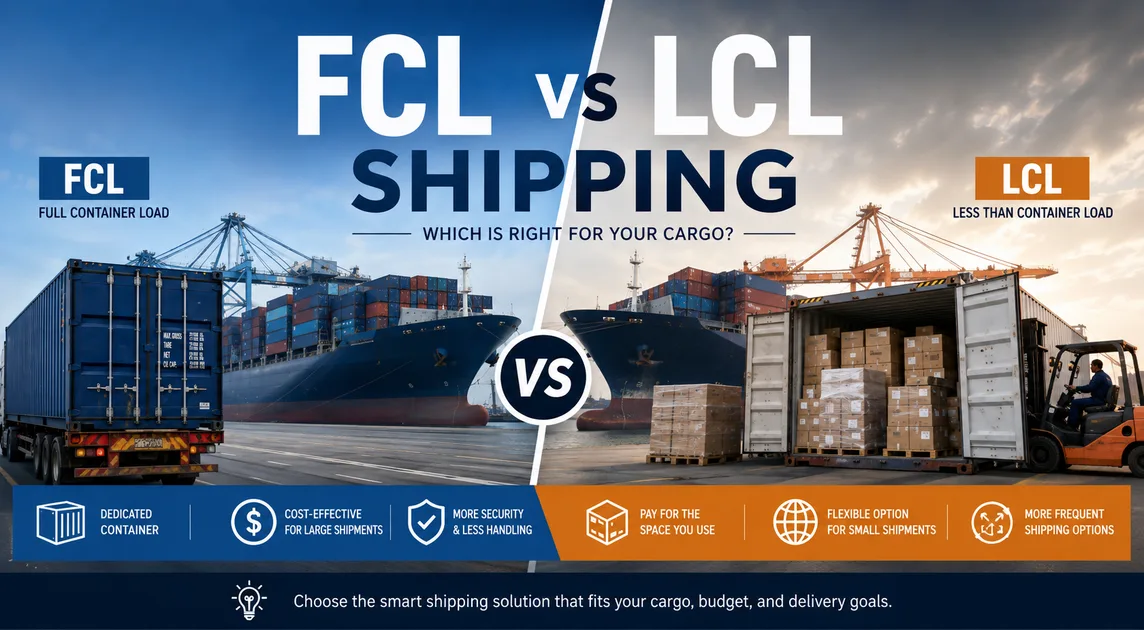
What is FCL (Full Container Load)?
FCL means you book an entire container exclusively for your cargo — whether it fills it completely or not. The container is sealed at origin and only opened at destination. Standard sizes are 20ft (roughly 25–28 cbm capacity) and 40ft (55–58 cbm), with 40ft High Cube containers offering extra height for bulky goods.
FCL is ideal when your cargo fills more than 15 cbm, when you need maximum security and minimal handling, or when your cargo is hazardous or time-sensitive.
What is LCL (Less than Container Load)?
LCL means your cargo shares container space with other shippers' goods. A freight forwarder or consolidator groups multiple small shipments together to fill a container. You only pay for the space your cargo occupies, measured in CBM (cubic metres) or weight — whichever is higher.
LCL suits cargo under 10–12 cbm, regular small shipments, or when you are testing a new trade lane and do not have enough volume for a full box.
FCL vs LCL: Cost Comparison
FCL pricing is a flat rate per container regardless of how full it is. LCL pricing is per CBM (e.g. $25–$80/cbm depending on trade lane). The break-even point is usually around 10–15 cbm — above that, FCL almost always works out cheaper per unit.
Beyond freight, LCL carries additional charges: consolidation fees, deconsolidation fees, CFS (Container Freight Station) handling at both ends. These can add $100–$250 per shipment. FCL has fewer add-on charges and simpler billing.
Transit Time Differences
FCL is faster. Your goods go directly from stuffing point to destination without intermediate sorting. LCL requires cargo to be consolidated at origin CFS, then deconsolidated at destination CFS — adding 3–7 days on each side of the ocean voyage.
Risk and Cargo Safety
FCL offers better protection. Your container is sealed and untouched until delivery. LCL involves multiple handlings — your cargo is packed, sorted, and unpacked alongside other shipments, increasing the risk of damage, contamination, or delay if another cargo in the consolidation has a problem.
When to Choose FCL
- Cargo volume exceeds 12–15 cbm
- High-value or fragile goods requiring minimal handling
- Hazardous materials (which may not be consolidated)
- When delivery speed is critical
- Regular, high-volume trade lanes
When to Choose LCL
- Small shipments under 10 cbm
- Sample shipments or trial orders
- Budget-sensitive cargo with flexible delivery windows
- Businesses that cannot store a full container worth of stock
Frequently Asked Questions
Ready to Get Competitive Freight Quotes?
Submit your enquiry to NavilinkGlobal's network of verified freight forwarders. No registration required — get multiple quotes fast.
Get My Freight QuoteFree · No signup · Multiple forwarders
Related Guides
Browse All Guides
- FCL vs LCL: Which Container Option is Right for Your Cargo?
- How to Find a Reliable Freight Forwarder
- Complete Guide to Incoterms 2020: What Every Shipper Must Know
- Sea Freight Cost: What Factors Affect Your Shipping Rate?
- Air Freight vs Sea Freight: Cost, Speed & When to Choose Each
- How to Ship a Full Container (FCL) — Step by Step
- What is a Bill of Lading? Types, Requirements & Common Mistakes
- China to UAE Shipping: Costs, Transit Times & Best Options
- China to USA Shipping: Sea Freight, Air Freight & Costs
- How to Calculate CBM for Shipping: Formula & Examples
- Import Customs Clearance: A Beginner's Guide
- What is a Freight Forwarder and What Do They Do?
- Dangerous Goods Shipping: IMDG Code & What You Need to Know
- How to Negotiate Freight Rates: Tips for Importers
- LCL Consolidation Explained: How Groupage Shipping Works
- Port of Dubai (Jebel Ali): Complete Importer's Guide
- Temperature Controlled (Reefer) Shipping: Complete Guide
- What is a Freight Quote and How Do You Compare Them?
- Top 10 Documents Required for International Shipping
- Peak Season Shipping: How to Plan and Beat the Rush