
What Happened
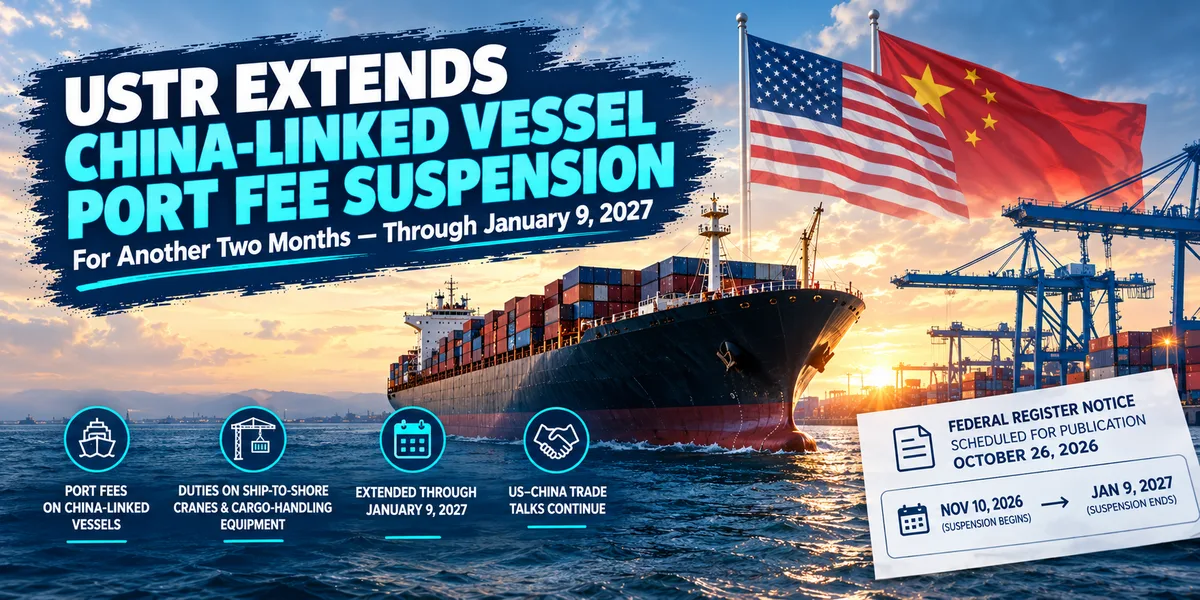
The Office of the US Trade Representative (USTR) proposed on Friday, October 23, 2026, to extend its suspension of port fees targeting China-linked vessels for another two months, pushing their potential return into January 2027 as Washington and Beijing continue negotiations over China's dominance of global shipbuilding.
The proposal, outlined in a Federal Register notice scheduled for publication October 26, would extend the existing one-year suspension through January 9, 2027. Under the proposal, the measures would remain suspended from November 10, 2026, through January 9, 2027 — covering not just the vessel port fees themselves but also certain duties on ship-to-shore cranes and cargo-handling equipment.
Why This Announcement Matters More Than It Might Seem
This is worth unpacking carefully, because it closes a gap that had been causing genuine uncertainty in the shipping industry for weeks. Back on September 23, Treasury Secretary Scott Bessent publicly announced that the broader US-China "Busan" trade truce — reached during economic and trade consultations in Kuala Lumpur — would be extended to January 10, 2027, including the suspension of reciprocal port service fees.
But a political announcement and a binding legal change are two different things. The original fee suspension had been created through a specific USTR Federal Register notice with its own effective date and termination clause, and only a new Federal Register notice from USTR itself could actually extend that legal suspension. For weeks after Bessent's September statement, no such notice had been published — meaning that, technically, the Section 301 port fees on China-linked ships remained on track to resume on November 9 or 10, 2026, regardless of what officials had said publicly. Industry trade publications were explicitly tracking this gap as an open and unresolved risk through early-to-mid October.
This Friday's proposal is that missing formal step — though it is worth noting precisely: the proposal's suspension window runs through January 9, 2027, one day earlier than the January 10 date Bessent originally cited for the broader truce.
What's Covered, and Why China's Shipbuilding Dominance Is the Backdrop
The underlying US measures stem from a Section 301 investigation under the Trade Act of 1974 into China's dominance in global shipbuilding, maritime and logistics sectors, originally implemented on April 17, 2025. China responded with its own "special port fees" on vessels with a US nexus, introduced October 10, 2025, as a countermeasure — and that Chinese suspension has likewise continued in parallel with the US one.
The notice does not address whether China will extend its own suspension of retaliatory fees on US-linked vessels, meaning the Chinese side of this reciprocal arrangement is not formally confirmed through this specific US document.
Not Universal Support: Maritime Labor Unions Push Back
The extension is not without industry criticism. Maritime labor unions have criticized the suspension, arguing that it weakens one of the few measures specifically designed to counter China's state-supported shipbuilding industry. Their concern reflects the original intent behind the fees: pressuring change in a sector where Chinese shipyards have captured an overwhelming share of global commercial vessel construction, at the expense of US and allied shipbuilding capacity.
That tension — between the near-term goal of avoiding higher shipping costs during ongoing trade talks, and the longer-term goal of rebuilding competing shipbuilding capacity — sits at the heart of why this suspension keeps getting extended rather than either expiring or being made permanent.
Part of a Broader Port Fee Strategy Still Taking Shape
The proposed extension also comes as the administration considers a much broader port fee system under its Maritime Action Plan, unveiled earlier this year. This suggests the current China-specific suspension is a temporary holding pattern within a larger, still-evolving US policy framework for port fees generally — not necessarily the final word on how the US intends to use port charges as a trade and industrial policy tool going forward.
What Happens Next, and How to Weigh In
Comments on the proposal can be filed through the USTR public comment portal under docket USTR-2026-0694. More than 200 industry groups and trade associations had separately petitioned USTR earlier this fall urging an extended suspension, citing concerns about increased costs being passed through the economy — a signal of the scale of industry interest in how this specific policy question resolves.
What This Means for Shippers, Carriers, and Importers
- No fee restart on November 10 — but confirm the formal notice actually publishes. With the Federal Register notice scheduled for October 26, shippers and carriers relying on continued fee suspension should verify the notice has actually been published and finalized, rather than assuming the proposal alone is sufficient, given how long the gap between announcement and formal action has already run this year.
- Factor in the one-day discrepancy if you're tracking exact dates contractually. With the proposal's window ending January 9, 2027, rather than the January 10 date cited in the broader trade truce, charter parties, contracts, or internal compliance tracking referencing a specific cutoff date should use the USTR notice's own January 9 language once finalized.
- This remains a two-month extension, not a permanent resolution. Build planning around the possibility that this question resurfaces again in January 2027, rather than assuming the underlying Section 301 fee structure is permanently shelved.
- Watch whether China confirms its own reciprocal extension. Since this US notice does not address China's parallel suspension of its own special port fees on US-linked vessels, carriers and shippers with exposure to both sides of this arrangement should monitor for separate confirmation from Chinese authorities.
- This sits within a larger Maritime Action Plan still being developed. Shippers and carriers should treat the China-specific suspension as one piece of a broader US port fee policy still taking shape, and stay alert for additional announcements under that wider framework that could affect costs beyond just Chinese-linked vessels.
Key Takeaways
- USTR proposed on October 23, 2026 to extend the suspension of China-linked vessel port fees through January 9, 2027.
- This formal Federal Register notice — scheduled for publication October 26 — closes a weeks-long gap between Treasury Secretary Bessent's September political announcement of the extension and the legally binding notice required to implement it.
- The suspension covers the Section 301 port service fees on China-linked vessels (originally implemented April 2025) as well as duties on Chinese-made ship-to-shore cranes and cargo-handling equipment.
- China's own parallel suspension of retaliatory "special port fees" on US-linked vessels is not addressed in this specific US notice.
- Maritime labor unions have criticized the continued suspension as weakening pressure on China's shipbuilding dominance.
- The extension sits within a broader Maritime Action Plan the administration is still developing.
- Public comments can be submitted under docket USTR-2026-0694.
- Shippers should confirm the notice's actual publication and watch for China's reciprocal confirmation, rather than treating the proposal alone as final.


Comments
No comments yet. Be the first to share your thoughts!