
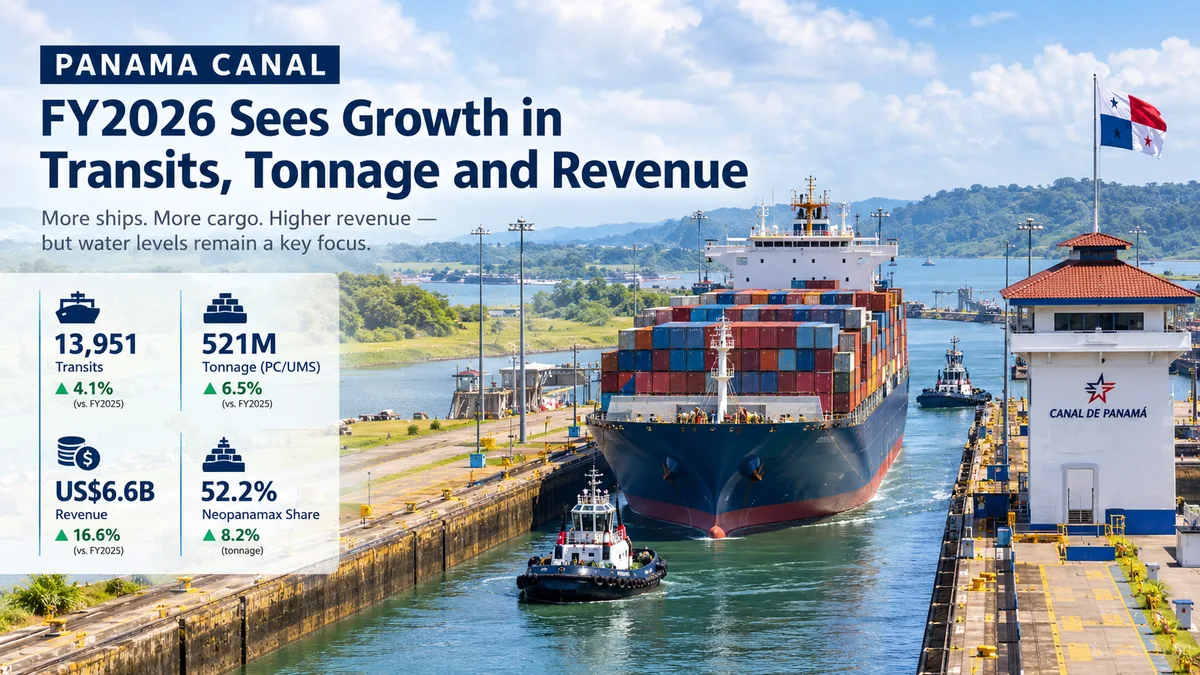
The Panama Canal Authority (ACP) has reported growth in both vessel transits and cargo tonnage for fiscal year 2026, which ran from October 2025 through September 2026. The canal handled 13,951 transits, up 4.1% from 13,404 in fiscal 2025. The figures were released on October 21, 2026, and are preliminary and unaudited. They show a waterway that is busy and earning more, while it keeps a close watch on water levels.
FY2026 at a glance
- Transits: 13,951, up 4.1% from 13,404 in FY2025.
- Tonnage: 521 million PC/UMS tons, up 6.5% from 489.2 million tons.
- Cargo volume: about 280.6 million long tons, up roughly 7%, according to separate trade reporting.
- Revenue: US$6.6 billion, up 16.6% from US$5.705 billion.
- Neopanamax share: 52.2% of total tonnage, with tonnage through these locks up 8.2%.
What drove the growth
The authority credited energy shipping segments and strong containership performance for the increase. Trade reports add that chemical tankers, containerships and gas carriers led the growth, with more activity on routes linking the United States, Asia and South America. Shifting energy routes and geopolitical tensions in the Middle East also pushed more vessels toward Panama.
Larger vessels played a big part. Ships using the Neopanamax locks carried more than half of all tonnage, and tonnage through those locks grew 8.2% year over year. This shows an increasing share of large-capacity vessels using the waterway, a direct benefit of the canal's expansion.
Record revenue
Total revenue for the year reached US$6.6 billion, up 16.6% from US$5.705 billion in fiscal 2025. Local reports describe it as the highest revenue the canal has generated since Panama took over its administration on December 31, 1999.
Revenue grew much faster than transits. The gap reflects the move toward larger vessels, which pay higher tolls and carry more cargo per crossing. It also reflects the strong demand for energy cargo and container capacity during the year.
A recovery from the drought years
The results continue the canal's rebound from the severe drought of fiscal 2024, when water shortages forced the authority to cut daily transits and draft. As conditions improved, traffic recovered through fiscal 2025 and kept rising in fiscal 2026. The canal also kept its maximum draft at 50 feet throughout the dry season, which gave customers favorable operating conditions for much of the year.
El Niño remains a risk
The good numbers come with a warning. From July, the authority introduced renewed draft restrictions in response to below-average rainfall and the risk of El Niño affecting water levels in Gatun Lake, the freshwater reservoir that powers the canal's locks. Each transit uses large amounts of water, so when rainfall drops, the canal has to limit draft to protect its water supply.
Earlier in the year, these restrictions brought lighter loads per vessel, longer waits for some ships and higher canal surcharges from several carriers. The ACP said it will keep monitoring water conditions and rainfall closely and will announce any further changes as needed.
More flexibility for carriers, and a long-term water plan
The authority also reinstated its Last-Minute Reservation service, which gives shipping companies more flexibility when planning transits. For carriers dealing with schedule changes and port delays, this is a useful tool.
Looking ahead, management discussed its water management strategy and progress on its Vision 2025-2035 plan. That includes the Río Indio Lake project, which is meant to secure long-term water supply for the canal and reduce the risk of future drought disruptions. For fiscal year 2027, the canal aims to maintain its level of activity and strengthen its operational capacity.
Why it matters for shippers
For importers and forwarders moving cargo between Asia and the US East Coast, the Panama Canal remains a key route. Rising transits show that carriers and energy shippers are still relying on it, even with draft limits in place. It also competes with other routes, such as the Suez Canal, as more carriers consider returning there.
But lower drafts mean lighter loads per vessel, so the water situation in the coming months will matter for capacity, schedules and surcharges. Shippers should confirm any canal-related surcharges with their carriers and plan for possible delays on Panama routings.
Key takeaways
- The Panama Canal handled 13,951 transits in FY2026, up 4.1% from 13,404 in FY2025.
- Tonnage rose 6.5% to 521 million PC/UMS tons.
- Revenue grew 16.6% to US$6.6 billion, according to preliminary, unaudited figures.
- Neopanamax locks carried 52.2% of total tonnage, with tonnage through them up 8.2%.
- Draft restrictions linked to El Niño have been in place since July, and the authority says further changes may follow.
- The Last-Minute Reservation service has been reinstated, giving carriers more flexibility.
For freight forwarders and shippers using Panama routings, the strong year is good news. Still, it is worth watching water levels and draft announcements closely as the next dry season approaches.


Comments
No comments yet. Be the first to share your thoughts!