The Numbers: 8 Straight Weeks of Rail Traffic Growth
On June 3, 2026, the Association of American Railroads (AAR) released its latest weekly rail traffic report — and the headline number is striking.
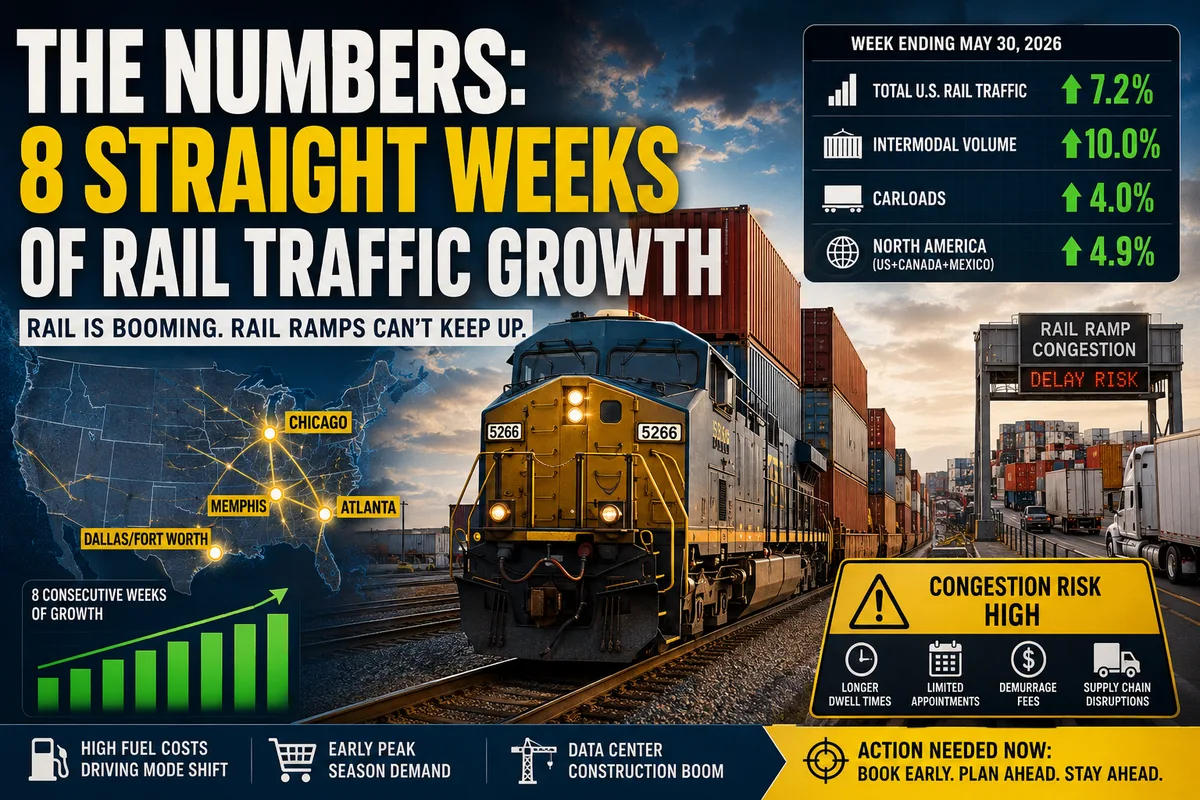
For the week ending May 30, 2026, total U.S. rail traffic rose 7.2% from the same point last year, with gains in both carloads (4.0%) and intermodal volume (10.0%). This marked the eighth consecutive week of traffic upticks.
Here is the full picture for the week ending May 30:
- Total US rail traffic: Up 7.2% year-over-year
- Intermodal volume: Up 10.0% — the strongest category
- Carloads: Up 4.0%
- North America combined (US + Canada + Mexico): Up 4.9%
For the first 21 weeks of 2026, US railroads reported cumulative volume of 4,756,909 carloads, a 3.4% rise from the same point last year, and 5,820,002 intermodal units, a 1.8% increase from 2025.
Eight consecutive weeks of growth means this is not a one-week blip — it is a sustained, accelerating surge in freight being moved by rail across North America.
Why Is Rail Booming Right Now?
Three forces are driving this surge simultaneously:
1. Shippers Fleeing High Fuel Costs
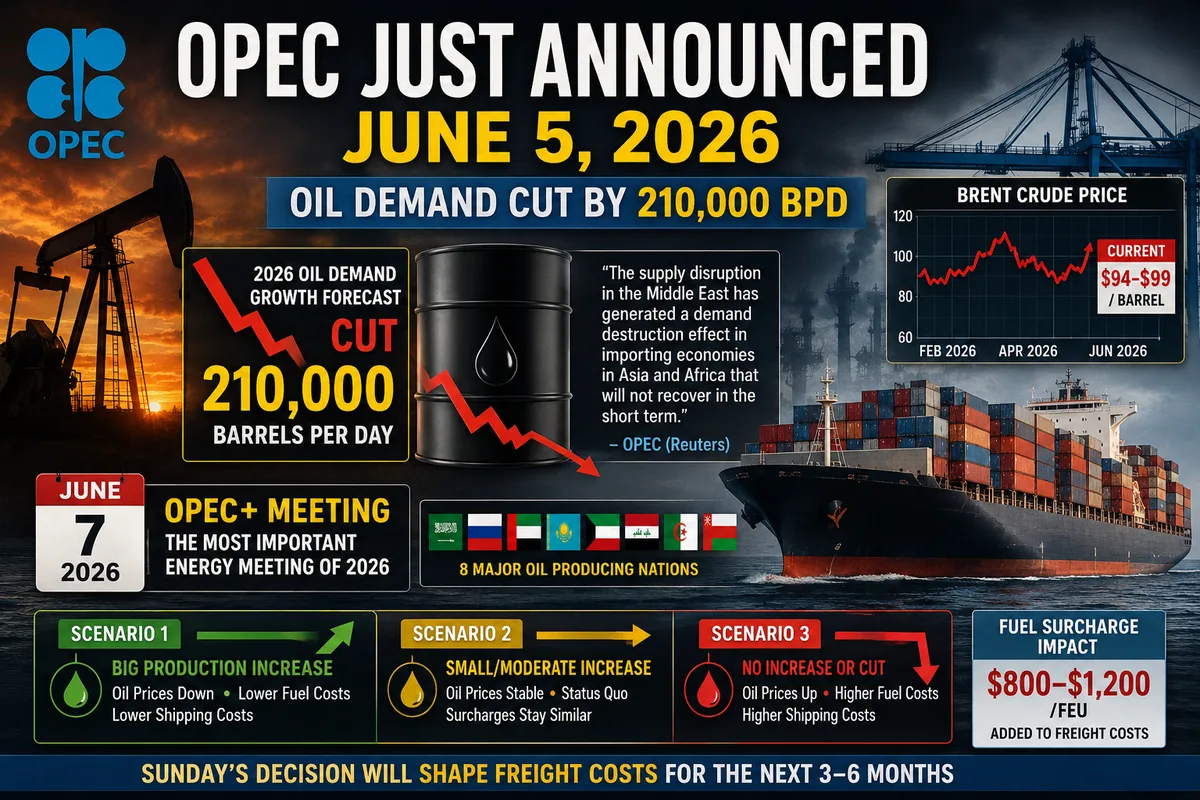
The Iran war has kept oil prices elevated — Brent crude is trading near $98/barrel as of June 3, down from the $109 peak but still well above pre-war levels. For shippers moving large volumes of goods across long distances, rail is significantly cheaper than trucking on a fuel-cost basis. As shippers change modes from trucking to rail to find relief from higher fuel costs, intermodal volumes are rising sharply. This is a direct, rational response to the energy shock — and it is showing up clearly in the AAR data.
2. Early Peak Season Demand
Peak shipping season is starting earlier than usual in 2026. European importers front-loading orders due to longer Red Sea bypass routes, US retailers stocking up ahead of holiday season, and general supply chain catch-up after months of disruption are all combining to pull forward demand that would normally hit in July and August. That demand is landing on the rail network — right now.
3. Data Center Construction Boom
Data center construction is driving strong flatbed demand as AI infrastructure buildout continues at pace across the US. Heavy construction materials — steel beams, electrical equipment, cooling systems — move by flatbed rail car. This is a new, sustained freight category that did not exist at this scale even two years ago.
The Problem: Inland Rail Ramps Cannot Keep Up
Here is where the positive growth story turns into a warning.
An "intermodal rail ramp" is an inland facility where containers are transferred between trucks and trains. When a ship arrives at the Port of Los Angeles, containers are loaded onto trains and sent to inland ramps in Chicago, Dallas, Memphis, or Atlanta — where trucks pick them up for final delivery.
When too many containers arrive at a rail ramp faster than trucks can pick them up, containers pile up. Dwell times increase. Appointment windows get booked out days in advance. The whole system slows down.
And right now, that is exactly what is starting to happen. As intermodal volumes rise sharply, there are growing concerns about possible bottlenecks at inland rail ramps. "As shippers change modes from trucking to rail, to find relief from higher fuel costs, we could start to see congestion at inland rail ramps that challenge key entry points for many ocean containers in North America," warned Paul Brashier, VP of Global Supply Chain at ITS Logistics.
The ramps he is most concerned about:
- Chicago — the single most important rail hub in North America, where nearly every major railroad intersects
- Memphis — critical hub for goods moving between the South and Midwest
- Dallas/Fort Worth — the gateway for Mexico-US intermodal and Southwest distribution
- Atlanta — the primary entry point for goods moving into the Southeast US
Brashier warned shippers to brace for significant disruption and said they should be prepared for post-Covid or 2014 congestion levels. The 2014 rail congestion crisis caused widespread supply chain delays across the US for several months — and it was triggered by a much smaller surge in volumes than what the data is showing today.
The FreightWaves June 2026 State of Industry Report — Published Today
Separately, FreightWaves published its June 2026 State of Industry Report on June 3 — and it confirms the same tension between growth and capacity constraints across the broader freight market.
Key findings:
- Freight market remains volatile and capacity-sensitive: Disruptions like Roadcheck quickly drove tender rejections and spot rates higher, highlighting an unstable, supply-constrained environment.
- Spot rates are outpacing contract rates: A widening gap is pulling capacity into the spot market, increasing rejection rates and signaling upward pricing pressure for shippers.
- Modal shifts accelerating: Shippers are leveraging intermodal and LTL to secure capacity, even at higher unit costs, as truckload tightens.
- Inflation adding pressure: Elevated fuel and broader input costs with PPI around 6% are contributing to higher freight rates and economic uncertainty.
The picture that emerges is clear: the freight market is tightening fast, shippers are scrambling to lock in capacity across all modes, and the rail network — which everyone is turning to as a cheaper alternative to trucking — is absorbing more volume than it may be able to handle smoothly.
What Does "Rail Ramp Congestion" Actually Mean for Your Shipment?
If you ship goods via intermodal rail — or if your freight forwarder uses rail for any part of your domestic or inland transport — here is what congestion at key ramps means in practice:
- Longer dwell times at ramps. Your container arrives on the train — but sits at the ramp waiting for a truck appointment. Instead of being picked up the same day, it could wait 2, 3, or even 5+ days.
- Limited appointment availability. Ramp appointment windows get booked out further in advance when volumes spike. If your drayage provider cannot secure a slot, your cargo waits.
- Potential demurrage charges. If containers sit at ramps beyond their free time, carriers will charge per-day fees — just like at ocean ports.
- Supply chain schedule disruptions. If your goods are needed at a warehouse or store by a specific date, rail ramp congestion can break that schedule — causing stockouts, missed sales, or production line stops for manufacturers.
What Should Shippers and Freight Forwarders Do Right Now?
- Book intermodal capacity early. If you have shipments moving by rail in June or July, confirm your bookings now. Space is tightening and ramp appointment windows are filling up.
- Identify which ramps your cargo uses. If your goods move through Chicago, Memphis, Dallas, or Atlanta — these are the highest-risk locations for congestion. Ask your carrier or forwarder for current dwell time data at these ramps.
- Build buffer time into delivery schedules. Add 2-3 days of buffer to any intermodal delivery timeline for shipments moving through high-risk ramps this month.
- Have a truck backup plan. For time-critical shipments, identify truckload carriers who can step in if rail congestion causes an unacceptable delay. Yes, trucks are more expensive right now — but a missed delivery deadline costs more.
- Monitor spot rates. Spot rates are currently outpacing contract rates — this means if you need to move urgent freight at short notice, expect to pay a premium. Locking in contract capacity now protects you from this.
Key Takeaways — June 4, 2026
- US rail traffic up 7.2% for week ending May 30 — 8th consecutive week of growth. (AAR, June 3, 2026)
- Intermodal volume up 10.0% — the strongest growth category.
- Shippers shifting from truck to rail to escape high fuel costs driven by the Iran war.
- Rail ramps at Chicago, Memphis, Dallas, and Atlanta at growing risk of congestion.
- Industry experts warning of post-Covid or 2014-level disruption potential.
- Spot rates outpacing contract rates — capacity is tightening fast.
- Action needed now: book early, build buffer time, have backup truck capacity ready.
The US freight market is in a critical transition point. Rail is booming — but the infrastructure that supports it was not built for a simultaneous surge of peak season demand, mode-shifting shippers, and AI infrastructure construction freight. The next 4-6 weeks will reveal whether the rail network can absorb this surge smoothly — or whether a new congestion crisis is about to hit North American supply chains.


Comments
No comments yet. Be the first to share your thoughts!
Join the conversation
You need an account to comment on articles.