Import Rush Drives One of the Busiest Months Ever at U.S. Ports
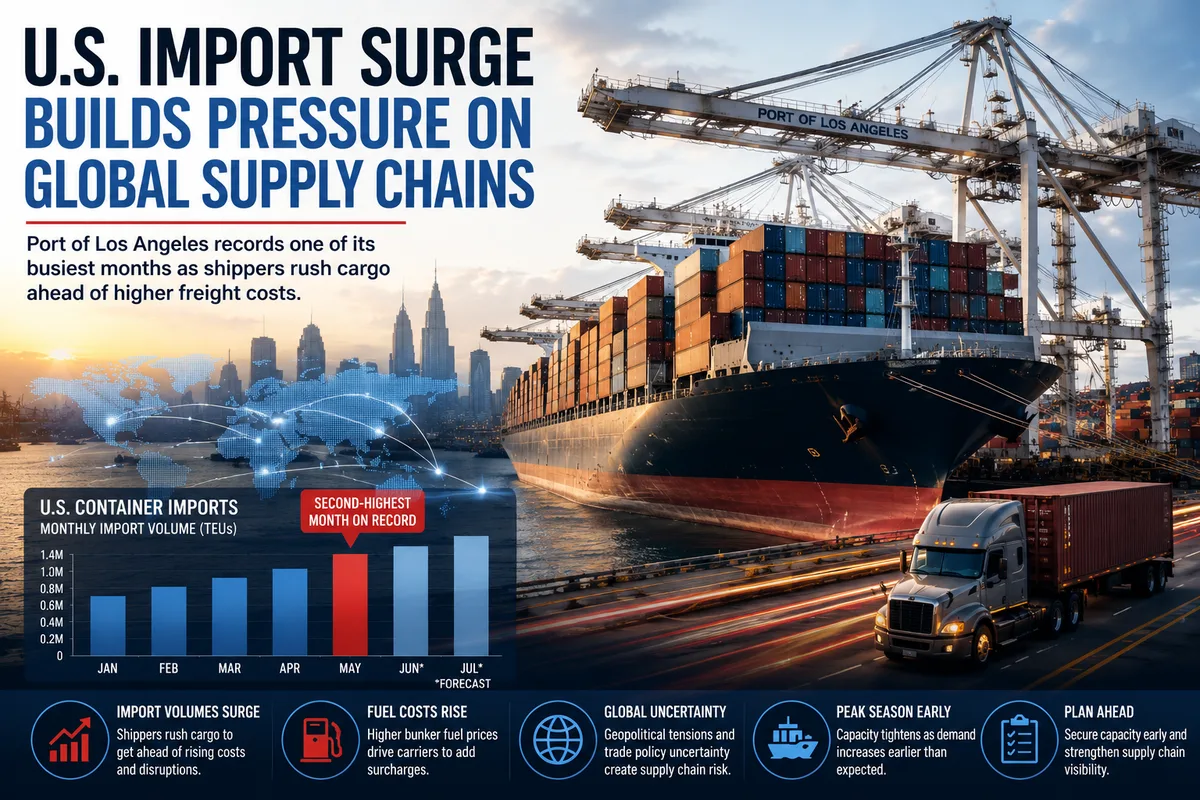
The global logistics industry is closely watching a significant surge in U.S. import activity after the Port of Los Angeles reported its second-highest monthly import volume on record. The increase comes as retailers and manufacturers accelerate shipments ahead of expected freight cost increases and continued uncertainty in global transportation markets.
According to port officials, import volumes rose sharply during May, with companies moving cargo earlier than planned to avoid anticipated fuel surcharges and potential supply chain disruptions. Industry analysts expect the trend to continue throughout June and July as businesses seek to secure inventory before transportation costs rise further.
Why Shippers Are Moving Cargo Earlier
The primary driver behind the import surge is the expected increase in marine fuel costs. Ongoing geopolitical tensions in the Middle East have affected energy markets and created uncertainty around shipping expenses. As carriers prepare to implement higher fuel-related charges, importers are attempting to bring goods into the United States before those additional costs impact supply chains.
At the same time, companies remain cautious about trade policy developments and future tariff decisions. This combination of rising transportation costs and policy uncertainty is encouraging businesses to move inventory while market conditions remain relatively stable.
Impact on Global Logistics and Supply Chains
The early import rush is already creating ripple effects across global logistics networks. Increased demand for vessel space is placing upward pressure on ocean freight rates, while trucking and warehouse providers are preparing for stronger cargo volumes throughout the summer.
Supply chain experts note that the industry is entering its peak shipping season earlier than usual. This could lead to tighter capacity on major trade lanes, longer transit times, and higher transportation costs if demand continues to accelerate.
Freight forwarders and logistics providers are also advising customers to improve shipment planning and secure transportation capacity earlier than normal. Businesses that delay bookings may face higher rates and reduced flexibility later in the season.
What This Means for Logistics Providers
For carriers, freight forwarders, and third-party logistics companies, the import surge presents both opportunities and challenges. Higher cargo volumes can support revenue growth, but increased demand may also strain transportation networks and warehouse operations.
Companies with strong visibility tools, flexible capacity solutions, and diversified transportation networks are expected to be better positioned to manage growing customer demand during the upcoming peak season.
Key Takeaways
- U.S. container imports have surged as businesses rush shipments ahead of expected cost increases.
- The Port of Los Angeles recorded one of the strongest import months in its history.
- Rising fuel costs and geopolitical uncertainty are driving earlier shipping activity.
- Ocean freight rates and transportation demand are expected to remain elevated during summer 2026.
- Supply chain planning and capacity management will be critical for shippers in the coming months.
The latest import surge highlights how quickly global supply chains can react to changing market conditions. As freight costs rise and uncertainty persists, logistics professionals worldwide will be closely monitoring capacity, rates, and cargo flows throughout the remainder of 2026.

Comments
No comments yet. Be the first to share your thoughts!
Join the conversation
You need an account to comment on articles.