The Good News — Oil Is Already Falling
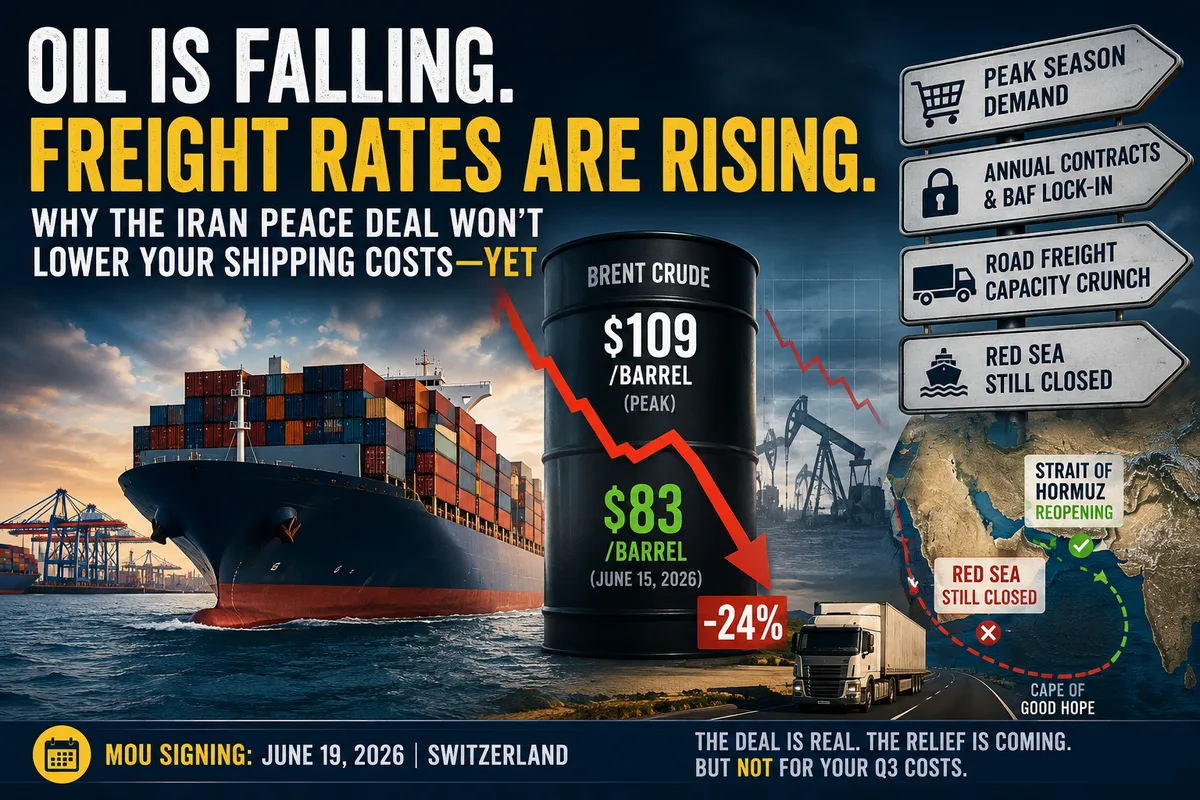
Let's start with what is genuinely positive. The US-Iran peace deal announced on June 14 and digitally signed on June 15 has already had a real impact on energy prices.
Brent crude fell from its war peak of $109/barrel to approximately $83/barrel on the day of the deal announcement — a drop of $26/barrel, or nearly 24%. European diesel prices are already retreating — Germany, which peaked at €2.44 per liter in late March 2026, has fallen to around €1.80 per liter. That is real relief for carriers who have been absorbing a fuel cost shock of historic proportions since late February.
The formal MOU signing is scheduled for this Friday, June 19 in Switzerland. The Strait of Hormuz is expected to reopen within 30 days of signing. The 22,500 trapped sailors are coming home. The crisis is ending.
So why aren't freight rates falling?
The Hard Truth — Rates Are Still Rising RIGHT NOW
Here is the data that tells the real story for shippers today, June 17, 2026:
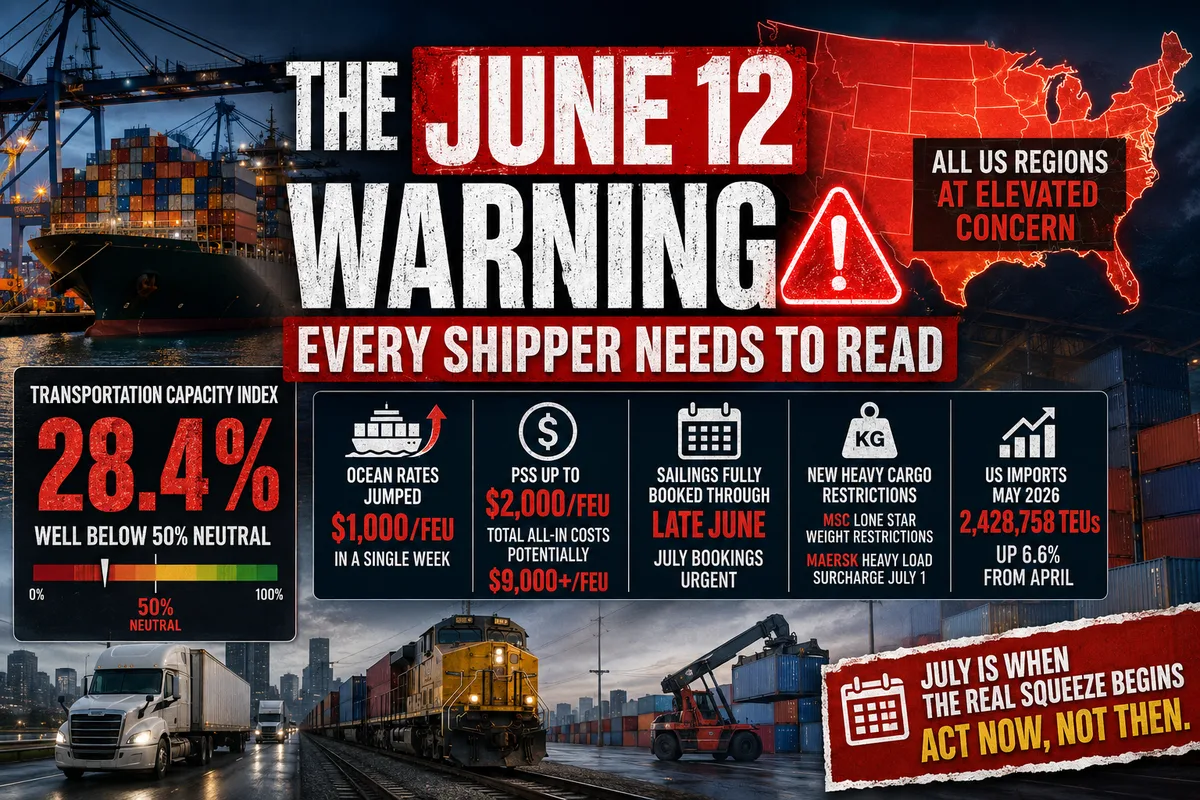
- Asia → US East Coast: $6,558/FEU — up 4% just this week, and the highest level of 2026
- Asia → US West Coast: $4,836/FEU — jumped 51% in a single week when June 1 GRIs took effect
- Asia → Europe: Rates rose for the sixth consecutive week according to The Loadstar's June 14 update
The deal has been announced. Oil is falling. And yet freight rates are still going UP. How is this possible?
The answer is that the freight market is being driven by forces that have nothing to do with the Strait of Hormuz — and those forces are not going away just because a peace deal was signed.
Reason 1: Peak Season Demand Is in Full Force
General Rate Increases and Peak Season Surcharges went into effect June 1, making mid-month rate increases likely to stick as carriers roll containers and reduce allocations, according to FreightWaves' analysis published today.
Peak season demand — driven by retailers building holiday inventory, Amazon Prime Day preparation, and TikTok mid-year promotions — is at its strongest right now. Container ships are full. Carriers can charge whatever the market will bear. A peace deal in the Middle East does not make Christmas go away or move Amazon Prime Day to a different month.
The National Retail Federation projects US ports will handle 2.25 million TEU in June — up 14.3% year on year. That cargo is already on the water. It booked weeks ago. It is arriving now. And the ships carrying it are full.
Reason 2: Annual Contract Shippers Are Locked In
This is the part that most logistics commentators are missing — and it directly affects thousands of large shippers right now.
While reduced Emergency Fuel Surcharges will be relevant for spot shipments, large shippers with annual contracts will still be paying higher rates via third quarter Bunker Adjustment Factors (BAFs) even as fuel costs decline, as FreightWaves research chief Judah Levine explained in a note to clients today.
Here is how this works. Large shippers negotiate annual contracts with carriers that include a "Bunker Adjustment Factor" — a surcharge that adjusts periodically based on fuel prices. These BAF rates are typically updated quarterly — not weekly or monthly.
That means if you signed an annual contract in Q1 or Q2 2026, your Q3 BAF rate was calculated based on the elevated fuel prices from that period — $100+/barrel oil. Even though oil has now fallen to $83, your contract's fuel surcharge will not reflect that reduction until Q4 at the earliest. You are paying yesterday's fuel prices on today's shipments.
Reason 3: Road Freight Rates Are Not Coming Down Either
Ocean freight is only one part of the logistics cost picture. Road freight — trucking — is facing its own structural problems that the Iran deal does nothing to fix.
Carrier bankruptcies and severe capacity shortages guarantee that contracted road freight rates will not return to early-2026 levels — even as diesel prices fall, according to analysis published today by FreightPerspectives.
Why? Because the trucks that went out of business during the 2023-2024 freight recession have not come back. The drivers who left the industry have not returned. The structural capacity shortage in US and European road freight is a multi-year problem — not something a peace deal can fix in 30 days.
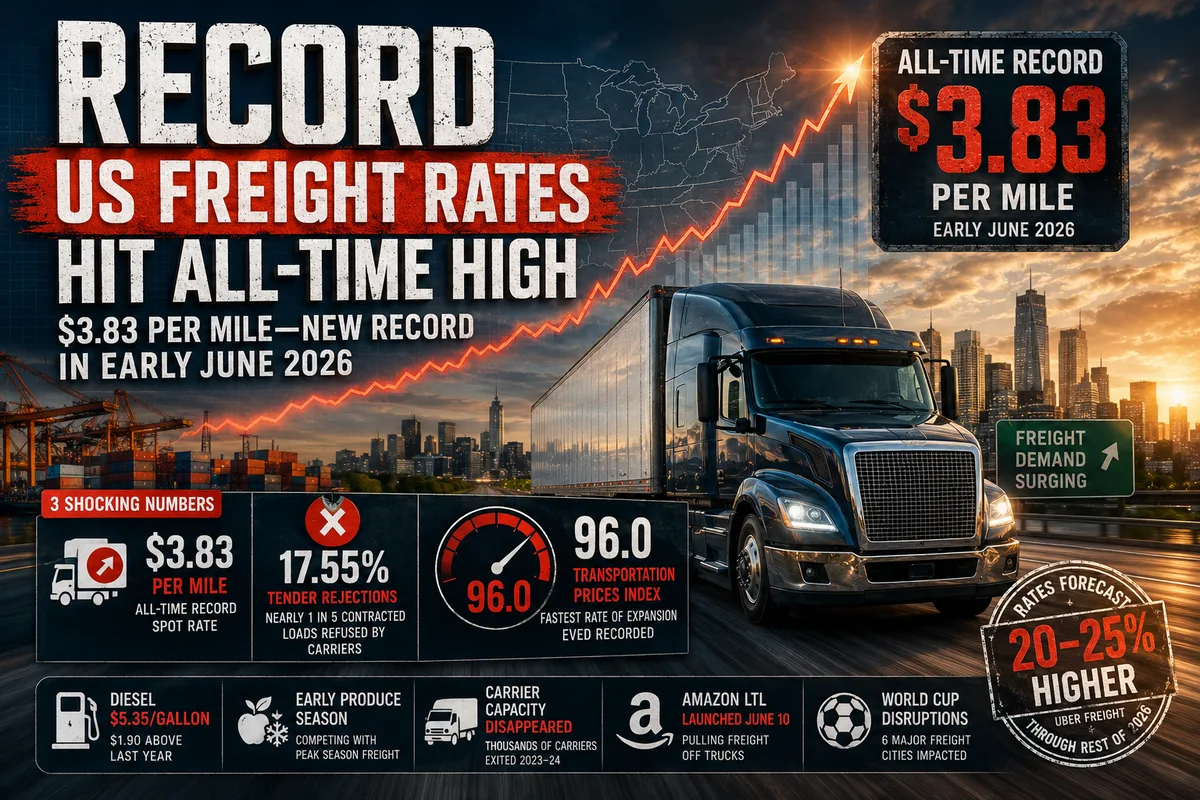
US truckload spot rates hit an all-time record of $3.83/mile just two weeks ago. Those rates are driven by demand that exceeds available capacity — and that imbalance does not change because oil prices fell.
Reason 4: The Red Sea Is Still Closed
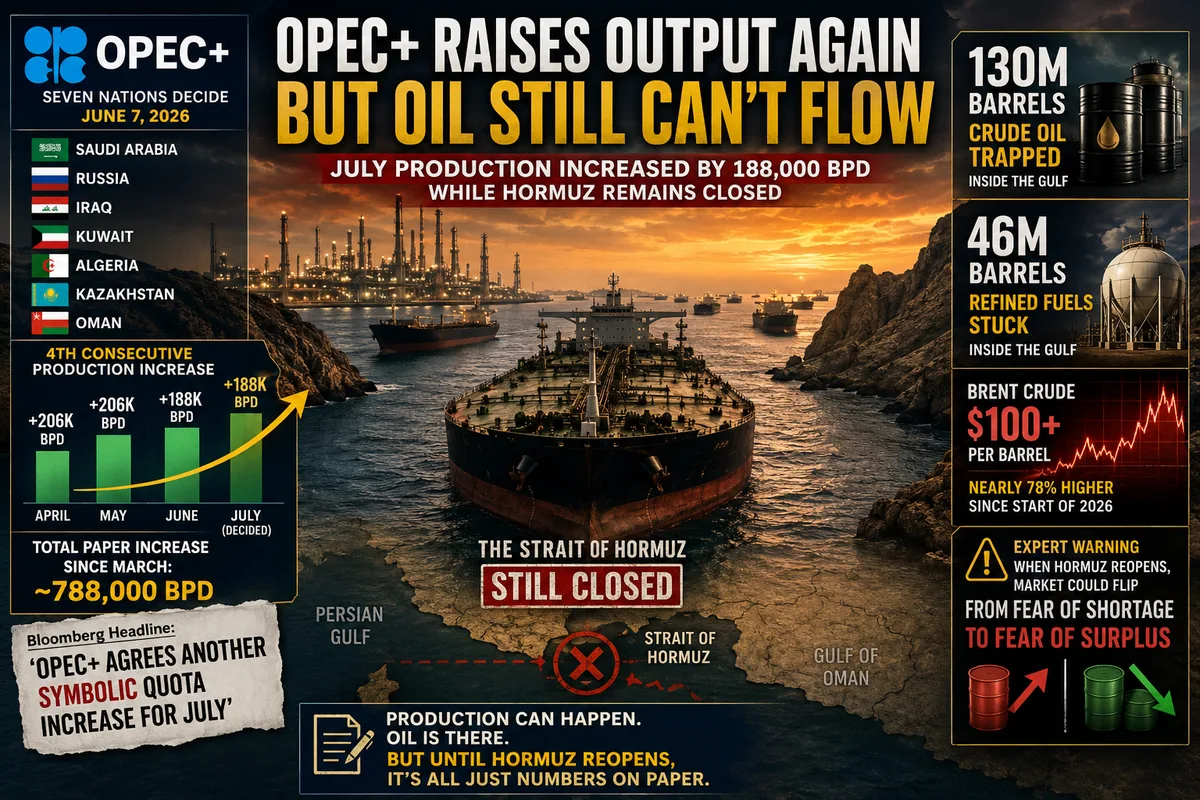
Here is something the peace deal coverage has mostly glossed over: the US-Iran deal reopens the Strait of Hormuz. It does NOT reopen the Red Sea.
Houthi attacks on shipping in the Red Sea began separately in late 2023 and have continued throughout 2026. While Iran has influence over Houthi operations, the US-Iran MOU does not explicitly address Houthi disarmament or Red Sea security. Ships are still routing around the Cape of Good Hope to get between Asia and Europe — adding 10-14 days to every voyage.
If the peace deal hastens a broad carrier return to the Red Sea, that downward pressure will be even stronger on rates — but that is a hope, not a guarantee, and the timeline is uncertain.
Until the Red Sea fully reopens, the effective capacity of the global container fleet remains significantly below pre-crisis levels — because ships spending 10-14 extra days on each voyage are doing fewer round trips per year. Less effective capacity means less competitive pressure on rates.
What WILL Change — And When
To be clear: the Iran deal IS good news for freight costs. Here is a realistic timeline of what actually changes and when:
- Now — June 17: Oil at $83/barrel. Bunker fuel prices starting to ease in Singapore and Rotterdam. War-risk insurance premiums for Gulf routes beginning to fall.
- Friday June 19 — MOU signing: Formal commitment to reopen Hormuz confirmed. Insurance market begins repricing Gulf routes more aggressively.
- Week 2-4 — Mine clearing (late June/early July): Hormuz channel cleared for safe commercial transit. First major tankers begin moving through. Gulf oil starts flowing to world markets. Oil likely falls further toward $75-80/barrel.
- Late July — Fuel surcharge revisions: As bunker fuel costs fall, spot market Emergency Fuel Surcharges begin to ease. Expect carrier announcements reducing EFS by $200-$400/FEU on spot shipments. Annual contract BAFs will NOT adjust until Q4.
- August-September — Rate normalization begins: As peak season demand eases and fuel costs fall, container rates on Asia-Europe and transpacific lanes face downward pressure. Rates likely fall 10-20% from current peaks — but remain above pre-war levels.
- Q4 2026 — Meaningful normalization: If Red Sea also reopens (which requires a separate Houthi agreement), effective fleet capacity increases significantly. This is when rates could return closer to pre-crisis levels for most shippers.
The Rates Shippers Are Paying Right Now
Just so there is no confusion about the current market — here are the actual rates as of this week:
- Asia → US East Coast: $6,558/FEU (up 4% this week)
- Asia → US West Coast: $4,836/FEU
- Asia → North Europe: Rising for 6th consecutive week
- US truckload spot: $3.83/mile (all-time record)
- LTL rates: Up 13.5% year-on-year
- Air freight (China → N. America): $6.16/kg (up 12% in May)
These are the rates the industry is working with today. The Iran deal does not change any of these numbers this week — or next week. The normalization process takes months, not days.
What Should Logistics Professionals Do Right Now?
- Do NOT assume your freight costs will fall in July. They won't — at least not significantly. Peak season demand, locked-in BAF rates, and road freight structural issues mean costs stay high through August at minimum.
- Watch for carrier EFS reduction announcements in late July. This is when spot market shippers will see the first real benefit from falling oil prices. Sign up for carrier advisories and track when EFS announcements come.
- If you are on annual contracts — check your Q3 BAF rate now. If your Q3 BAF was calculated when oil was above $100/barrel, understand that you are overpaying relative to current fuel costs. This may be negotiable if your contract has repricing provisions.
- Do NOT cancel Gulf routing alternatives prematurely. Salalah and Khor Fakkan routing for UAE, Kuwait, Qatar cargo should remain in place until mine clearing is confirmed and carriers officially restore direct Gulf port calls. This is at least 3-4 more weeks away.
- Plan Q4 with lower rates in mind. If you are building your Q4 2026 freight budget, you can now start modelling a scenario where fuel surcharges are meaningfully lower and Gulf routing costs are reduced. Q4 is when the real savings arrive.
Key Takeaways — June 17, 2026
- US-Iran deal signed — but freight rates are STILL RISING. Asia-US East Coast hit $6,558/FEU this week — up 4%.
- Peak season demand is the dominant driver right now — not Hormuz.
- Annual contract shippers will keep paying elevated Q3 BAF rates even as fuel falls — no short-term relief.
- Road freight structural capacity shortage means trucking rates stay high regardless of oil prices.
- Red Sea is still closed — Hormuz deal does not fix this.
- MOU signing this Friday June 19 in Switzerland — mine clearing starts next week.
- First meaningful rate relief: late July (spot EFS reduction). Broader normalization: Q4 2026.
- Action now: check Q3 BAF rates, maintain Gulf alternative routing, build Q4 budget with lower costs in mind.
The Iran deal is the most important news for global shipping in 2026. But experienced logistics professionals know that the market does not respond instantly to political announcements. The deal sets the direction — toward lower costs and normalizing supply chains. But the journey takes months, not days. Plan accordingly.

Comments
No comments yet. Be the first to share your thoughts!
Join the conversation
You need an account to comment on articles.