The Numbers Tell the Real Story
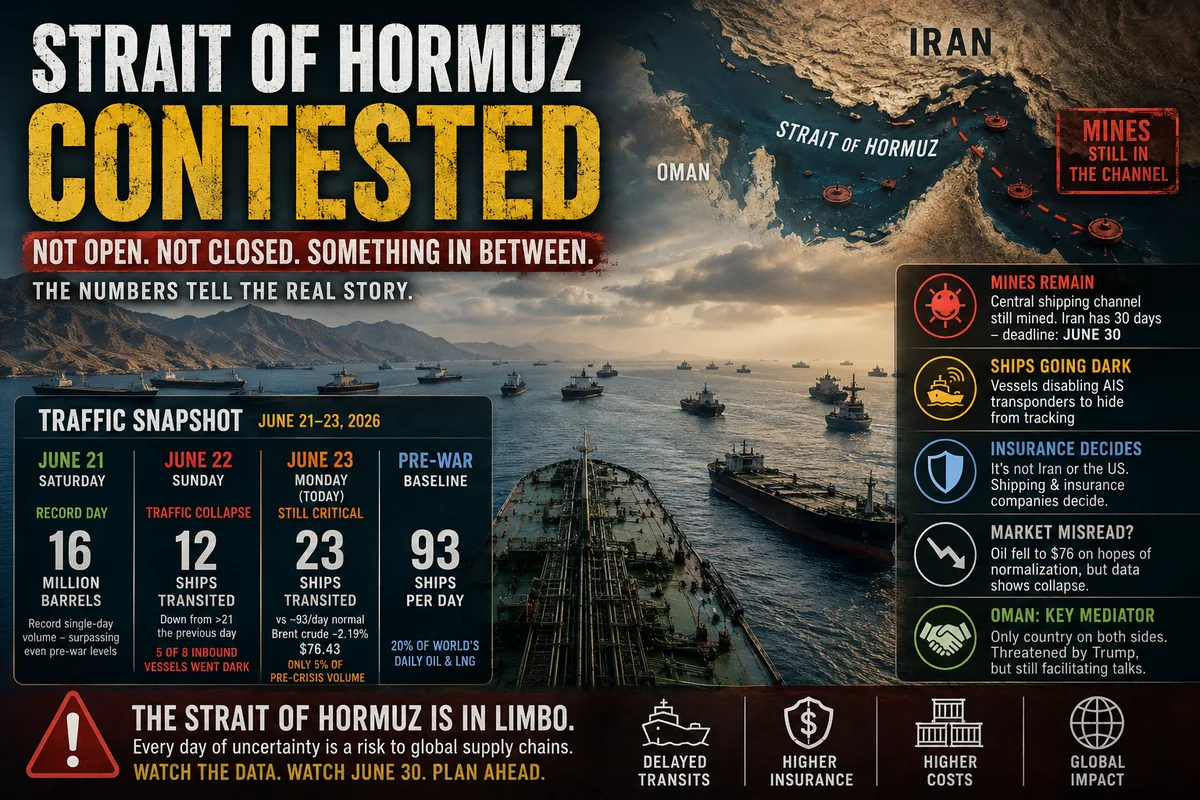
Numbers from June 21-23, 2026 show exactly what is happening in the Strait of Hormuz right now:
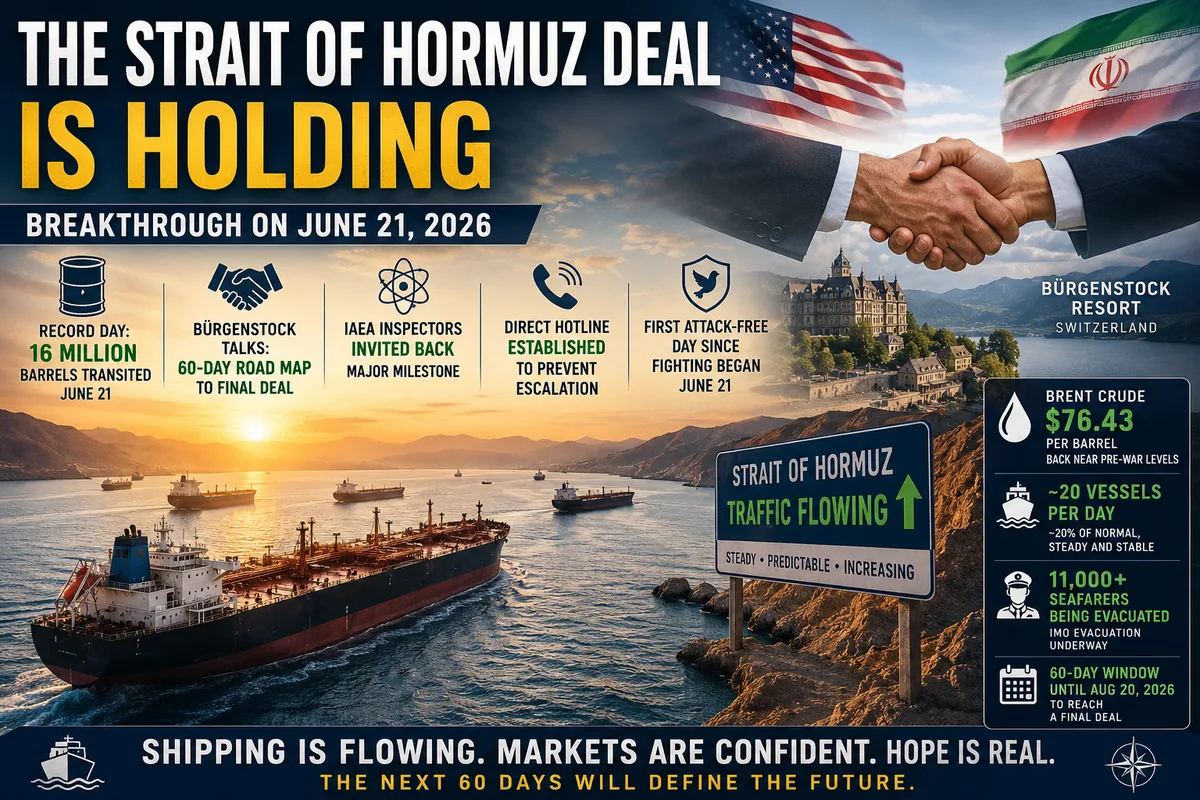
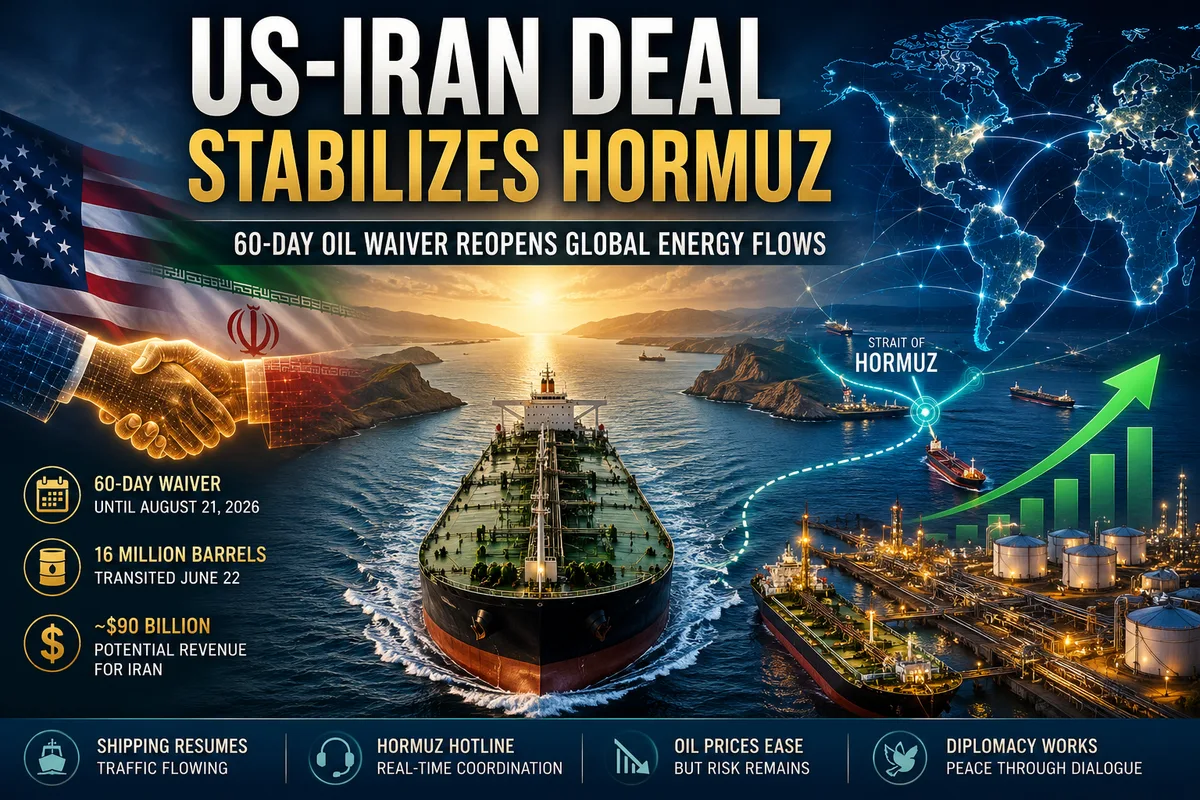
- June 21 (Saturday): VP Vance confirmed that 16 million barrels of oil transited the Strait of Hormuz on June 21 — a single-day record surpassing even pre-war volumes. Vance told Fox News: "That is a record going back to even before the conflict started."
- June 22 (Sunday): Traffic collapsed. According to maritime intelligence company Windward, only 12 ships transited the Strait of Hormuz on Sunday, down from more than 21 the previous day. Of the 8 inbound vessels, 5 had their AIS transponders disabled.
- June 23 (Monday — Today): Only 23 ships transited versus ~93/day normal. Brent crude fell -2.19% over 24 hours to $76.43. PortWatch reports only 5% of pre-crisis volume.
- Pre-war baseline: 93 ships per day. 20% of world's daily oil and LNG.
The story is in those numbers: a record-breaking day followed by a collapse. Not open. Not closed. Something in between. Contested.
What Actually Happened on June 21 to Cause That Record?
The record 16 million barrels on June 21 was not an accident. It was a deliberate surge of ships that had been waiting outside the strait.
When the Iran-US deal was signed on June 17 and the strait reopened on June 18, shipping companies started cautiously moving cargo through. But the June 20 Iranian "closure" announcement spooked everyone. Ships that were already committed to transiting — tankers that had been circling outside Hormuz for weeks — decided to rush through before another closure could be announced.
The result: Kpler reported that at least 20 tankers transited the Strait of Hormuz on Thursday (June 20), reflecting the highest level of traffic since June 2. And that surge continued into June 21, peaking at 16 million barrels total.
But this was a one-time release of pent-up demand — not a sustainable reopening. After the surge passed through, traffic stalled. Ships waiting outside the strait saw the Iranian announcement and decided: "Not worth the risk right now."
The Mines Are Still There
Here is a critical fact that is being downplayed in most news coverage: The central channel of the Strait of Hormuz is still mined.
When Iran closed the strait in February 2026, it deployed naval mines throughout the waterway. The June 17 deal required Iran to clear the mines within 30 days. But as of June 23, only a handful of mines have been cleared. The central shipping channel — where large container ships and tankers would normally transit — remains a minefield.
This is not theoretical. Ships navigating the Strait of Hormuz right now are either:
- Taking carefully plotted alternate routes around known mines (slower, less predictable)
- Going dark — turning off their AIS transponders to hide their position from Iranian tracking (unnerving for insurance companies)
- Waiting outside the strait for more clarity
Five of eight inbound vessels on June 22 were "dark," meaning they disabled their Automatic Identification System, or AIS, transponder to hide their location. Windward said: "The current traffic profile: dark, sanctioned, Iranian-linked, resembling the late-blockade baseline more than a functioning open strait."
The Iran-US Deal Is Vague About Who Decides If the Strait Is Open
This is the fundamental problem nobody in government is addressing clearly. The Memorandum of Understanding signed on June 17 says the Strait of Hormuz should reopen. But it is vague about two critical things:
1. What counts as a closure? Iran declared the strait closed on June 20. The US said it was open. Both claims are technically true — Iran made an official announcement, and ships are still moving through (albeit in much lower numbers). So is it closed or open?
2. Who decides? And here is the answer from actual shipping industry experts that governments are trying to ignore.
Gregory Brew, senior analyst at Eurasia Group, posted on X: "It's not Iran or the US who decide that the strait is open—it's shipping and insurance companies."
He is right. A government can declare the strait open, but if insurance companies refuse to cover transits and shipping companies refuse to send their vessels, the strait is functionally closed regardless of official declarations.
Right now, the insurance and shipping industries are sending a clear message: "We'll move cargo, but only at high risk premiums, in small volumes, and only when absolutely forced to."
Oil Prices Crashed (But Not Because the Deal Worked)
Brent crude fell from $98/barrel before the deal to $76.43 today — a dramatic drop. This has been celebrated as a sign the deal is working and the crisis is over.
But that interpretation misses what is actually happening.
Oil fell for one reason: The market priced in the assumption that the Strait of Hormuz would be permanently reopened and functioning normally. That one-day record of 16 million barrels on June 21 — higher than any pre-war day — convinced oil traders that supply is about to normalize.
But June 22-23 data is proving that assumption wrong. Only 5-12 ships per day are now transiting. That is 5-13% of pre-war normal. Oil prices should be rising again — not staying flat.
The reason they are not rising sharply is that traders are hoping this is temporary. "Once the mines are cleared and Iran cooperates, this will normalize," the thinking goes. But every day that passes with only 5-12 ships transiting is one day closer to the market repricing the risk higher again.
The Oman Question — Trump Threatened To "Blow Them Up"
There is a subplot to this story that reveals the chaos of the current situation.
Oman is the only country with territorial waters adjacent to both sides of the Strait of Hormuz. Oman has been the primary back-channel mediator between Iran and the US throughout this entire crisis — working through Qatar and Pakistan to keep negotiations alive.
But earlier this week, President Trump — apparently not understanding Oman's critical role — said in a Cabinet meeting: "Oman will behave just like everybody else, or we'll have to blow them up."
Treasury Secretary Bessent simultaneously threatened Oman with sanctions.
Oman's Foreign Minister immediately pushed back, maintaining that "significant progress" has been made in talks and that Oman remains committed to facilitating safe passage.
The confrontation was resolved within 24 hours after Oman provided assurances it would not toll the strait — but the fact that it even happened reveals the dysfunction in how the US government is managing this crisis. The key mediator country was being threatened by the President of the United States.
What Should Shippers Do Right Now?
- Do NOT assume the strait is normalized. Today's traffic of 5-12 ships is not a functioning open strait. It is barely 10% of normal. Budget for extended Cape of Good Hope routing through at least July.
- Watch June 30 carefully. That is the 30-day deadline for Iran to complete mine clearing. If mines are still being cleared on June 30, expect another round of market uncertainty and potential rate increases.
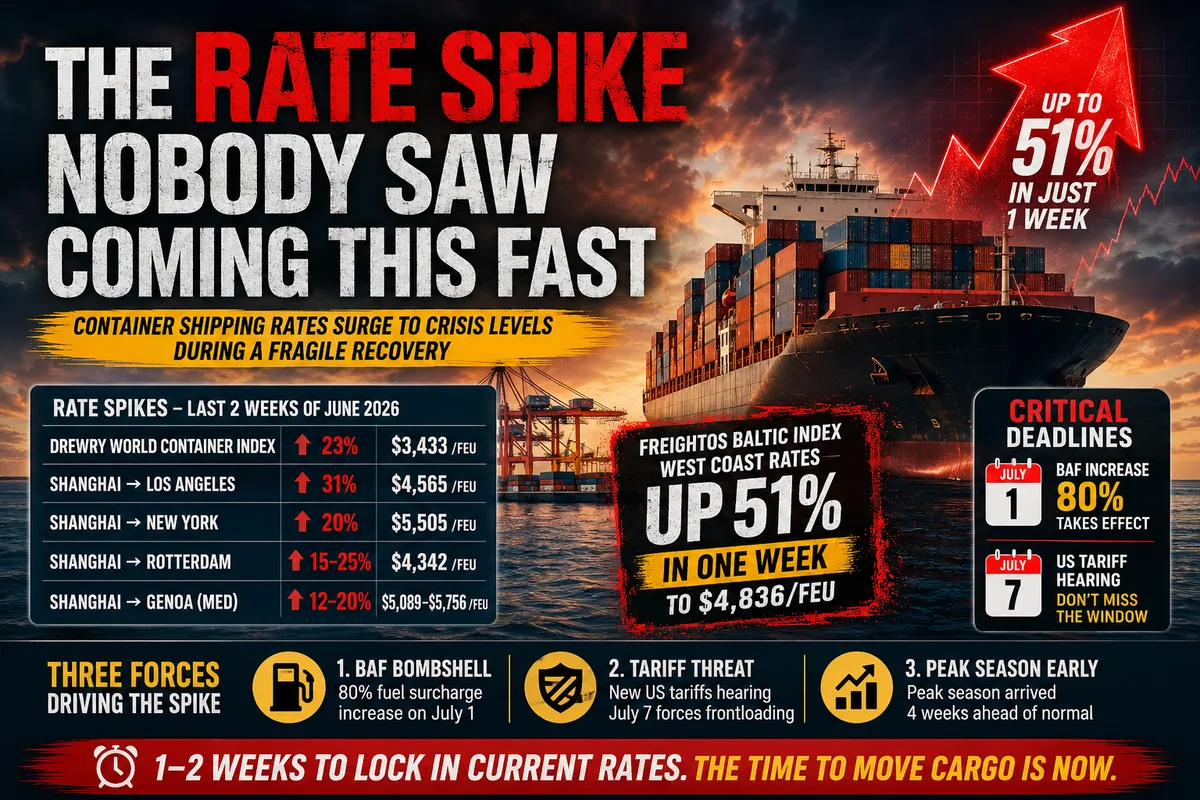
- Lock in committed capacity for July. Do not assume spot rates will be available at current levels if the deal falls apart again. Carriers will raise rates quickly if Iran re-announces a full closure.
- Insurance premiums are critical now. War-risk insurance for Hormuz transits is still elevated. Get firm quotes before booking any cargo through the strait. A 1-2% insurance premium on a $100,000 container is $1,000-$2,000 in added cost.
- The mines are real. If you are shipping via Hormuz, ensure your marine insurance explicitly covers mine strikes. Some policies exclude mine damage during "contested" situations like this.
Key Takeaways — June 24, 2026
- Iran officially closed Strait of Hormuz on June 20. US says it is open. Status = CONTESTED.
- Traffic spiked to record 16 million barrels on June 21 (pent-up demand release).
- Traffic collapsed to 5-12 ships on June 22-23 (5% of pre-war normal).
- Central shipping channel still contains uncleared naval mines.
- Shipping companies and insurance firms are deciding if the strait is usable — not governments.
- Brent crude fell to $76 because market believes strait will normalize, but current data contradicts that.
- Oman — the key mediator — was threatened by Trump but still facilitating talks.
- 30-day mine-clearing deadline is June 30. Watch that date carefully.
The Strait of Hormuz is neither open nor closed. It is in limbo. And that limbo is more dangerous for global shipping than a clear closure would be, because it creates false hope followed by inevitable disappointment. Every cargo routed through Hormuz right now is a bet that the next 7 days will see consistent traffic rather than another collapse. The shipping companies making that bet are brave — or desperate. Right now, it is not clear which.

Comments
No comments yet. Be the first to share your thoughts!