The Breakthrough That Saved the Deal
For three days — June 20, 21, and 22 — the US-Iran deal looked like it was collapsing. Iran announced the strait was closed. Israel continued attacking Lebanon. Negotiations were stalled. The global shipping industry was bracing for another months-long closure crisis.
And then, on June 22, 2026, something shifted.
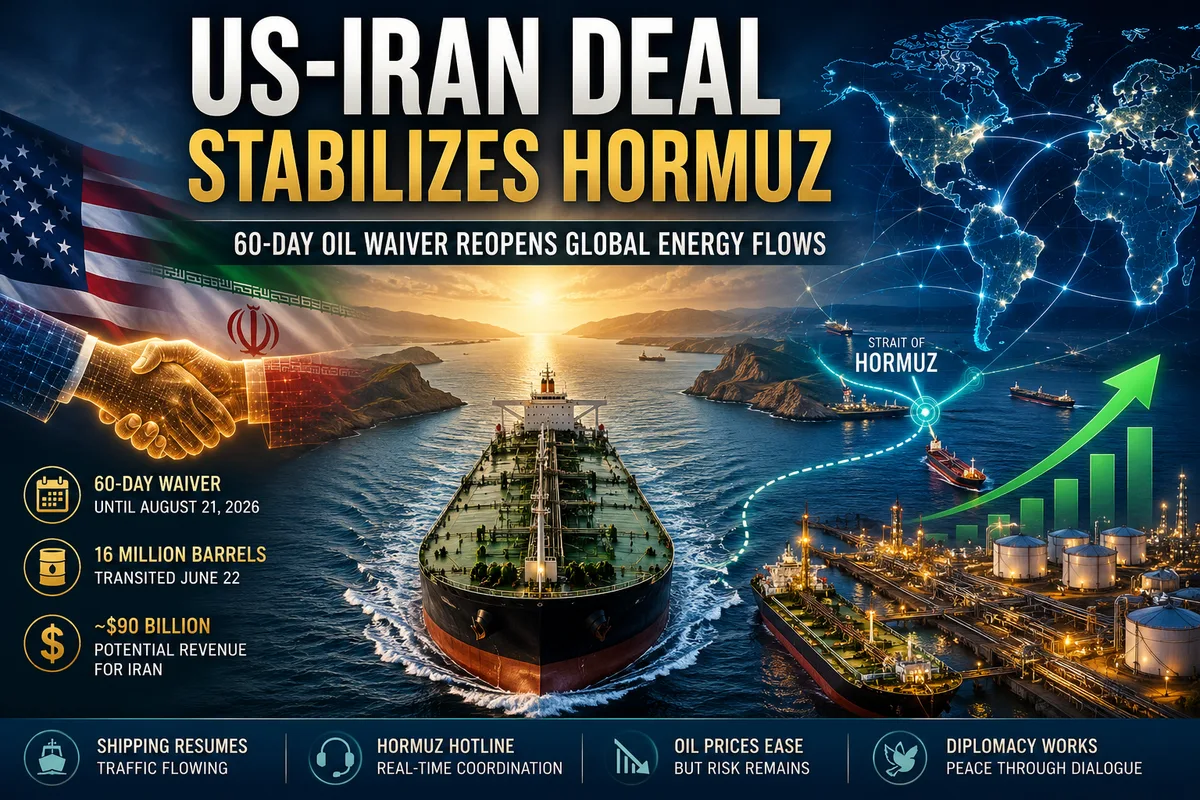
The US Treasury Department issued a temporary 60-day general license authorizing the production, delivery, and sale of Iranian oil to nearly every country on Earth — including the United States.
US Treasury Secretary Scott Bessent announced it publicly: "Iran has committed to free and open transit in the Strait of Hormuz. As part of the framework, Treasury has issued a temporary 60-day general license authorizing the production, delivery and sale of Iranian oil."
This is a massive economic concession to Iran — and it is working.
What This Oil Waiver Actually Means — The Numbers
Iran has been under strict US oil sanctions since 2018. When the US-Iran war began in February 2026, those sanctions were reinforced and expanded. Iran's oil exports fell to near zero.
This new 60-day waiver — effective until August 21, 2026 — changes everything. It allows:
- Production of Iranian oil: Oil fields can operate and pump at full capacity
- Delivery of Iranian oil: Tankers can load and transport without fear of US seizure
- Sale of Iranian oil: To virtually every country except Israel and a handful of US-sanctioned regimes
- Direct sales to the US: For the first time since 2018, Iranian oil can be sold directly to American refineries
Iran's oil production capacity is roughly 4 million barrels per day. If Iran can export even half of that during the 60-day waiver period — 2 million bpd — that represents approximately $90 billion in revenue (at $75-80 per barrel).
$90 billion is roughly equivalent to Iran's entire annual government budget. This waiver is an economic lifeline for Iran's sanctioned economy.
The Strait of Hormuz "Telephone Hotline" — What It Actually Does
In exchange for the oil sales waiver, Iran made a commitment to manage the Strait of Hormuz safely and transparently.
Iran's chief negotiator, Mohammad Bagher Ghalibaf, announced: "We have reached an agreement to establish coordination mechanisms — a telephone hotline and a center. If any ambiguity or issue arises, ships can contact that center."
This is practical. Here is what it means in real terms:
- Direct communication line: Ship captains and maritime companies can contact an Iranian operations center in real time if they encounter problems
- Rapid problem resolution: Instead of assumptions and escalation, real-time coordination can solve issues before they become crises
- Transparency: Iran commits to explaining maritime actions so shipping companies understand what is happening
- Accident prevention: The hotline is designed specifically to prevent the kind of ship-boarding, harassment, and attacks that escalated the crisis earlier
Ghalibaf also made an important statement about how Iran views the strait: "The strait will be managed under Iranian arrangements and never return to what it was before the war. Iran will implement international laws precisely and act quickly to resolve any problems."
This is Iran signaling that while the strait will be open, Iran will be a more active manager of it going forward — not just allowing free passage, but actively controlling traffic and coordinating with international shipping.
The Real Test: 16 Million Barrels Transited on June 22
The most important proof that something has changed is the actual shipping data.
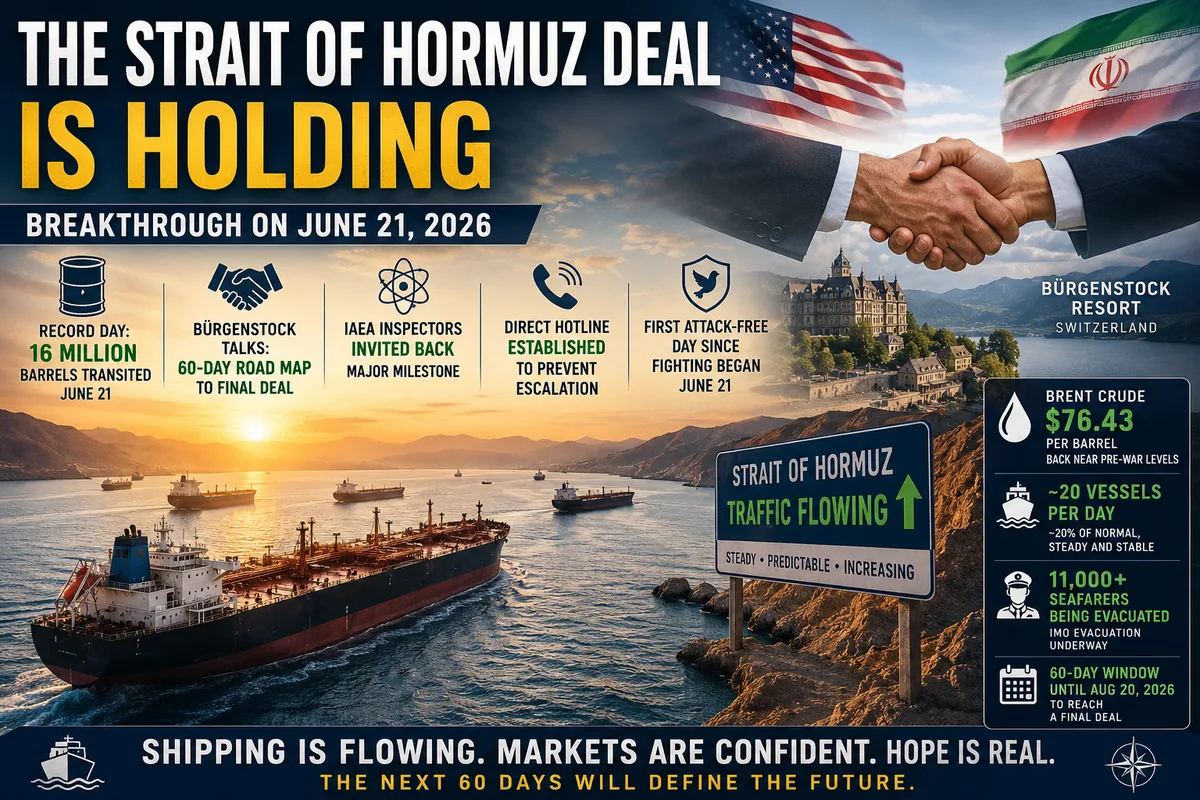
VP Jared Vance announced: "We actually got 16 million barrels of oil out of the Strait of Hormuz yesterday. That is a record going back to even before the conflict started."
Let that number sink in. 16 million barrels in a single day. That is extraordinary. Pre-war, the strait moved roughly 20-25 million barrels per day total. Vance is saying that oil shipments alone hit 16 million — which is 64-80% of normal traffic levels.
This happened after Iran's military had announced the strait was closed. Yet traffic increased dramatically on the same day.
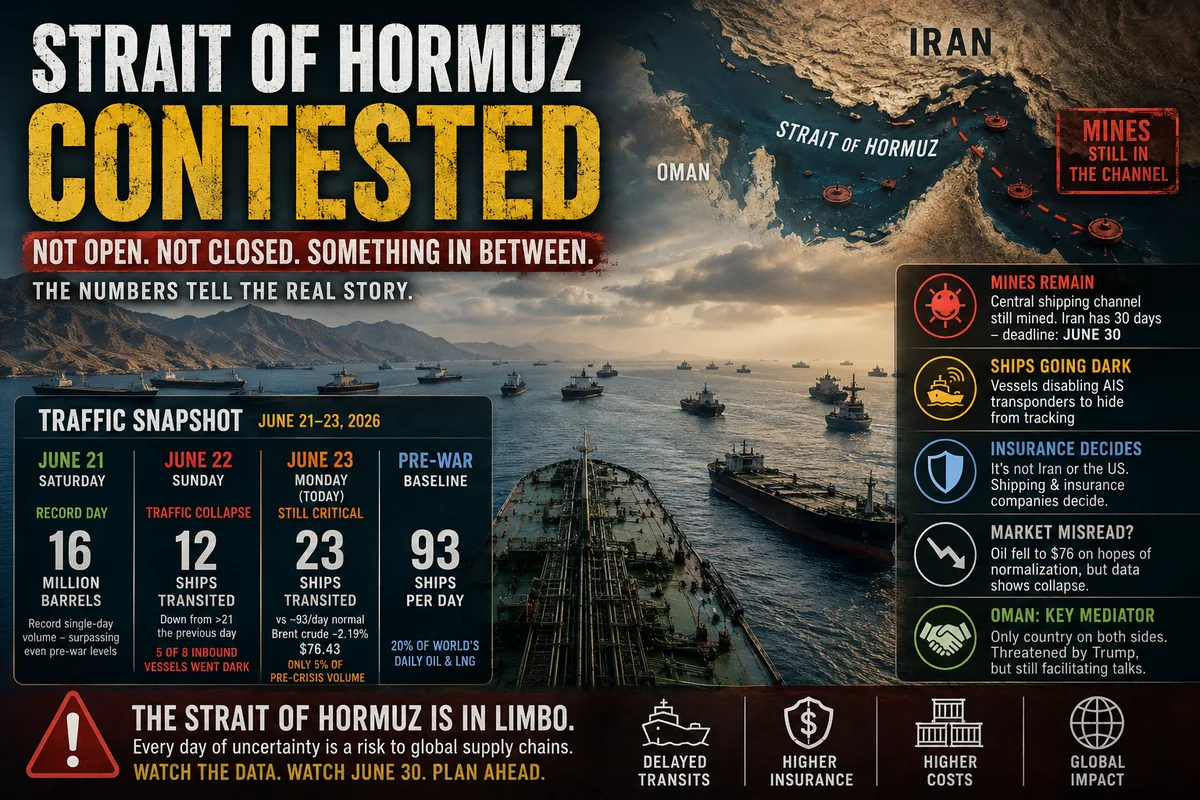
Why? Because the hotline is working. Shipping companies are communicating with Iranian authorities. Iran is allowing traffic through. The physical mines are still there — but the political and military barriers have dropped enough that tankers are moving again.
Oil Prices Are Falling — But Not Enough
With 16 million barrels flowing and a 60-day oil sales waiver now in place, you would expect oil prices to fall sharply.
And they did — but only partially.
- June 21: Brent crude trading at $82.35/barrel
- June 22: Brent crude falls to $78.17/barrel — down 4.34%
- Change from pre-crisis: Still $8-15 above the pre-February levels of $65-70/barrel
Why has oil not fallen back to pre-war levels? Because the market is still pricing in political risk. The deal is only 60 days old. The waiver expires August 21. Lebanon is still a flashpoint. Israel has not committed to the ceasefire.
Oil markets are thinking: "Good — traffic is flowing. But we are still 50 days away from uncertainty. Hold the premium."
The Three Working Groups — What They Are Negotiating
The talks in Switzerland — happening right now, June 22-23 — have been organized into three technical working groups:
1. The Nuclear File
Iran will lower its uranium enrichment levels instead of shipping uranium stockpiles out of the country. The US wants Iran's enrichment capability reduced to "effectively impossible" to rebuild a nuclear weapon. Three technical working groups are hammering out the details.
2. Frozen Assets and Sanctions Relief
How much of Iran's $200+ billion in frozen assets abroad can be unfrozen? How many sanctions can be lifted? This working group is negotiating the economic terms of the deal.
3. Lebanon and Regional Ceasefire
The hardest issue. Iran insists that fighting between Israel and Hezbollah must stop as a precondition for a permanent deal on the strait and nuclear issues. Israel says it is not bound by the ceasefire. Pakistan and Qatar are mediating.
What Should Shippers and Freight Forwarders Do Right Now?
- Traffic is flowing — but assume risk remains. The hotline is working and Iran is letting oil through. But the strait is still not "normal." Assume that 50% of capacity is the reliable baseline right now.
- Start planning Hormuz routing — but keep Cape as backup. With 16 million barrels transiting daily, some carriers will begin testing Hormuz routes again. But keep your Cape of Good Hope routing operational as insurance against escalation.
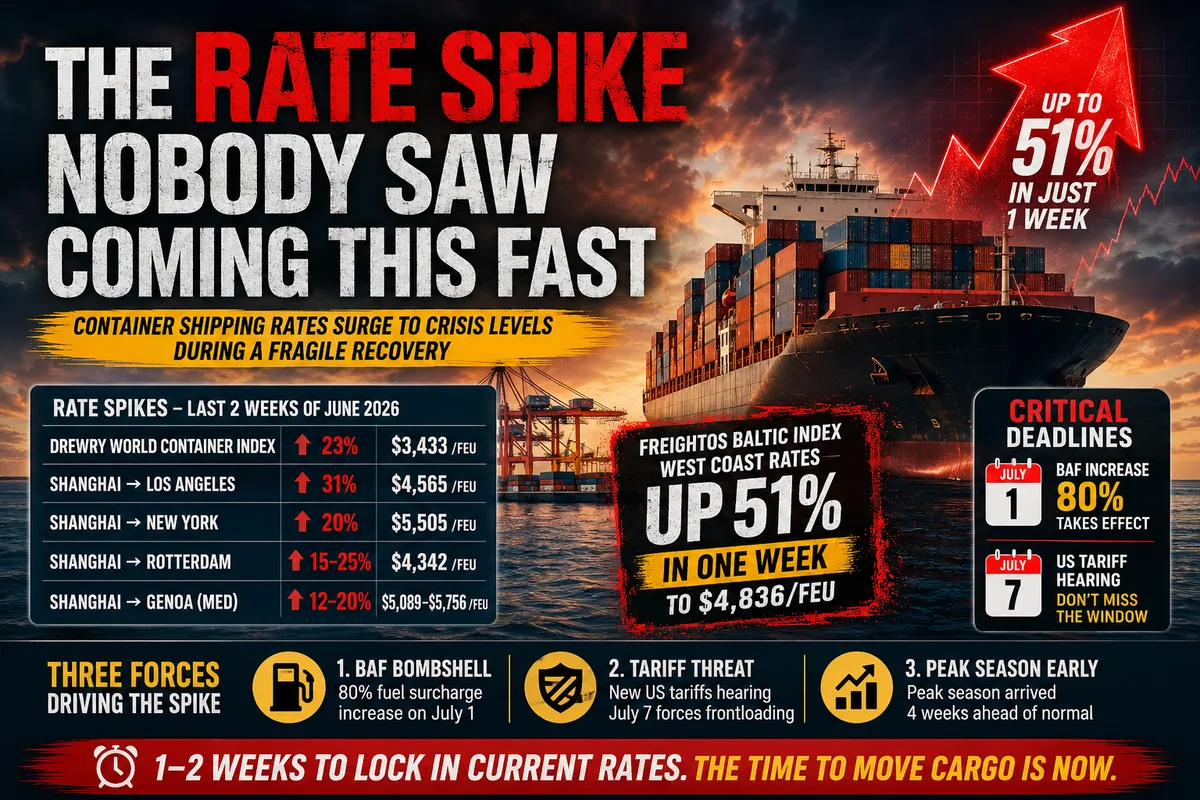
- Oil prices have room to fall further. If the deal holds through August 21 and Lebanon remains quiet, Brent could fall to $70-75/barrel. This would reduce fuel surcharges by another 5-10%. Plan for this as upside.
- Watch August 21 very carefully. The 60-day oil waiver expires August 21. If negotiations have not reached a final permanent deal by then, the waiver could expire and oil sanctions could snap back. This is a major political and economic cliff.
- Monitor Lebanon ceasefire compliance daily. The Lebanon fighting is the trigger that could collapse the entire deal. If Israel or Hezbollah escalates significantly, expect Iran to use the Hormuz hotline closure threat as leverage. This is the single biggest risk to shipping stability.
Key Takeaways — June 22-23, 2026
- US Treasury issued 60-day oil sales waiver for Iran — effective until August 21, 2026.
- Iran can now sell oil to nearly every country including the US — worth approximately $90 billion over 60 days.
- Iran agreed to Strait of Hormuz "telephone hotline" for real-time coordination with shipping companies.
- 16 million barrels of oil transited on June 22 — record traffic levels and highest since pre-conflict.
- Brent crude fell to $78.17/barrel — still $8-15 above pre-war levels due to ongoing political risk.
- Three technical working groups negotiating: nuclear file, frozen assets, Lebanon ceasefire.
- 60-day window until August 21 — major cliff date if deal is not finalized by then.
- Lebanon remains the single biggest risk to deal stability — ceasefire violations could trigger strait closure again.
The US-Iran deal is not saved — but it is stabilizing. Iran is getting economic relief. Shipping is flowing. The hotline is working. Oil prices are falling. But this is a 60-day house built on fragile foundations. Every ceasefire violation in Lebanon, every political shift in Israel, every nuclear negotiation dispute could trigger another crisis. The next 60 days will determine whether this becomes a real peace — or just a temporary pause before another Hormuz closure. Every shipper and freight forwarder needs to watch August 21 on their calendar.

Comments
No comments yet. Be the first to share your thoughts!