What Just Happened?
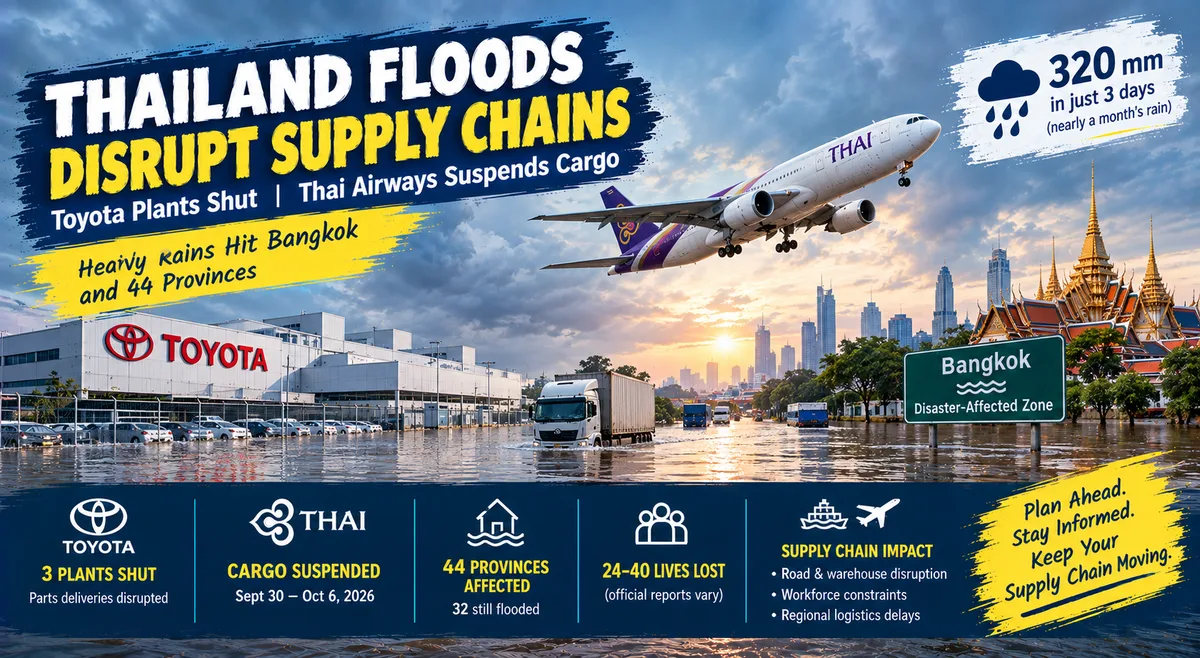
Floods in Thailand have caused the temporary shutdown of four Toyota plants and suspension of cargo operations of flag carrier Thai Airways International (THAI), the companies confirmed on Wednesday, September 30, 2026.
The capital Bangkok was declared a disaster-affected zone after it was hit with heavy rainfall of 320 millimetres (12.6 inches) in just three days late last week — nearly as much rain as the city typically receives in all of September combined.
Before addressing the supply chain impact, it's important to acknowledge the human toll: at least 24 people have been killed in the flooding, according to Thailand's interior ministry, with 44 of the country's 77 provinces affected and flooding still prevalent in 32 of those provinces as of Wednesday. A government spokesperson separately cited health ministry figures putting the death toll at 40.
How Is Toyota Affected?
Flooding has disrupted parts deliveries to Toyota's Thai unit, which has suspended operations at three plants and a facility at its joint venture Toyota Auto Works, a Toyota spokesperson said. The company added that it was coordinating with suppliers to restore deliveries and restart operations as soon as possible.
Thailand is one of Toyota's most important manufacturing hubs outside Japan, serving as both a major domestic production base and a regional export platform across Southeast Asia. Plant shutdowns here don't just affect the local Thai market — they can ripple into export schedules and parts supply chains that feed vehicle assembly operations elsewhere in the region.
How Is Thai Airways Cargo Affected?
Thai Airways said many of its employees were unable to travel to work, and the airline has stopped accepting inbound and outbound cargo from Wednesday through to October 6, adding that those services would resume as soon as possible.
This is a significant window — roughly a full week — during which one of Southeast Asia's major flag carriers will not be handling air cargo. Thai Airways operates extensive cargo routes connecting Bangkok's Suvarnabhumi Airport to destinations across Asia, Europe, and beyond, making this suspension relevant well beyond Thailand's own borders.
What Does This Mean for Freight and Logistics in the Region?
Bangkok Post reported that passengers were seen queuing to claim baggage from Thai Airways flights at Suvarnabhumi International Airport as heavy rain and flooding disrupted the airline's ground operations — a visible sign of how deeply the flooding has affected day-to-day airport functioning, not just the cargo side of operations.
Beyond Toyota and Thai Airways, this level of flooding across 44 provinces typically has broader knock-on effects for regional logistics:
- Road transport disruption. Widespread flooding across dozens of provinces almost always means damaged or impassable roads, affecting trucking and inland distribution well beyond the directly reported companies.
- Warehouse and inventory risk. Facilities in flood-affected provinces may face water damage risk to stored goods, requiring urgent contingency planning from any company with warehousing in the affected regions.
- Workforce availability. As Thai Airways itself noted, employees being unable to travel to work is a direct operational constraint — this likely affects other logistics operators, ports, and manufacturers across the affected provinces, not just the two companies named in today's reports.
- Airport ground operations strain. Disruption to ground operations at Suvarnabhumi, one of Southeast Asia's busiest airports, can create ripple effects for connecting cargo and passenger flights well beyond Thai Airways' own network.
What Should Shippers and Freight Forwarders Do Right Now?
- Check any air cargo bookings through Thai Airways immediately. With cargo acceptance suspended through October 6, confirm alternative routing or carriers for any time-sensitive shipments currently planned through Bangkok.
- Contact suppliers with Thai manufacturing exposure. If your supply chain includes Toyota-sourced components or parts from suppliers in the affected provinces, reach out directly to understand expected delay timelines, since Toyota has said it is still coordinating with suppliers on restart timing.
- Build buffer time into Thailand-origin shipments. With flooding still active in 32 provinces as of Wednesday, treat any near-term shipment timelines from Thailand as uncertain and add contingency time where possible.
- Monitor for wider automotive and electronics supply chain effects. Thailand is a significant regional hub for both automotive parts and electronics manufacturing. Even companies without direct Toyota or Thai Airways exposure should watch for second-order effects on shared supplier networks or shared logistics infrastructure.
- Watch the October 6 resumption date closely. Both companies have said services will resume "as soon as possible," but Thai Airways has set October 6 as its cargo suspension end-date. This is worth tracking closely, as extended flooding could push that date further out.
Key Takeaways — September 30, 2026
- Severe flooding in Thailand has forced Toyota to shut three plants and a joint-venture facility due to disrupted parts deliveries.
- Thai Airways has suspended all inbound and outbound cargo operations from September 30 through October 6, 2026.
- Bangkok received 320mm of rain in just three days — nearly a full month's typical rainfall in less than a week.
- 44 of Thailand's 77 provinces have been affected, with flooding still active in 32 provinces as of Wednesday.
- The flooding has tragically claimed at least 24-40 lives, according to different official sources.
- Toyota is coordinating with suppliers to restore parts deliveries and restart operations as soon as possible.
- Shippers with Thailand-origin cargo or Thai Airways bookings should confirm alternative arrangements immediately.
- Watch the October 6 target resumption date for further updates, as continued flooding could extend disruption.
This is a fast-developing situation with real human and economic impact across Thailand. For the logistics industry, the immediate priority is practical: confirming cargo routing, checking in with Thai suppliers, and building flexibility into shipment timelines until normal operations resume. We will continue monitoring this story as it develops.
Comments
No comments yet. Be the first to share your thoughts!