What Was Just Announced?
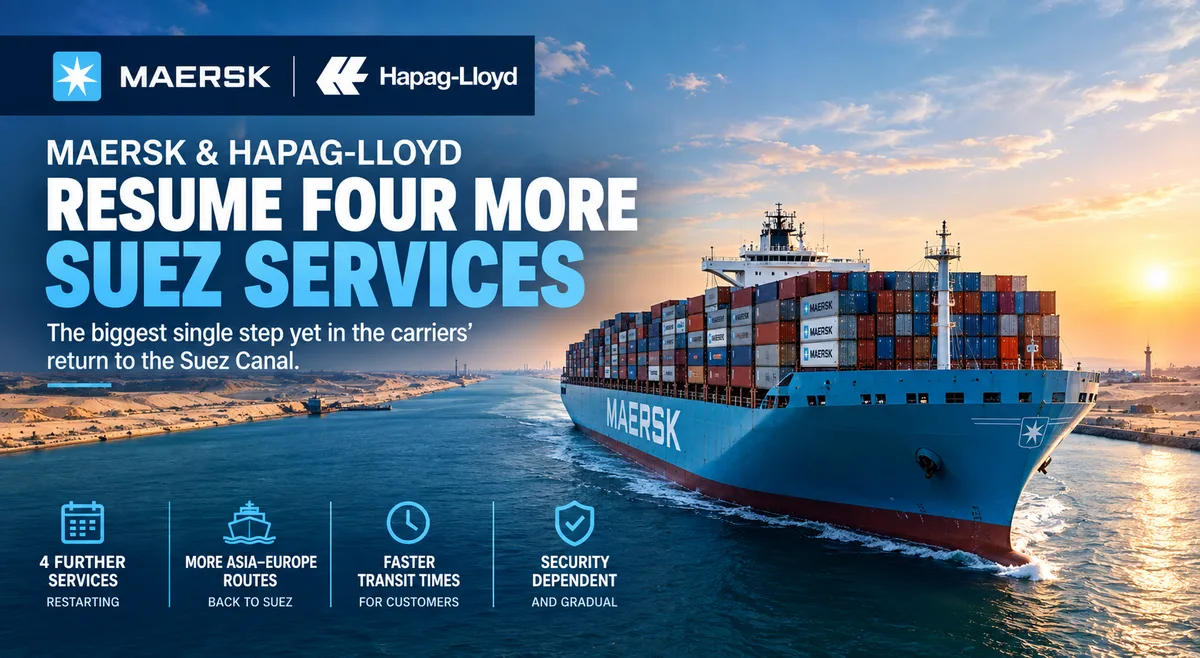
On Monday, September 14, 2026, Maersk announced it will resume four further container services with Germany's Hapag-Lloyd through the Suez Canal, as the two carriers continue their gradual return to using the shortcut between Asia and Europe.
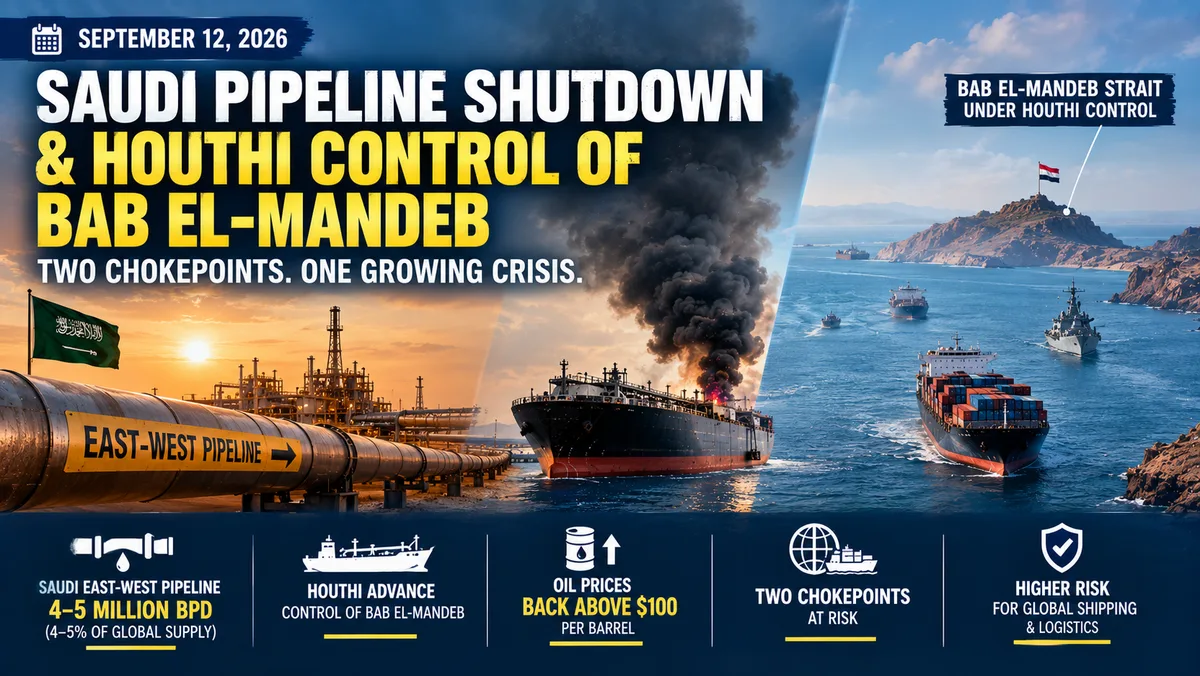
This is the latest — and largest single — step yet in a return journey that has been unfolding carefully, service by service, since early summer. The Asia-Europe trade corridor through the Suez Canal was abandoned by most shippers earlier this decade after attacks in the Red Sea by Yemen's Houthis, forcing ships to take the much longer trip around Africa's Cape of Good Hope.
Adding four services at once represents a meaningful acceleration compared to the single-service moves the carriers had been making in previous months.
The Full Timeline: How We Got Here
This announcement did not happen overnight. It is the result of a careful, months-long process of testing the waters — literally. Here is the complete timeline of the Gemini Cooperation's return to Suez:
- Early July 2026: Maersk and Hapag-Lloyd announced they would resume a service connecting Asia, the Mediterranean, and Europe through the Suez Canal — the AE15 service, which calls at Qingdao, Kwangyang, Ningbo, Tanjung Pelepas, Port Said, Damietta, Colombo, and Singapore. This was the first structural change back to the trans-Suez corridor, with the first sailing undertaken by the vessel Majestic Maersk.
- Also in early July: Maersk separately confirmed a Middle East-to-US East Coast service would make the same switch back to Suez routing.
- August 10, 2026: A further Gemini Cooperation service — the AE19, connecting Asia, the Mediterranean, Saudi Arabia, and Europe — made the switch, beginning with the westbound voyage of the Berlin Maersk. Hapag-Lloyd told media the AE19 switch was expected to save around four weeks compared with sailing around the Cape of Good Hope, but described it as "a targeted adjustment for one selected service, not a general network-wide return."
- September 14, 2026 (today): Maersk confirmed four further services will now transition back to the Suez Canal — the most significant single expansion of the return so far.
Why Are They Moving So Cautiously?
The step-by-step approach is deliberate. Each time Maersk and Hapag-Lloyd have made a routing change, they have emphasized that the decision followed careful assessment of Red Sea security conditions — not a blanket policy shift.
When the AE19 service returned in August, Hapag-Lloyd was explicit that any further routing decisions would depend on security conditions, whether the route remained operationally viable, and the broader impact on the network — not a predetermined schedule.
This caution comes from hard experience. Carriers have previously attempted returns to the Red Sea only to have to reverse course when security conditions deteriorated again. As one shipping executive put it in earlier commentary on the situation: "You can't just flip flop" — once a return is announced and then reversed, it damages customer trust and operational planning far more than staying the cautious course.
Why Does the Suez Route Matter So Much?
The difference between the Suez Canal route and the Cape of Good Hope alternative is not small — it is one of the most significant routing decisions in global shipping.
Maersk itself has described the calculus clearly: "The route through the Suez and the Red Sea is the fastest, most sustainable and most efficient way to serve customers with transport between Asia and Europe." The AE19 service switch alone was expected to save around four weeks compared with the Cape of Good Hope routing.
For context, the Cape of Good Hope diversion has meant:
- Longer transit times — typically adding 10-14 days or more to Asia-Europe voyages
- Higher fuel costs — the longer route burns significantly more bunker fuel per voyage
- More vessels needed per service — to maintain the same weekly frequency over a longer route, carriers need additional ships in rotation
- Reduced capacity efficiency — ships spend more time at sea and less time available for additional voyages
Every service that returns to Suez immediately recovers these efficiencies — which is exactly why carriers are motivated to return as security conditions allow, while remaining careful not to move faster than safety permits.
What About the Wider Middle East Security Picture?
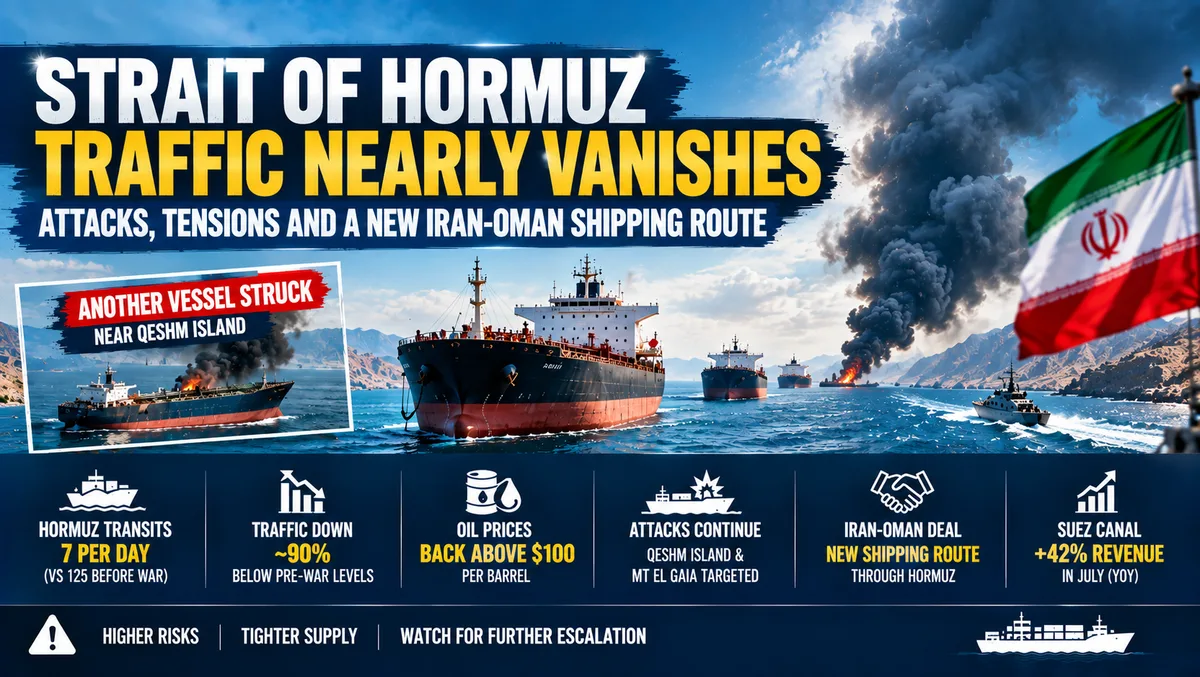
The gradual Suez return is unfolding against a backdrop of continued regional uncertainty. Elsewhere in the Middle East, the Strait of Hormuz situation has remained a parallel and separate concern — Iran has at various points indicated progress on arrangements with Oman regarding shipping routes, though conditions tied to the United States have remained unresolved.
It's an important distinction for shippers to keep in mind: the Suez Canal and Red Sea security situation (driven primarily by Houthi activity) is a separate risk factor from the Strait of Hormuz and Gulf situation (driven by the Iran-US conflict). Progress or setbacks in one region do not necessarily reflect conditions in the other.
What Does This Mean for Shippers Right Now?
- Check if your specific service is affected. With four additional services switching today, on top of AE15 and AE19 earlier this year, shippers should confirm with Maersk or Hapag-Lloyd directly whether their particular Asia-Europe booking is now routing via Suez or still via Cape of Good Hope.
- Expect faster transit times on affected lanes. Services switching back to Suez will see meaningfully shorter transit times — potentially several weeks faster — which should be reflected in updated delivery schedules.
- Watch for capacity and rate effects. As more capacity returns to the shorter Suez route, the effective supply of vessel capacity on Asia-Europe trades increases (since ships complete more round trips per year on the shorter route). This has historically put downward pressure on freight rates as the return progresses.
- Do not assume full stability. Both carriers have been explicit that any of these routing decisions can be reversed if Red Sea security conditions deteriorate. Build contingency awareness into your logistics planning rather than assuming the Suez return is now permanent and irreversible.
- Monitor for further announcements. Given the pace of this return — from single services in July to four services announced in one day in September — further expansion of Suez routing across the wider Gemini Cooperation network appears increasingly likely if security conditions continue to hold.
Key Takeaways — September 14, 2026
- Maersk announced today it will resume four further container services with Hapag-Lloyd through the Suez Canal.
- This builds on earlier returns: the AE15 service in early July, and the AE19 service in August 2026.
- The AE19 switch alone was expected to save around four weeks of transit time versus the Cape of Good Hope route.
- Both carriers emphasize this remains a security-dependent, gradual process — not a full network-wide return.
- The Suez/Red Sea security situation is separate from the ongoing Strait of Hormuz/Iran-US situation.
- Shippers should confirm routing status for their specific Asia-Europe services directly with carriers.
- Faster transit times and potential rate pressure are expected as more capacity shifts back to the shorter route.
- Further expansion of Suez routing remains likely if security conditions continue to hold, but reversal remains possible.
Today's announcement marks the most significant single step yet in the shipping industry's long, careful journey back to the Suez Canal. What started as a single cautious service switch in July has now grown to include multiple major Asia-Europe routes just two months later. For shippers, the direction of travel is increasingly clear — but as both Maersk and Hapag-Lloyd continue to stress, every step remains conditional on the security situation holding in the Red Sea.
Comments
No comments yet. Be the first to share your thoughts!