
How Bad Has It Gotten?
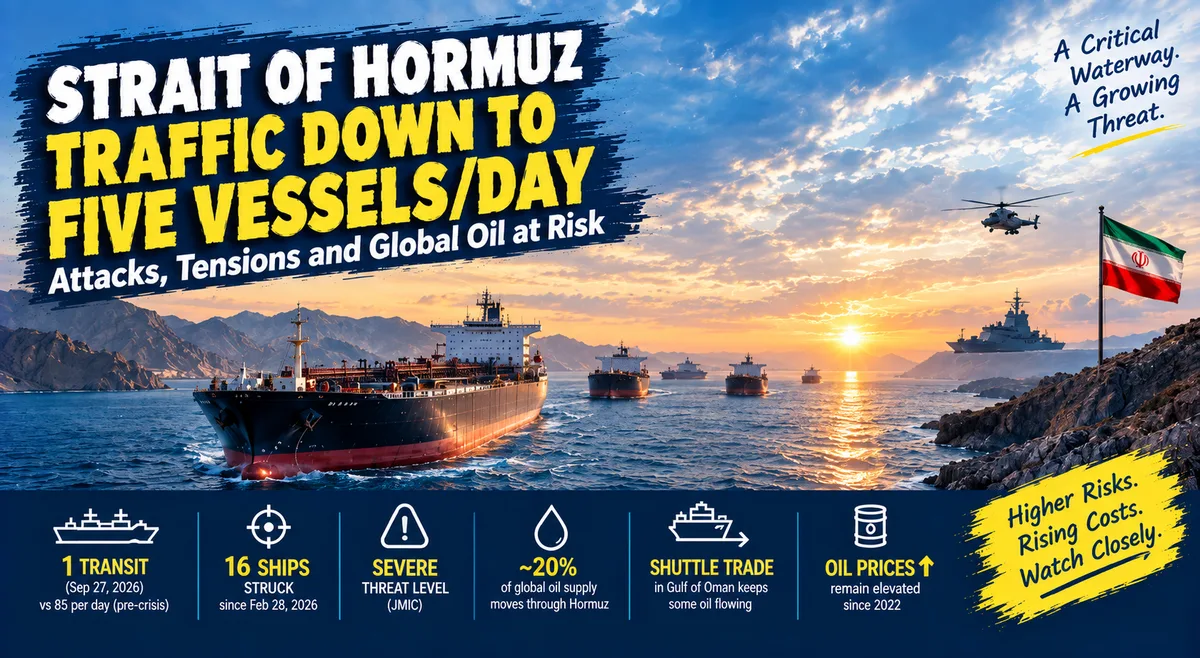
Shipping in the Gulf and along the narrow Strait of Hormuz, which carries around a fifth of the world's oil, has come to a near-standstill since the US and Israel began strikes on Iran on February 28, sending global oil prices surging to highs not seen since 2022.
The numbers confirm just how severe this has become. IMF PortWatch recorded just 1 transit on September 27, 2026, against a pre-crisis baseline of 85 transits per day. As of early October, 147 AIS-visible vessels were holding position away from berth in the Strait of Hormuz and Gulf watch box — a count that does not even include ships within 25km of a working port.
In other words, a waterway that used to see 85 ships pass through daily is now seeing, on some days, essentially none.
A Wave of Fresh Attacks This Week
The past several days have brought a renewed and intense wave of attacks on commercial vessels in and around the strait:
- September 28-29: Four tankers struck in a 24-hour period, with inbound and outbound vessels both hit by unknown projectiles.
- October 1: A tanker was struck by an unknown projectile at approximately 1750 UTC, causing a fire. A separate report described a Kuwaiti VLCC (very large crude carrier) on fire. The crew was reported safe.
- October 3-4: At least two more vessels were struck over the weekend in waters near Oman and Iran — one crude oil tanker hit four nautical miles east of Oman, and another struck in the Strait of Hormuz itself, with the projectile damaging the tanker's engine room. Crews on both vessels were reported safe.
The Joint Maritime Information Center (JMIC) counted four confirmed attacks or disruptions in the strait over a 96-hour period in early October alone, and has maintained the regional threat level at SEVERE, warning that deliberate attacks on commercial shipping remain highly likely under current conditions.
Taken together, at least 16 ships have now been struck in the region since the war began on February 28 — a number that continues climbing week by week.
Why Won't Iran Reopen the Strait?
Tehran reiterated its position this weekend that the Strait of Hormuz would not reopen unless its conditions for ending the war with the US are met. Iranian Parliament Speaker Mohammad Bagher Ghalibaf said: "The Strait of Hormuz will not open until Iran's seven conditions based on the Islamabad Memorandum are met, and Iran will not regulate its national security with tweets from American officials."
Separately, Iranian lawmakers have advanced legislation to formally declare full control over the Strait of Hormuz — a move the Trump administration has firmly rejected, along with Tehran's current demand that all commercial vessels seek Iranian permission before transiting.
Iran's Revolutionary Guards (IRGC) have separately warned that any ship passing through the strait will be targeted, and the latest JMIC assessment noted continued IRGC activity including drone overflights, targeted surveillance of merchant shipping, and VHF radio hailing of passing vessels.
Is Anyone Still Moving Oil Through the Region?
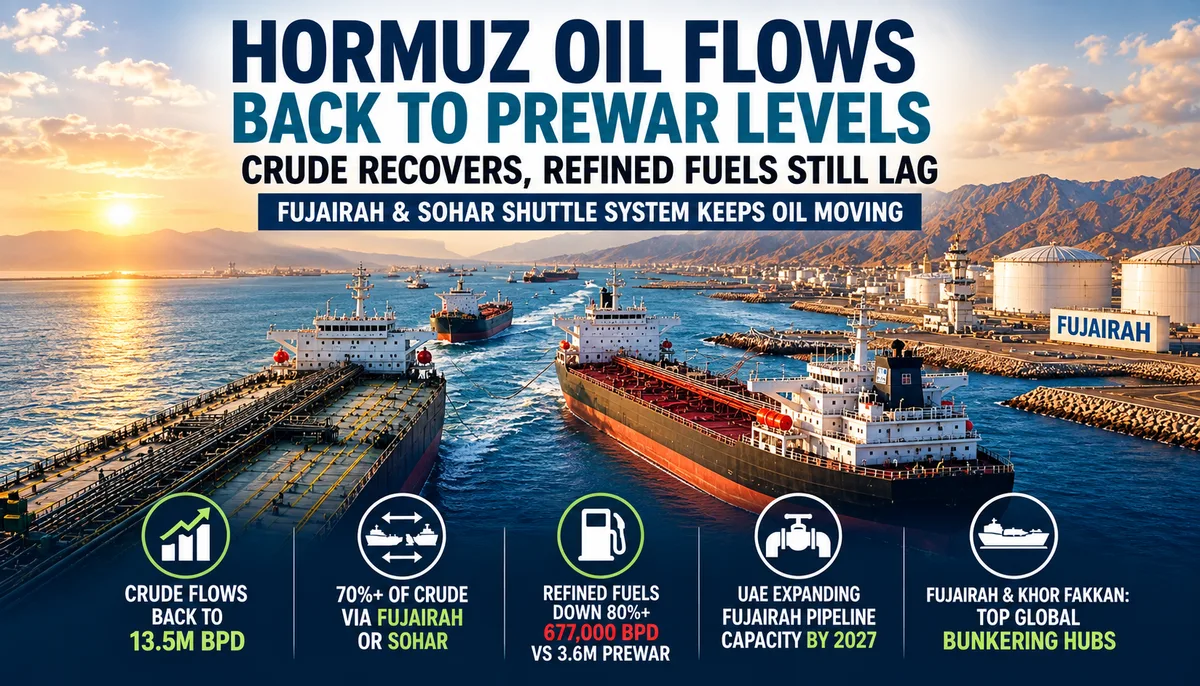
Despite the near-total halt in direct Hormuz transits, oil is still reaching global markets through alternative means. The vessels that do move largely operate on a shuttle trade — a pattern we first reported on in August, where tankers transit the strait quietly to conduct ship-to-ship transfers out in the Gulf of Oman, away from the most dangerous waters.
One industry estimate suggests Middle East crude exports have recovered to roughly 80% of pre-war levels through this shuttle system and alternative routing — though this figure comes from a single financial data outlet and has not been independently verified by multiple sources.
What Is the US Military Response?
The US has been steadily increasing its military posture in the region. Reports indicate the US has moved approximately 2,000 Marines to the Middle East, and senior Trump administration officials met at Camp David this weekend specifically to discuss the Iran war situation.
However, one detail stands out for the shipping industry specifically: the US Navy has refused near-daily requests from the shipping industry for military escorts through the Strait of Hormuz since the start of the war, with sources familiar with the matter telling Reuters that the risk of attacks is considered too high for now.
This is a significant point for ship operators to understand — even as the US expands its broader military presence in the region, direct naval escort protection for individual commercial vessels transiting Hormuz is not currently being provided.
What Does This Mean for Global Oil and Freight Markets?
With approximately one-fifth of the world's oil supply normally moving through this single waterway, the near-total halt in direct transits has kept global oil prices elevated well above pre-war levels, with the February price surge reaching highs not seen since 2022.
For the broader logistics industry, this connects directly to several trends we have tracked throughout the year: elevated fuel surcharges across ocean and air freight, the dark tanker shuttle trade that has helped prevent an even more extreme price spike, and the general pattern of Gulf-based shipping lines rerouting away from direct Hormuz transits wherever operationally possible.
What Should Shippers, Charterers, and Cargo Owners Do Right Now?
- Treat direct Hormuz transit as an extreme-risk operation. With JMIC maintaining a SEVERE threat rating and attacks continuing on a near-daily basis, any vessel considering direct transit should assume a significant chance of being targeted.
- Do not expect US Navy escort support. The Navy's continued refusal of escort requests means commercial vessels transiting the strait are currently doing so without direct military protection, regardless of the broader US military buildup in the region.
- Monitor UKMTO advisories daily. The UK Maritime Trade Operations Centre has been issuing frequent warnings covering specific attacks — any vessel or cargo owner with Gulf exposure should be checking these advisories as part of daily operations, not periodically.
- Watch the Camp David talks for policy signals. With senior Trump administration officials meeting specifically on the Iran war situation, any shift in US strategy — military or diplomatic — could have immediate implications for shipping risk levels and insurance costs.
- Expect continued fuel and freight cost pressure. With the strait operating at a small fraction of normal capacity and no resolution in sight, budget for sustained elevated fuel surcharges and war risk insurance premiums across all affected trade lanes.
- Reassess any remaining shuttle trade exposure. Given the intensity of recent attacks, any company still involved in or dependent on the ship-to-ship shuttle trade through the Gulf of Oman should review current risk levels, which appear to have increased meaningfully compared to the situation we reported in August.
Key Takeaways — October 4, 2026
- The Strait of Hormuz has come to a near-complete standstill: 1 transit recorded on September 27 versus a pre-crisis baseline of 85 per day.
- At least 16 ships have now been struck since the war began February 28, 2026.
- Four tankers were struck in 24 hours on September 28-29; further attacks continued October 1 and October 3-4.
- JMIC maintains the regional threat level at SEVERE.
- Iran says the strait will not reopen until its seven conditions under the Islamabad Memorandum are met.
- Iranian lawmakers are advancing legislation to declare full control over the strait — rejected by the Trump administration.
- The US has deployed approximately 2,000 additional Marines to the Middle East; senior officials met at Camp David October 4.
- The US Navy continues to refuse shipping industry requests for military escorts through the strait, citing excessive risk.
- A shuttle trade via ship-to-ship transfers in the Gulf of Oman continues to move some oil, helping Middle East crude exports recover to an estimated 80% of pre-war levels (unverified figure).
- Shippers should treat direct Hormuz transit as extreme-risk and budget for continued elevated fuel surcharges and insurance costs.
More than seven months into the conflict, the Strait of Hormuz remains one of the most dangerous waterways in the world for commercial shipping, with attacks intensifying rather than easing and no diplomatic resolution currently in sight. For the global logistics industry, this remains a situation demanding daily monitoring and continued caution around any Gulf-related routing decisions.


Comments
No comments yet. Be the first to share your thoughts!