Rates Are Climbing Fast — Here's What's Happening
Global container shipping rates surged this week, with some major trade lanes posting double-digit increases in a matter of days. According to the Drewry World Container Index (WCI) released mid-May 2026, carriers are pushing through a wave of emergency fuel surcharges and peak season surcharges at the same time — creating a compounding effect on freight costs for shippers worldwide.
Here's how the key routes moved:
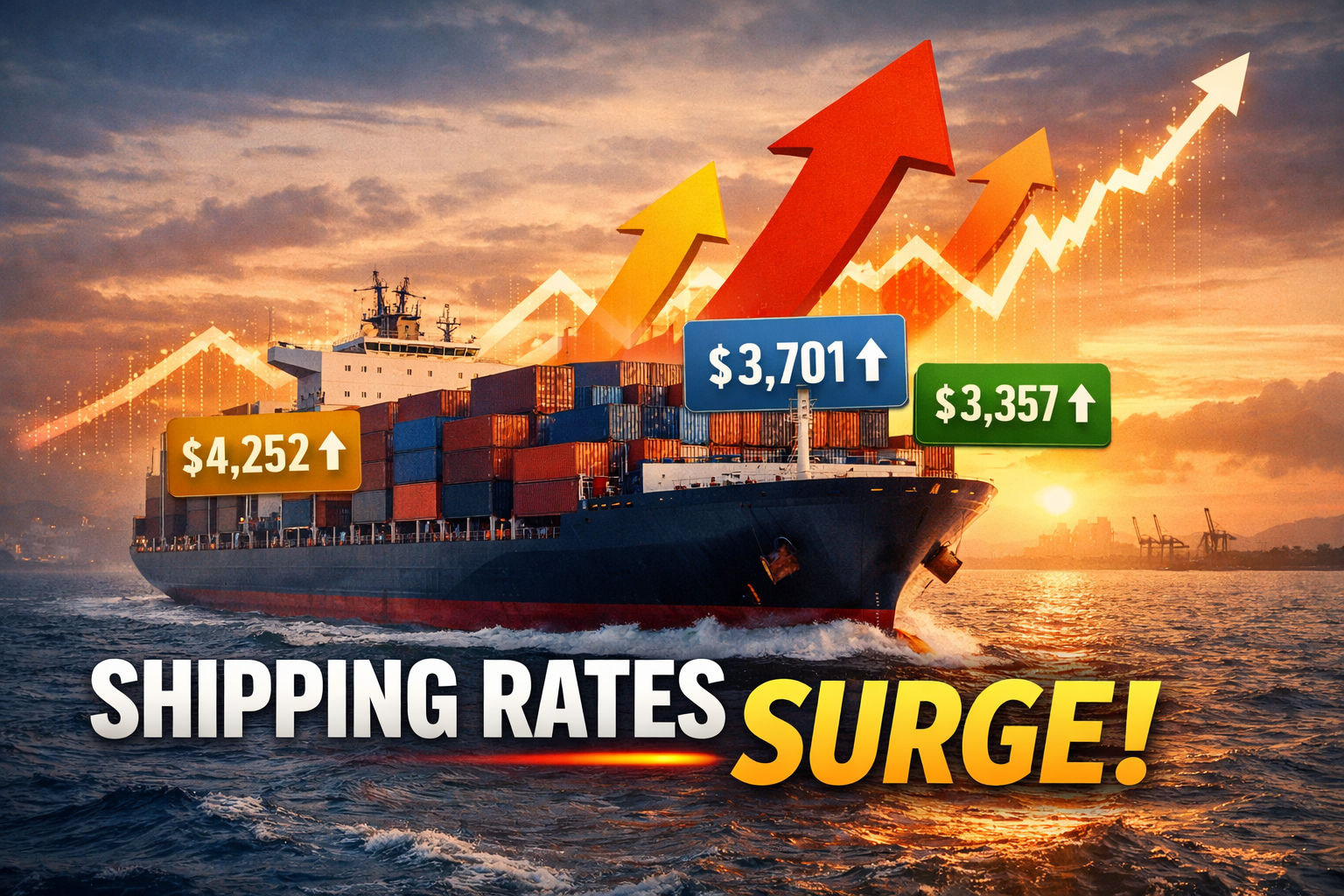
- Shanghai → New York: Up 14% week-on-week to approximately $4,252 per 40ft container
- Shanghai → Los Angeles: Up 10% to around $3,357 per 40ft container
- Shanghai → Genoa: Up 20% to $3,701 per 40ft container
- Shanghai → Rotterdam: Up 11% to $2,413 per 40ft container
Why Are Rates Rising Right Now?
Several factors are hitting at once. Carriers have been cutting available capacity through blanked sailings — cancelled departures used to tighten supply and support higher prices. According to Drewry, seven blank sailings were announced on the transpacific route for a single week, with 34 blanked sailings expected across major East-West trades over a five-week period.
On top of that, major carriers have been layering surcharges:
- MSC raised its Emergency Fuel Surcharge on Asia–U.S. East Coast cargo from $430 to $644 per FEU
- CMA CGM introduced a new $2,000 per FEU Peak Season Surcharge effective May 1
- Yang Ming announced a General Rate Increase (GRI) of $2,000 per FEU
The Strait of Hormuz crisis is adding another layer of pressure. Ongoing disruptions in the region are forcing carriers to adjust routing, absorb higher war-risk insurance costs, and plan around fuel supply uncertainty — all of which feed into higher shipping costs.
Why Is Peak Season Starting Early?
Normally, the global shipping peak season ramps up in late June or July. But in 2026, it appears to be arriving weeks ahead of schedule — particularly on the Asia-Europe route.
The reason is largely tied to the Red Sea situation. Since carriers have been avoiding the Red Sea and routing around the Cape of Good Hope, voyage times have become significantly longer. European importers have had to start ordering earlier to make sure goods arrive before the Golden Week holidays in October. If cargo leaves too late, it simply won't arrive in time for the holiday selling season.
According to Freightos, some carriers are already reporting an early uptick in booking demand on Asia-Europe lanes, and spot rates have started ticking up heading into mid-May — with further increases expected.
What Does This Mean for Freight Forwarders and Shippers?
Space is getting tight — especially on the transpacific. One West Coast freight forwarder, Freight Right, warned that while bookings are technically still possible, the reduction in vessel capacity means a high percentage of shipments are being rolled to later sailings. For time-sensitive cargo, that's a serious problem.
Shippers who had been holding off on signing long-term contracts are also facing a difficult situation. Delays in locking in rates mean more cargo is being pushed onto the spot market — where carriers are charging a premium.
Key Takeaways
- Container spot rates jumped 10–20% on major routes in a single week.
- Carriers are using blanked sailings and surcharges to tighten the market.
- Asia-Europe peak season is starting earlier than usual due to longer Red Sea bypass routes.
- Strait of Hormuz tensions continue to push up fuel and insurance costs.
- Shippers are advised to book early and avoid relying on spot market availability.
For logistics professionals managing international shipments, the message right now is simple: plan ahead, book early, and expect costs to stay elevated through at least June and into the summer peak.



Comments
No comments yet. Be the first to share your thoughts!
Join the conversation
You need an account to comment on articles.