
Two Separate Port Disputes Are Colliding This Week
European shippers are facing a difficult few days ahead, with two completely separate labour disputes threatening to disrupt operations at some of the continent's most important container ports — almost simultaneously.
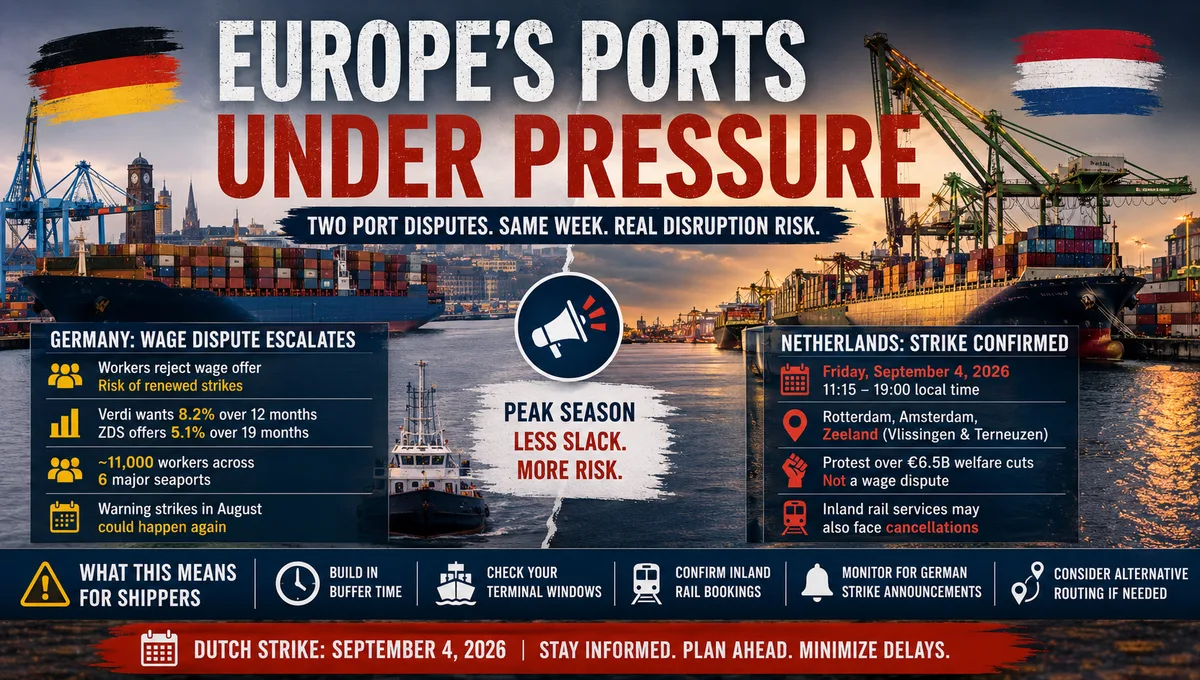
In Germany, port workers have rejected employers' latest wage offer, reopening the risk of fresh strikes. In the Netherlands, a strike has already been confirmed for this Friday, September 4, 2026, at Rotterdam, Amsterdam, and Zeeland.
Although the two disputes are unrelated — one is a wage negotiation, the other a protest against government welfare policy — they are hitting Europe's port network within days of each other, creating a compounding risk for anyone shipping through the region right now.
Germany: Workers Reject Wage Offer, Renewed Strikes Loom
Workers at Germany's seaports have rejected the latest wage offer from employers' association ZDS, after a week-long ballot by union Verdi ended with a large majority voting the offer down. Verdi's federal collective bargaining commission formally rejected the offer on Monday, September 1, following the failure of the internal consultation process.
This is the latest chapter in a dispute that has been running since mid-August. The union is seeking an 8.2% increase in hourly wages under a 12-month agreement, with a minimum increase of €2.50 per hour. Employers, represented by ZDS, have offered a 5.1% increase in basic hourly wages spread over 19 months.
The gap between the two positions remains significant — both in the percentage increase and in how long the agreement would run. A 12-month deal at 8.2% gives workers a much faster pay increase than a 19-month deal at 5.1%.
The dispute involves about 11,000 seaport workers across Germany's largest container gateways, including Hamburg, Bremerhaven, Wilhelmshaven, Bremen, Emden, and Brake.
What Happened Last Time — August's Warning Strikes
This is not the first time this dispute has caused disruption. In mid-August, German ports already experienced a taste of what escalation looks like.
A 24-hour strike by dock workers disrupted cargo operations at six major German seaports, including Hamburg, after wage negotiations between Verdi and ZDS reached a deadlock. The strike began with the night shift on August 17 and affected ports in Hamburg, Bremerhaven, Wilhelmshaven, Bremen, Emden, and Brake.
German media reported that operations at Hamburg's four main container terminals were largely halted, with many quay cranes standing idle and some vessels avoiding the port before the strike began.
The August strikes led to renewed negotiations, but with the latest offer now rejected, the same disruption risk is back on the table.
What Are Employers Saying?
ZDS is pushing back against the prospect of renewed strikes. The employers' association said on September 1 that the possibility of renewed strikes is now being raised by the union. "The threat of renewed strikes is disproportionate in this context," ZDS said, calling on Verdi to continue working towards a negotiated settlement.
Whether this appeal will prevent fresh strike action remains to be seen — the rejected offer has reopened the door to exactly the kind of warning strikes seen in August.
The Netherlands: Strike Confirmed for This Friday
While Germany's dispute is a wage negotiation, the Dutch situation is entirely different — and already confirmed to happen.
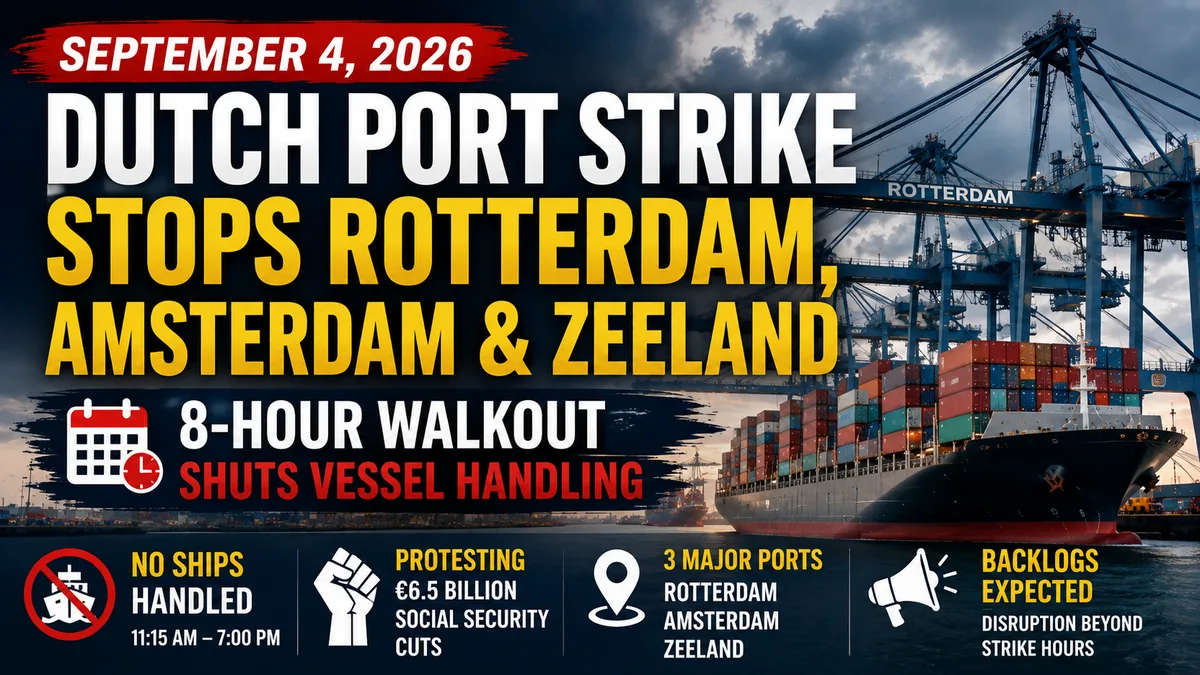
FNV Havens, the trade union representing port workers under the Dutch Federation of Trade Unions, has designated Friday, September 4, 2026, as a strike day at the country's seaports. From 11:15 to 19:00 local time, striking workers will halt activities related to vessel and cargo handling — a period of nearly 8 hours.
The three participating port areas are Rotterdam, Amsterdam, and Zeeland — with Zeeland covering the areas of Vlissingen and Terneuzen.
Unlike the German dispute, this strike is not about wages. FNV Havens is protesting the Dutch government's plan to cut €6.5 billion in social welfare spending, including a proposal to reduce the maximum unemployment benefit period from two years to one year. The dispute concerns government budget and social welfare policies rather than a conventional wage negotiation.
How Bad Could the Disruption Be at Rotterdam?
Rotterdam is Europe's largest port by volume — any disruption there has outsized consequences for the entire European supply chain.
Multimodal operator Contargo has warned that operational impacts could begin earlier and continue beyond the official strike window — from approximately 10:30 to 20:00. According to Contargo, terminal operations could be severely restricted or suspended altogether during this period. Some inland rail services could also be cancelled as a knock-on effect.
In other words: the practical disruption window is wider than the official 11:15-19:00 strike time. Shippers should plan for potential impacts starting mid-morning and continuing into the evening.
Why This Timing Matters for Shippers
Both disputes are hitting at a particularly sensitive moment for European supply chains:
- Peak season is still underway. Container volumes remain elevated heading into the final months of 2026, meaning ports have less slack to absorb disruption than during quieter periods.
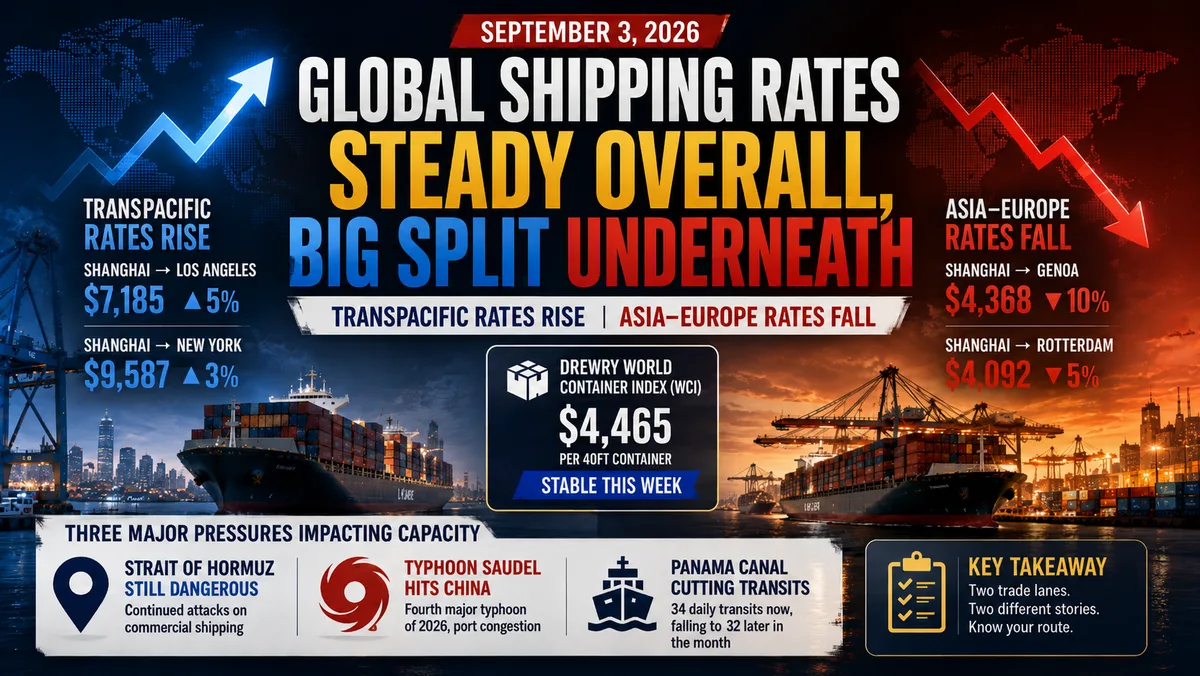
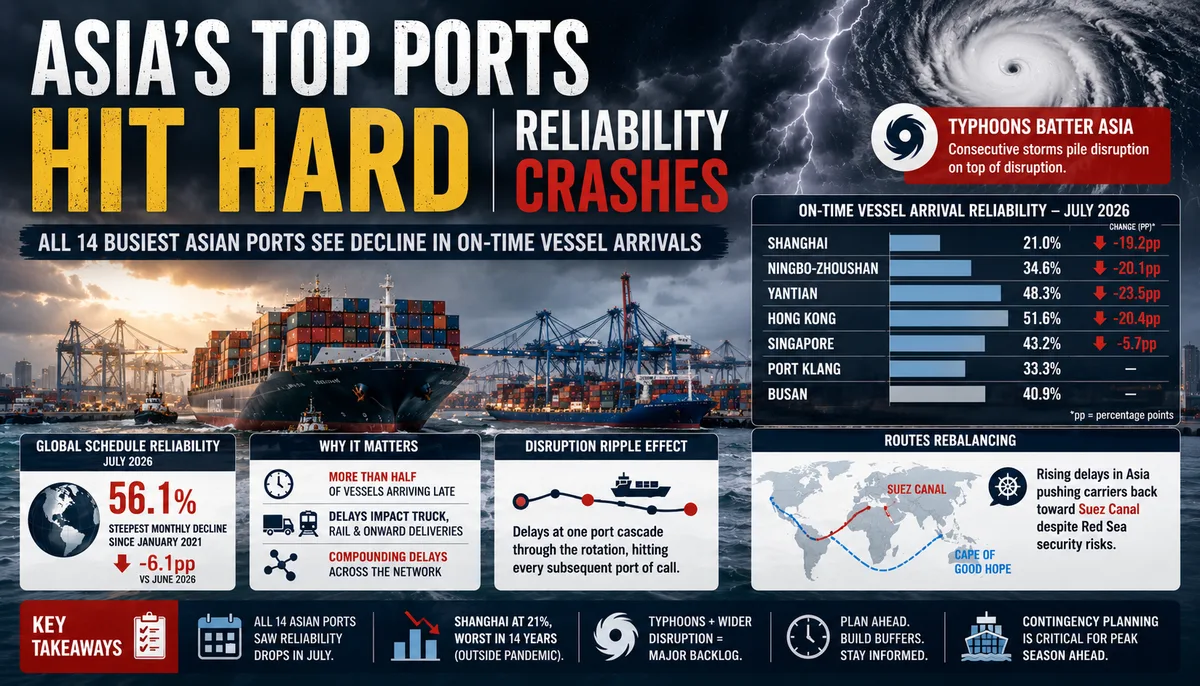
- Schedule reliability is already weak. Global schedule reliability fell significantly in July according to recent industry data, meaning ships were already running behind before these strikes were even announced. Additional delays compound an already fragile situation.
- Two separate disruptions in one week. Even though Germany and the Netherlands are dealing with different issues, any shipper with cargo moving through both regions faces a genuinely difficult week, with disruption risk on both sides of the German-Dutch border.
- Renewed German strikes could come with little notice. Warning strikes in Germany have historically been announced with only a few days' notice. If Verdi calls a new strike following this rejected offer, shippers may have limited time to adjust plans.
What Should Shippers and Freight Forwarders Do Right Now?
- Plan around September 4 for Dutch cargo. If you have vessels calling at Rotterdam, Amsterdam, or Zeeland on Friday, expect handling delays from mid-morning through the evening. Confirm with your terminal operator whether your specific vessel's call window falls within the disrupted period.
- Check inland rail bookings. Contargo has warned that inland rail services connected to the Dutch ports could be cancelled as a knock-on effect. If you rely on rail transport from Rotterdam inland, confirm your booking status directly with your operator this week.
- Monitor German ports for renewed strike announcements. With the latest wage offer rejected, Verdi could call new warning strikes with short notice — as it did in mid-August. Sign up for direct alerts from your German terminal operators (HHLA, Eurogate) if you have not already.
- Build in buffer time for both regions this week. Given the compounding disruption risk in Germany and the confirmed Dutch strike, add extra buffer time to any delivery commitments involving cargo moving through Hamburg, Bremerhaven, Rotterdam, or Amsterdam over the coming days.
- Consider alternative routing for time-critical cargo. If you have urgent shipments due to move through Rotterdam specifically on September 4, discuss with your forwarder whether routing through an unaffected nearby port is feasible for that specific window.
Key Takeaways — September 3, 2026
- German seaport workers rejected employers' latest wage offer on September 1, 2026 — reopening the risk of renewed strikes.
- The wage gap remains significant: Verdi wants 8.2% over 12 months; ZDS has offered 5.1% over 19 months.
- Dispute affects roughly 11,000 workers across Hamburg, Bremerhaven, Wilhelmshaven, Bremen, Emden, and Brake.
- Dutch strike confirmed for Friday, September 4, 2026 — Rotterdam, Amsterdam, and Zeeland ports affected.
- Dutch strike runs 11:15-19:00 officially, but Contargo warns of wider disruption from 10:30-20:00.
- Dutch strike is about government welfare policy, not wages — unrelated to the German dispute.
- Inland rail services connected to Dutch ports may also face cancellations.
- Renewed German strikes could be announced with short notice, based on August's pattern.
- Shippers with cargo moving through either region this week should build in buffer time now.
Two unrelated labour disputes are converging on Europe's ports within days of each other — one a wage dispute reopening in Germany, the other a confirmed welfare policy protest hitting the Netherlands this Friday. For shippers and freight forwarders with cargo moving through Hamburg, Bremerhaven, Rotterdam, or Amsterdam this week, the message is the same: plan for delays, confirm your specific booking windows, and stay in close contact with your terminal operators over the coming days.


Comments
No comments yet. Be the first to share your thoughts!