What Happened
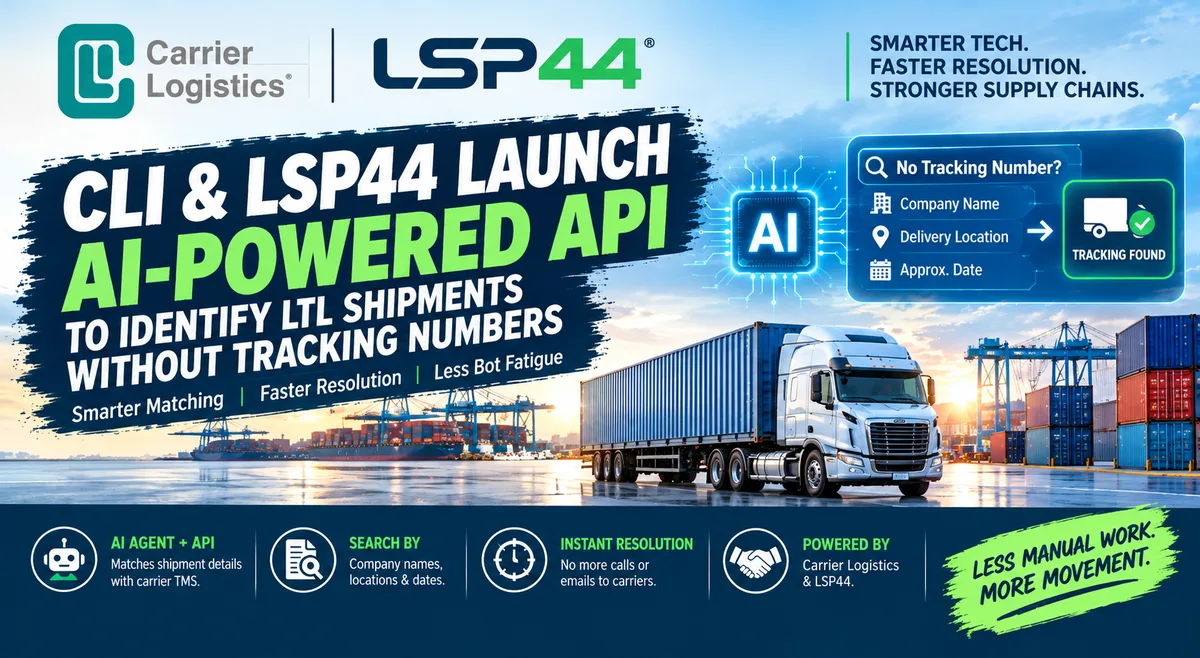
Carrier Logistics, Inc. (CLI) and LSP44 have partnered to launch an AI-powered API that identifies less-than-truckload (LTL) shipments when a shipper or third-party logistics provider does not have the correct tracking number. The partnership was announced at CLI's user group conference in Chicago, with LSP44 head of sales Jeremy Estep and Carrier Logistics President Ben Wiesen presenting it jointly. The collaboration is now live.
The new tool combines Carrier Logistics' freight management software for LTL carriers with LSP44's AI agent and API infrastructure for logistics service providers.
What Problem Is This Actually Solving?
The target here is a specific, narrow failure point in freight automation: tracking requests that cannot be resolved because the requesting system lacks a valid shipment identifier. When that happens today, automated bots used by shippers and 3PLs end up contacting carrier customer service teams directly through emails and phone calls to get a status update — work that falls on human staff even though the original request came from another automated system.
"Every carrier running LTL has a customer service team absorbing that cost today," said Nick Ruggiero, LSP44's head of product.
Ben Wiesen put it more bluntly: "CLI and LSP44 are collaborating to solve AI bot fatigue. This is where the bots step in, resulting in intrusive emails and phone calls that overwhelm the customer service teams at motor carriers."
How the Tool Works
Rather than requiring a tracking number, the new API uses shipment details that are more likely to already be available — company names, delivery locations and approximate dates — and matches them against records in the carrier's transportation management system (TMS). If a match is found, the tracking request can be resolved automatically, without a staff member having to search manually or respond to an inbound email or call.
This is a deliberate design choice: Carrier Logistics and LSP44 are addressing the problem at the API level, rather than adding more automation to handle the resulting calls and emails after the fact. In other words, instead of building a better chatbot to answer the phone, the companies are trying to stop the phone from ringing in the first place by letting systems resolve tracking requests to each other directly.
Why This Matters Beyond the Two Companies Involved
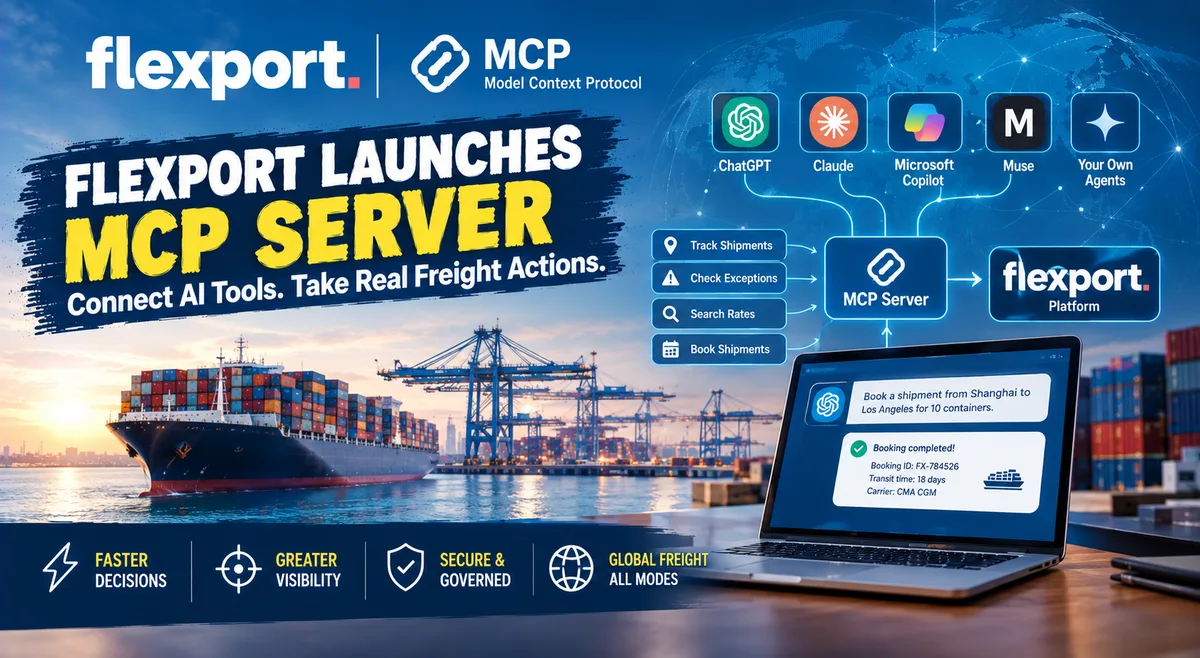
This fits a broader shift happening across freight technology this year, which we've tracked in previous coverage — AI tools moving from answering questions to taking direct action inside operational systems, with companies like Flexport building similar agent-to-agent infrastructure for booking and tracking freight. The CLI-LSP44 partnership applies the same underlying idea specifically to the LTL trucking segment, where missing or mismatched tracking numbers have long been a stubborn operational cost.
It also lands just as a separate, larger industry study — the 31st Annual Third-Party Logistics Study, produced with NTT DATA, Penske Logistics, the University of Tennessee's Global Supply Chain Institute, and CSCMP — found that 74% of logistics providers have now implemented generative AI, and 53% have implemented autonomous or agent-based decision support, compared with just 18% of shippers. That gap between providers and shippers is exactly the kind of practical automation this CLI-LSP44 tool is built to close: software infrastructure that lets a carrier's systems and a 3PL's systems resolve a routine question without a human on either end.
Who Is Carrier Logistics and LSP44?
Carrier Logistics, based in Elmsford, New York, provides the FACTS freight management system used primarily by asset-based LTL carriers, last-mile operators and cross-dock providers. The company has previously rolled out other AI-driven features for its platform, including a tool that auto-populates TMS data entry fields directly from a bill of lading to reduce manual entry errors.
LSP44 builds AI agent and API infrastructure specifically for logistics service providers, positioning itself as connective tissue between carrier systems like CLI's FACTS and the broader 3PL and shipper software ecosystem.
What This Means for LTL Carriers, 3PLs, and Shippers
- If you run an LTL carrier on CLI's FACTS system, ask about activating this API now. The partnership is already live, so this is not a future roadmap item — carriers experiencing high volumes of tracking-related calls and emails can evaluate the integration directly with CLI.
- 3PLs and shippers may see faster, more automated tracking resolution. If your tracking requests to LTL carriers sometimes fail due to missing or incorrect reference numbers, this kind of detail-matching approach could reduce the need for manual follow-up calls over time, though actual impact will depend on which carriers adopt it.
- This is a narrow, specific automation — not a full tracking overhaul. The tool solves one well-defined problem (missing tracking numbers) rather than replacing broader visibility platforms. Don't expect it to resolve unrelated tracking or exception issues.
- Watch for similar point-solution AI partnerships across other freight segments. The approach here — fixing one specific, high-volume operational pain point with a targeted API rather than a broad platform — may be a template other software vendors in trucking and logistics follow going into 2027.
Key Takeaways
- Carrier Logistics and LSP44 announced a live AI-powered API at CLI's Chicago user group conference to identify LTL shipments lacking a valid tracking number.
- The tool matches company names, delivery locations, and approximate dates against a carrier's TMS to resolve tracking requests automatically.
- The goal is reducing "AI bot fatigue" — the manual customer service burden created when automated systems contact carriers directly due to missing shipment identifiers.
- CLI's FACTS platform is used primarily by asset-based LTL carriers, last-mile operators, and cross-dock providers.
- The launch coincides with industry data showing 74% of logistics providers have adopted generative AI, versus 18% of shippers — a gap this kind of carrier-to-3PL automation directly targets.
- The partnership is live now, not a future announcement.




Comments
No comments yet. Be the first to share your thoughts!