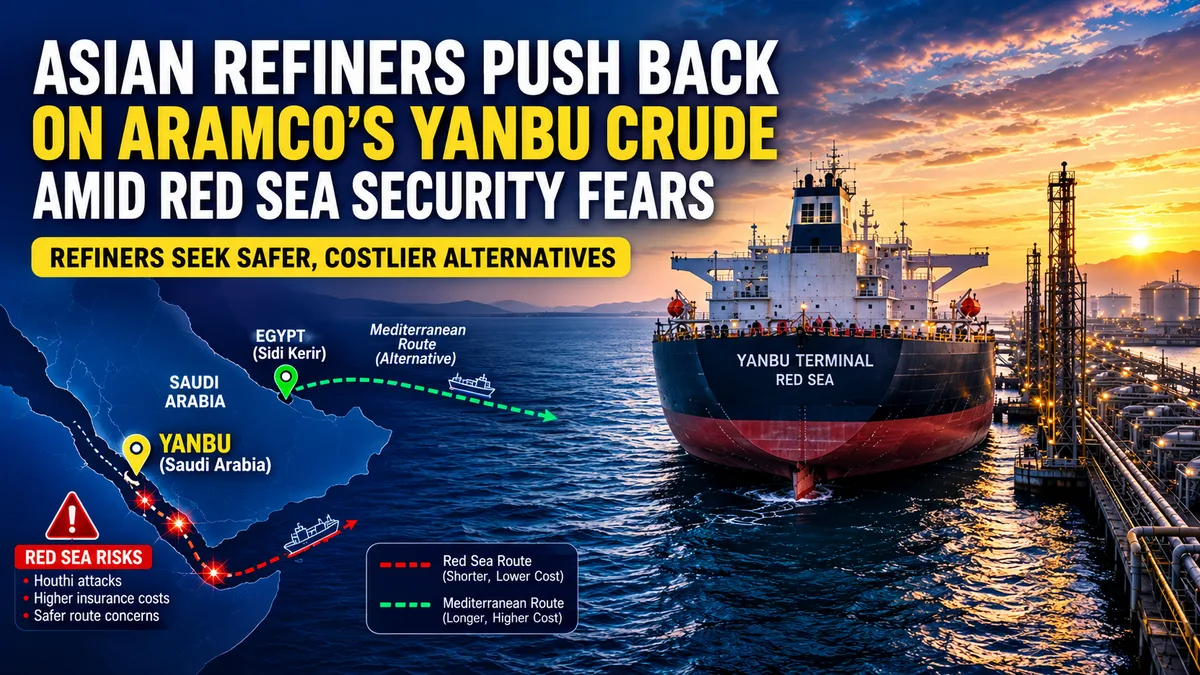
Saudi Aramco is facing pushback from some Asian refiners who are reluctant to send ships to collect crude oil from Yanbu, the kingdom's key export terminal on the Red Sea. The reason: growing danger in the waterway, where Houthi militants have carried out repeated attacks on tankers and energy infrastructure in recent weeks.
Why Yanbu became so important
Yanbu turned into a critical export route for Saudi Arabia after conflict disrupted traffic through the Strait of Hormuz and choked off supplies moving out of the Persian Gulf. With Hormuz effectively blocked, Aramco shifted much of its Asia-bound crude through this Red Sea port instead.
But the Red Sea itself has become a flashpoint. Attacks by Iran-aligned Houthi forces have made shipowners far more cautious about sailing through the narrow Bab el-Mandeb strait, driving up insurance costs and making it harder to find vessels willing to make the trip.
Refiners look for an alternative
According to traders familiar with the matter, at least two Asian refiners have asked Aramco whether they can instead collect their September crude allocations from Sidi Kerir, a Mediterranean port in Egypt that connects to the SUMED pipeline. This route lets buyers avoid the Bab el-Mandeb strait entirely.
For next month's allocations, Aramco has reportedly asked refiners in Japan and South Korea to use the Egyptian port, while most buyers in China, Taiwan, and India were still directed to collect crude from Yanbu. Aramco has not commented publicly on the arrangements.
A costly workaround
Shifting pickup points isn't free. Moving crude via Sidi Kerir means routing cargo through the Mediterranean and around Africa to reach Asia, a longer and more expensive journey than the direct Red Sea route. Traders say at least one refiner is even considering skipping its monthly allocation altogether rather than absorb the higher shipping costs.
Because Aramco's contracts allow buyers some flexibility in timing their annual crude purchases, refiners do have room to delay or adjust volumes without breaching their agreements. The overall volumes sold to countries outside China are reportedly still in line with recent months, but the routing headache highlights just how much Middle East shipping risk is now shaping day-to-day trade decisions.
Key takeaways
- Some Asian refiners are asking Aramco for alternative crude pickup points due to Red Sea safety concerns.
- Yanbu has become central to Saudi exports since the Strait of Hormuz was disrupted.
- Sidi Kerir in Egypt is emerging as a workaround, though it adds cost and transit time.
- Shipping and insurance costs, not supply shortages, are the main driver behind these routing requests.
For freight forwarders and shippers, this is another sign of how geopolitical risk is reshaping global routing decisions in real time, and why flexible, well-informed logistics partners matter more than ever.

Comments
No comments yet. Be the first to share your thoughts!