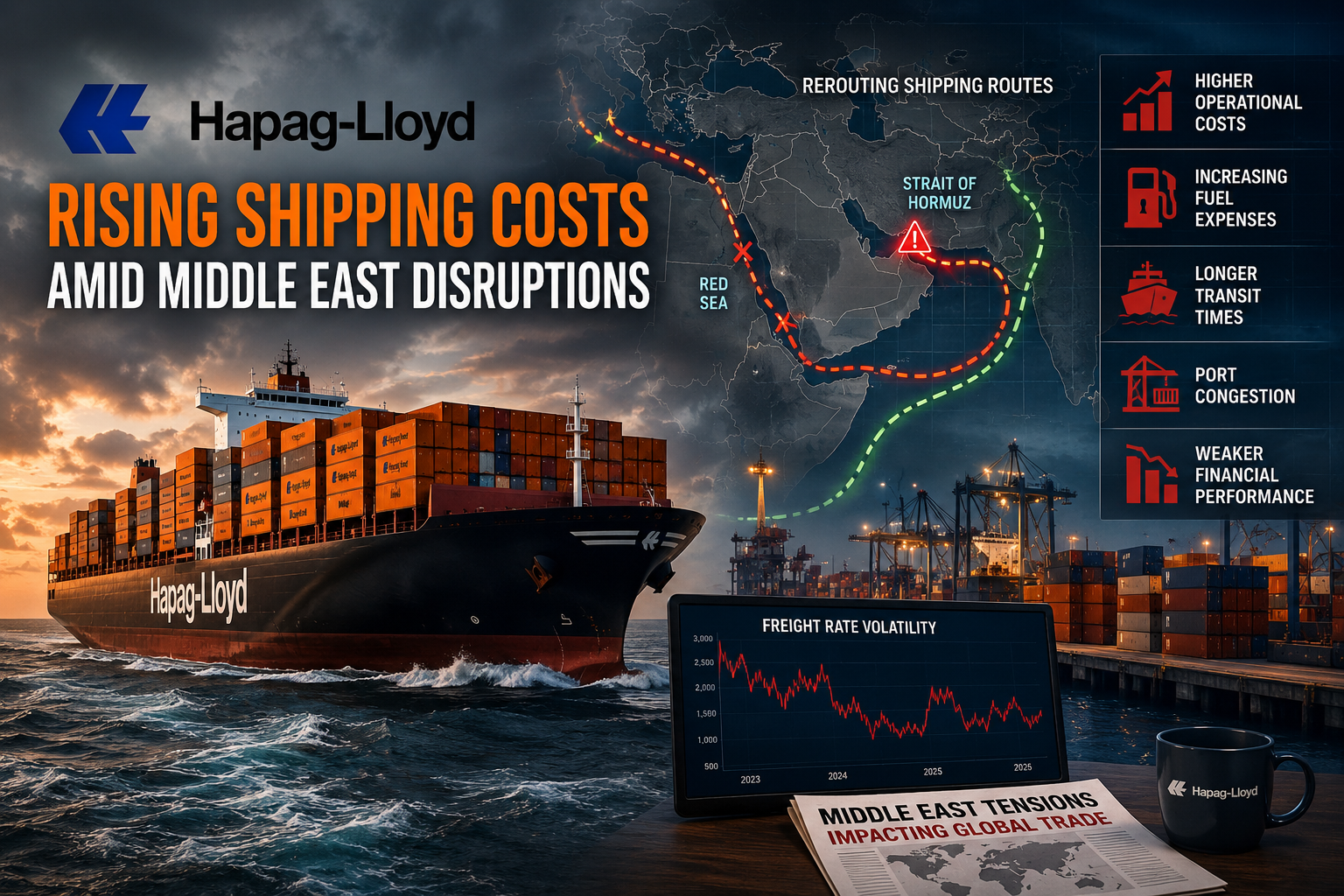
German shipping giant Hapag-Lloyd has warned that geopolitical tensions in the Middle East are continuing to impact global shipping operations and increase logistics costs worldwide.
The company reported that ongoing disruptions around key maritime trade routes, including the Strait of Hormuz and Red Sea region, are forcing vessels to reroute, resulting in longer transit times and higher fuel expenses.
Operational Costs Continue Rising
According to Hapag-Lloyd, rerouting ships away from high-risk areas has significantly increased operational costs during the first quarter of 2026. The company stated that fuel consumption, scheduling disruptions, and port congestion are placing additional pressure on global freight operations.
The shipping company also reported weaker financial performance compared to the previous year as lower freight rates combined with rising operational expenses affected profitability.
Impact on Global Supply Chains
The latest developments highlight how geopolitical instability can quickly affect global logistics and supply chain networks. Shipping disruptions in major trade corridors are creating uncertainty for importers, exporters, freight forwarders, and manufacturers worldwide.
Industry analysts say many logistics companies are now focusing heavily on supply chain resilience, alternative routing strategies, and risk management planning.
Freight Market Remains Volatile
Although container shipping demand remains relatively stable in some regions, ongoing market volatility continues to create challenges for the logistics industry. Rising fuel prices, longer shipping routes, and changing trade patterns are affecting shipping schedules and transportation costs.
Several shipping lines are adjusting their global networks to manage delays and maintain service reliability during the current market conditions.
Industry Focus on Flexibility
Logistics experts believe flexibility and operational planning are becoming increasingly important as companies navigate uncertain global trade conditions. Businesses are also investing more in digital logistics tools and real-time supply chain visibility systems to improve decision-making.
Technology-driven logistics management is helping companies respond more quickly to delays, disruptions, and changing customer demand.
Conclusion
Hapag-Lloyd’s latest warning reflects the ongoing pressure facing the global shipping industry in 2026. As geopolitical tensions continue affecting major trade routes, logistics companies worldwide are being forced to adapt operations and strengthen supply chain resilience.
The situation also highlights the growing importance of flexible logistics strategies and advanced supply chain management in today’s rapidly changing global market.


Comments
No comments yet. Be the first to share your thoughts!
Join the conversation
You need an account to comment on articles.