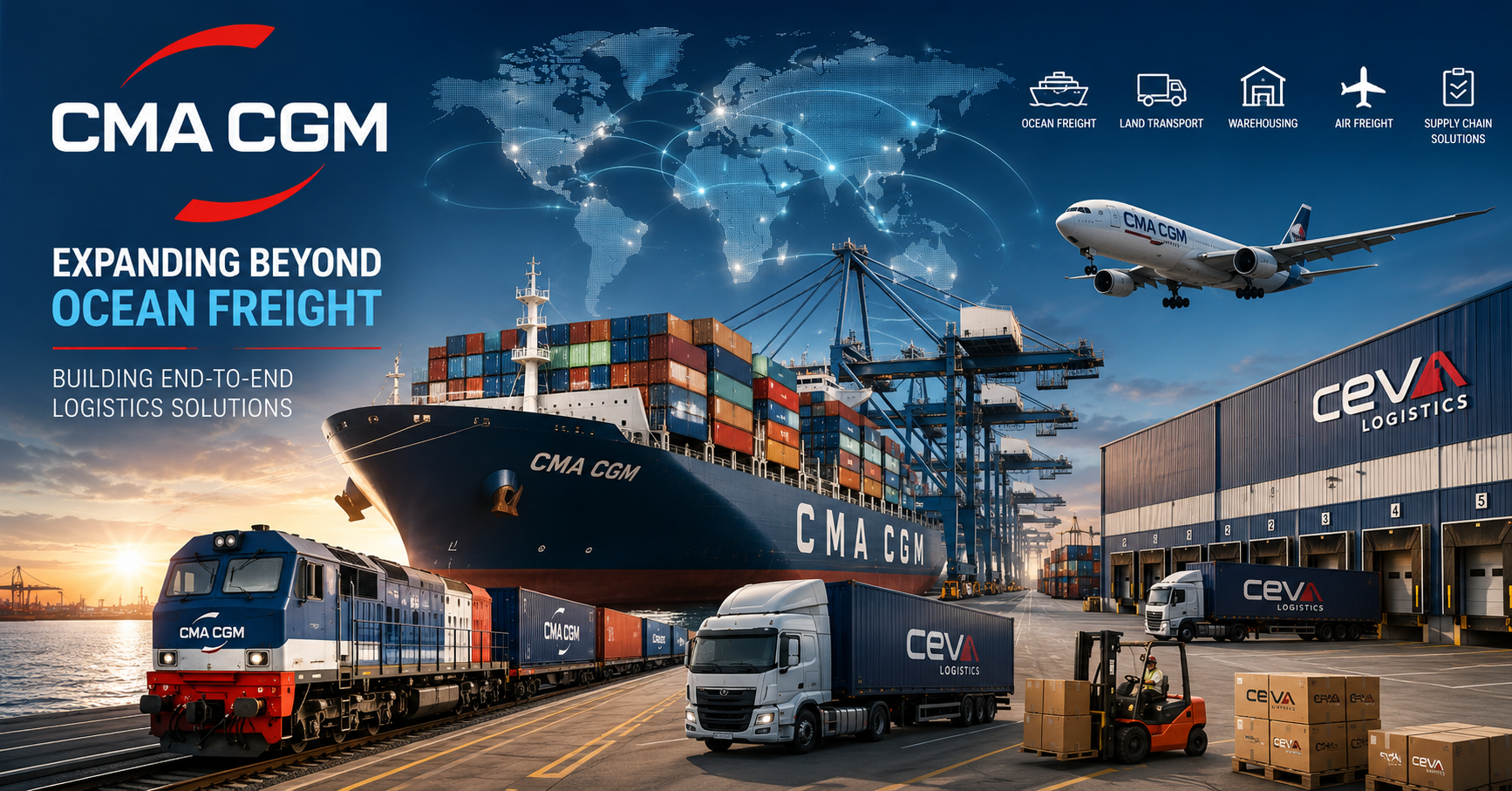
One of the world’s largest shipping companies, CMA CGM, is continuing its major expansion into global logistics and inland transportation as competition in the supply chain industry intensifies.
The French shipping and logistics group is investing heavily in land-based logistics operations, including trucking, warehousing, rail transport, and infrastructure development. The move highlights how major shipping companies are transforming into complete end-to-end logistics providers.
Beyond Ocean Freight
Traditionally known for container shipping, CMA CGM has significantly expanded its presence in logistics over recent years through acquisitions and infrastructure investments. The company now operates across multiple areas of the supply chain sector, including freight forwarding, warehousing, air cargo, and inland transportation.
Industry analysts say the strategy is designed to reduce dependence on ocean freight revenues while creating stronger supply chain control across global trade routes.
Growing Logistics Network
The company’s logistics division, CEVA Logistics, has played a major role in this expansion. CMA CGM has continued strengthening its operations across Europe, Asia, Africa, and North America through new facilities, transport networks, and strategic partnerships.
Recent global supply chain disruptions and geopolitical tensions have increased demand for flexible logistics solutions, encouraging companies to invest more heavily in integrated transportation systems.
Industry Shift Toward Integrated Supply Chains
The logistics industry is increasingly moving toward fully integrated supply chain models where customers can manage ocean freight, warehousing, trucking, customs clearance, and final delivery through a single provider.
Large logistics companies are using technology, automation, and global infrastructure investments to improve supply chain efficiency and reduce operational risks.
Market Challenges Continue
Despite expansion opportunities, the logistics industry continues facing challenges including fuel price volatility, geopolitical uncertainty, shipping route disruptions, and changing trade patterns.
Companies are focusing more on supply chain resilience and diversification to maintain stable operations during periods of market uncertainty.
Future Outlook
Industry experts believe global logistics companies will continue expanding beyond traditional shipping services in the coming years. Investments in inland logistics, digital technology, and infrastructure are expected to become key competitive advantages in the evolving freight market.
As international trade becomes more complex, customers are increasingly demanding complete logistics solutions from a single provider.
Conclusion
CMA CGM’s continued logistics expansion reflects a broader transformation taking place across the global supply chain industry. Major shipping companies are no longer focusing only on ocean freight—they are building integrated logistics ecosystems designed to offer faster, smarter, and more reliable transportation solutions.
The shift toward full-service logistics operations is expected to reshape competition across the global freight and supply chain sector in the years ahead.


Comments
No comments yet. Be the first to share your thoughts!
Join the conversation
You need an account to comment on articles.