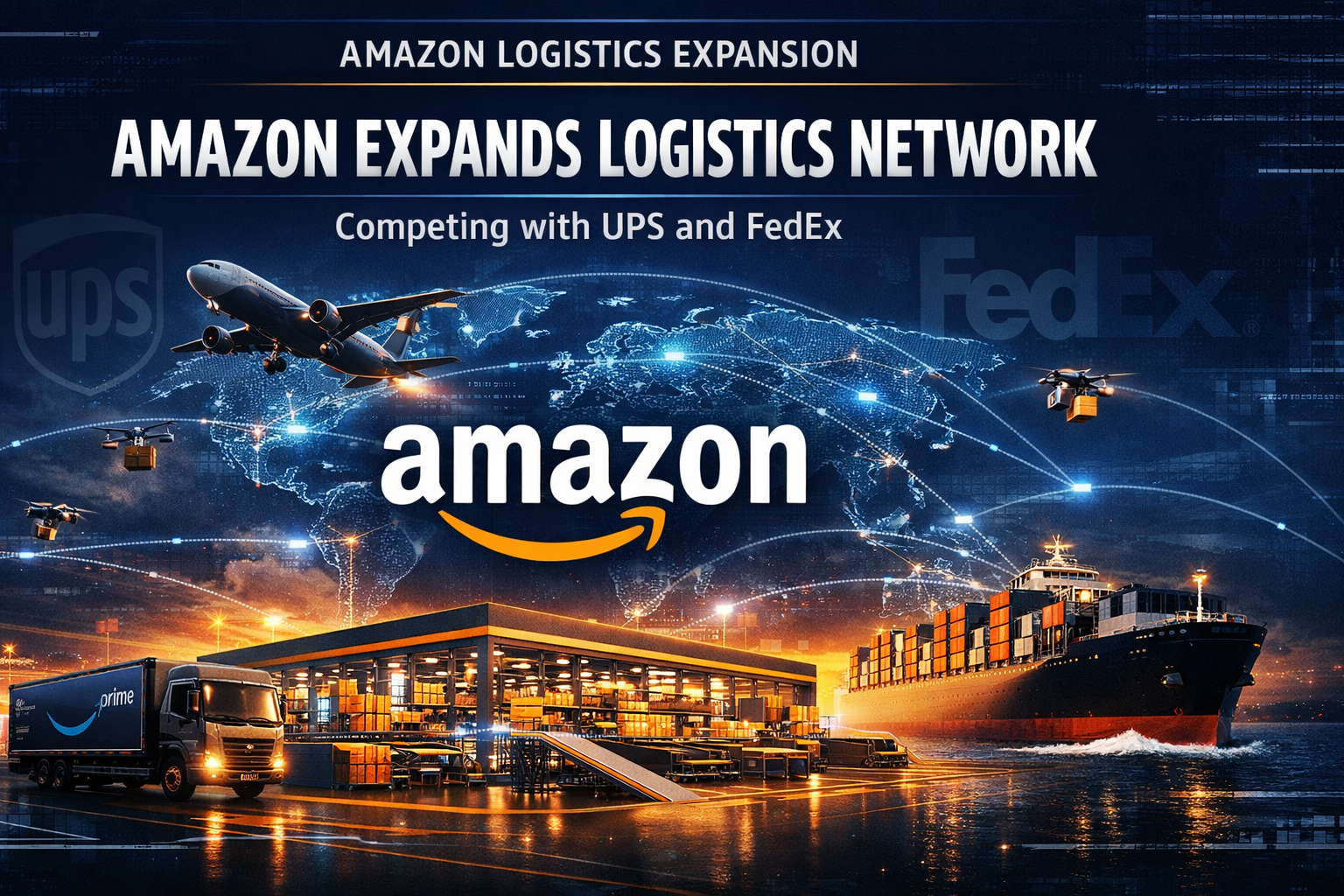
The global logistics industry is entering a new phase as Amazon expands its logistics capabilities by opening its supply chain network to external businesses. With this move, Amazon is no longer just an e-commerce giant—it is now positioning itself as a full-service logistics provider.
What Happened?
Amazon recently introduced a new service called “Supply Chain Services,” which allows businesses to store, manage, and deliver their products using Amazon’s logistics infrastructure. This includes access to warehouses, transportation systems, and last-mile delivery networks.
Unlike previous services that were limited to sellers on Amazon’s platform, this new offering is open to all businesses. This marks a significant step into the third-party logistics (3PL) market, where Amazon will compete directly with established players.
Why It Matters
This expansion is important because it could reshape the logistics industry. Companies like UPS and FedEx have traditionally dominated global shipping, but Amazon’s entry introduces a strong, technology-driven competitor.
Amazon’s logistics network is built on advanced technology, including real-time tracking, automation, and integrated inventory systems. These features allow businesses to manage their supply chains more efficiently and with greater visibility.
Impact on the Industry
The announcement has already had a noticeable impact on the market, with logistics companies facing increased pressure to innovate and improve their services. As competition grows, businesses can expect better pricing, faster delivery times, and improved service quality.
This move also highlights a broader trend in logistics—the shift toward digital transformation. Automation, artificial intelligence, and data analytics are becoming essential tools for companies looking to stay competitive.
Future Outlook
Looking ahead, the logistics industry is likely to become more technology-focused and customer-driven. Innovations such as automated warehouses and autonomous vehicles are expected to further improve efficiency and reduce costs.
Amazon’s expansion into logistics is a clear signal that the industry is evolving rapidly. Companies that adapt to these changes will be better positioned to succeed, while those that fail to innovate may struggle to keep up.
Conclusion
Amazon’s entry into the third-party logistics market marks a major turning point for the industry. By combining advanced technology with a vast global network, the company is setting new standards for speed, efficiency, and reliability in logistics.
For businesses, this means more options and better services. For the industry, it signals increased competition and a strong push toward innovation.