
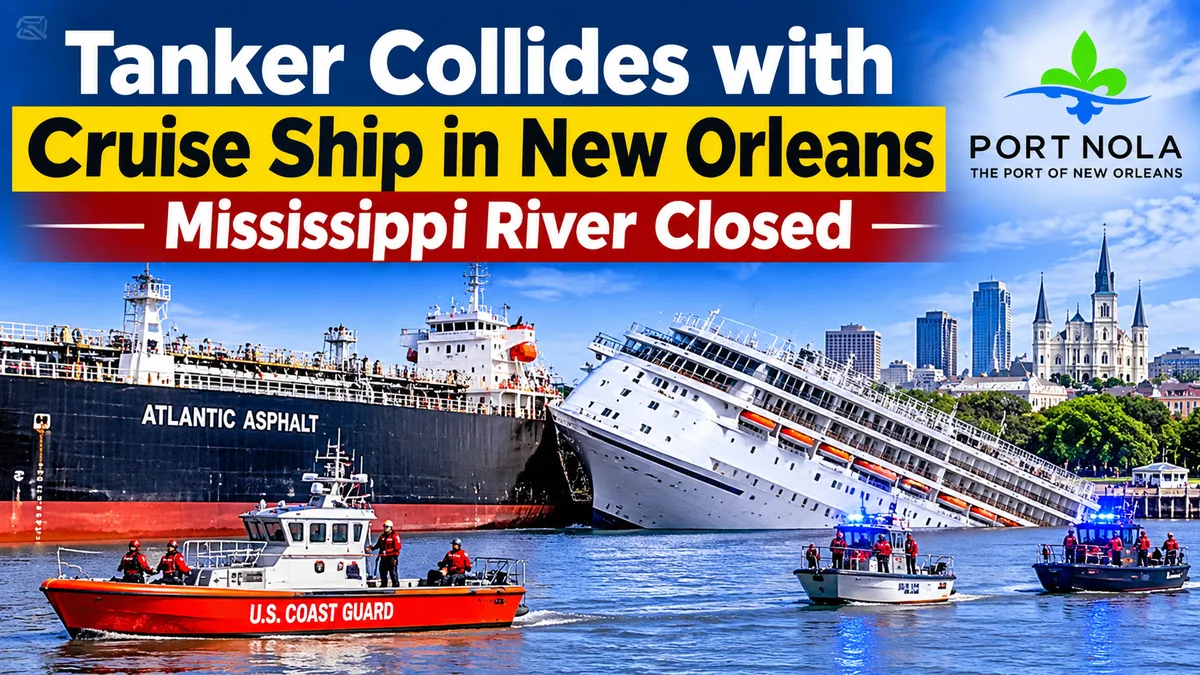

A tanker has collided with a docked river cruise ship at the Port of New Orleans, forcing a major rescue operation and a closure of the Mississippi River. According to port officials, the tanker Atlantic Asphalt struck the American Cruise Lines vessel American Heritage at about 12:30 p.m. local time on Friday, November 13, outside 1350 Port of New Orleans Place. The cruise ship had docked roughly two hours earlier and was beginning to let passengers disembark.
What happened
New Orleans Mayor Helena Moreno said the Atlantic Asphalt "lost control and collided" with the docked vessel. The impact left the American Heritage on its side and largely submerged. Local TV footage showed passengers in life vests in the water, and images online showed people clinging to railings as the ship tilted.
Numbers on board differ between reports. Port officials and local media cited about 129 passengers, while the Associated Press reported 180 passengers and crew in total. Authorities confirmed that everyone on board survived. A total of 32 people were taken to hospital with non-critical injuries. Rescued passengers were brought to the Port of New Orleans Administration Building for triage, and hotel rooms were arranged for those affected.
What caused the collision?
The cause is still under investigation. Coast Guard Captain Melanie Burnham told the New Orleans Advocate that the tanker appeared to have suffered some form of steering failure, but investigators have not confirmed this. The Coast Guard, the New Orleans Fire Department, police, and port harbor police all responded. The Atlantic Asphalt is an asphalt and bitumen tanker, a material used mainly in road construction and roofing. Vessel records from the US Coast Guard list its owner as Nave Shipping SA, registered in Monrovia, Liberia.
River closure and what it means for logistics
The Mississippi River was closed after the crash, and officials did not give a timeline for reopening. The lower Mississippi is a key route for grain exports, petroleum products, chemicals, and general cargo, and the Port of New Orleans sits at the heart of that trade. Even a short closure can cause ships and barges to queue, push back berth schedules, and create delays for cargo moving to and from the US Gulf.
Shippers and freight forwarders should expect schedule changes while the wreck is dealt with and the investigation continues. Recovering a partly sunken vessel from a busy channel can take time, and the Coast Guard will decide when and how traffic can safely resume.
What to watch next
- When the Coast Guard reopens the river, and whether traffic restarts in phases.
- The findings of the investigation into the tanker's reported steering problem.
- How long it takes to recover the American Heritage from the water.
- Any knock-on effect on grain, fuel, and container schedules through New Orleans.
Key takeaways
- The tanker Atlantic Asphalt struck the docked cruise ship American Heritage at the Port of New Orleans on November 13, 2026.
- All aboard survived, and 32 people were hospitalized with non-critical injuries.
- Early signs point to a steering failure on the tanker, but the cause is not yet confirmed.
- The Mississippi River was closed with no reopening time announced.
- Shippers using New Orleans should plan for delays and follow Coast Guard and port advisories.
For freight forwarders and shippers moving cargo through the US Gulf, this incident is a reminder that one accident on a busy river can affect schedules across the whole supply chain. Staying close to real-time port updates is the best way to protect your shipments.




Comments
No comments yet. Be the first to share your thoughts!