
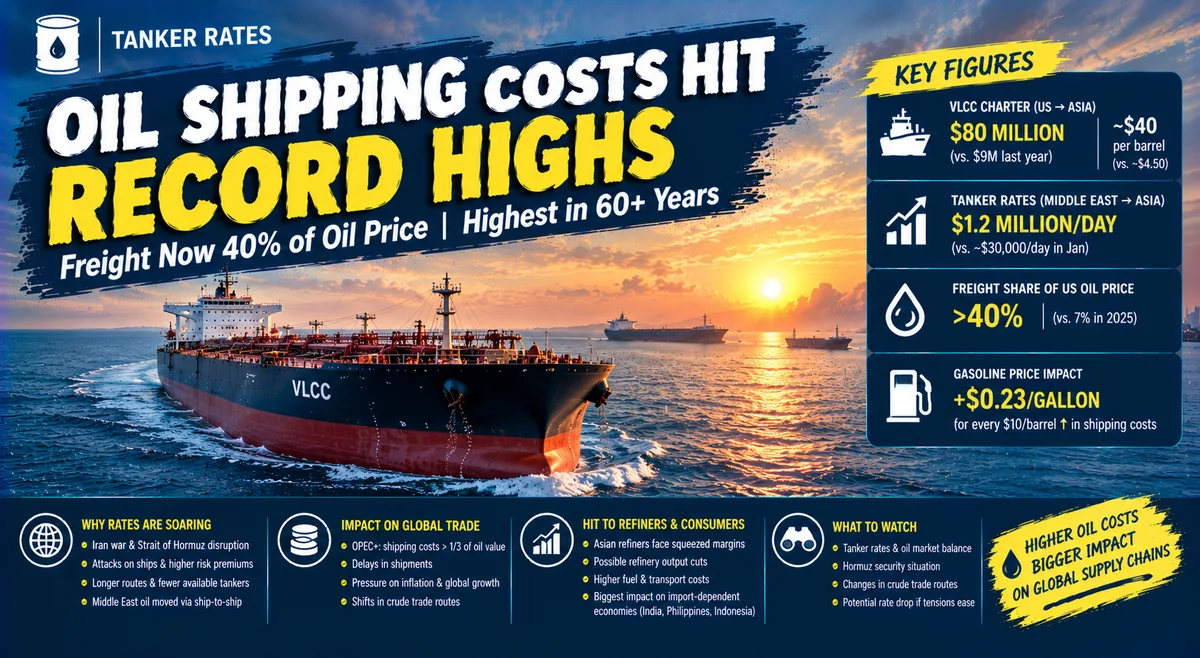

The cost of moving oil by sea has hit levels the tanker industry has never seen. Hiring a very large crude carrier (VLCC) to move US oil to Asia now costs around $80 million, equal to roughly $40 per barrel, compared with about $9 million, or around $4.50 per barrel, on the same route last year. Baltic Exchange data showed the cost at a record $77 million on October 7, against a 2025 average of $9.2 million.
Rates higher than the 1980s Tanker War
Shipbroker SSY says that even after adjusting for inflation, current tanker rates are the highest since the first supertankers entered service in the 1960s, surpassing the peaks of the 1980s Tanker War between Iran and Iraq. Bloomberg reported that a US-to-China tanker charter now costs more than a SpaceX Falcon 9 launch, at about $80 million compared with $74 million. Vitol chief executive Russell Hardy described the pricing as "parabolic" and said there is simply not enough shipping to go around.
Rates on the Middle East-to-Asia route have moved just as sharply. Poten & Partners data cited by Reuters showed VLCC earnings on that route topping $1.2 million a day, up from about $30,000 a day in January.
Why tanker rates are soaring
The main driver is the Iran war and the disruption around the Strait of Hormuz. Attacks on ships, longer routes, and fewer available vessels have all cut the effective supply of tankers. Middle Eastern producers are now moving oil between ships outside the Strait of Hormuz, a process that adds about a week to each journey and ties up even more of the global fleet. As a result, the tanker shortage gets worse with every extra barrel that flows out of the Gulf.
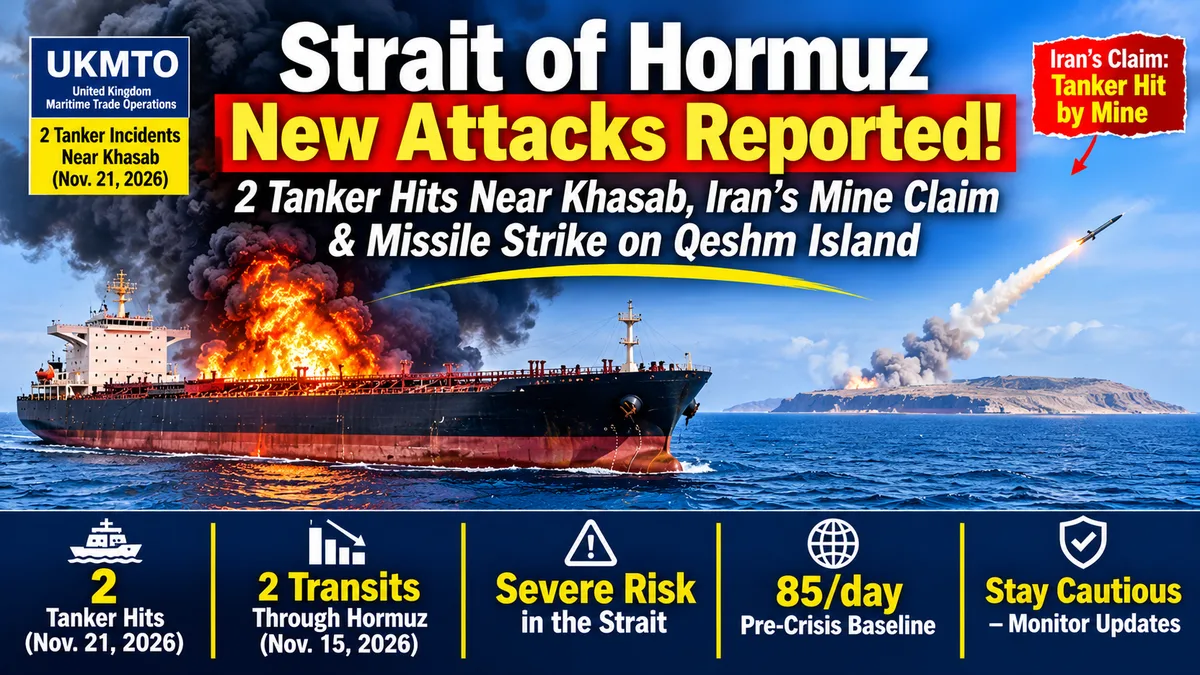
Recent attacks on shipping have kept risk premiums high. Strikes on vessels near Hormuz and, this week, off Qatar have made owners and insurers more cautious about where they send their ships.
Freight now a major share of the oil price
LSEG data cited by Reuters shows freight now accounts for more than 40% of the price of US oil at about $95 a barrel, compared with an average of 7% in 2025. OPEC+ ministers meeting in Riyadh on October 12 said shipping and insurance costs for crude and refined products have reached unprecedented levels, exceeding one-third of the value of the commodities being moved. They warned that the costs are delaying shipments, adding to inflationary pressure, and weighing on global economic growth.
The cost is also changing who can sell oil where. West African sellers have been forced to discount cargoes, and heavy crude is piling up in the Americas because high freight rates are choking off exports. Venezuelan crude, Canada's Western Canada Select, and other Americas grades are trading far below global benchmarks once shipping is excluded, but the transport bill is wiping out much of that advantage for Asian buyers.
What it means for fuel and consumer prices
Higher oil costs ripple through the supply chain because refined fuel moves food, retail goods, and construction materials. According to Kenneth Medlock of the Baker Institute for Public Policy, every $10-per-barrel increase in shipping costs adds about 23 cents per gallon to gasoline. Import-dependent economies such as India, the Philippines, and Indonesia are the most exposed to the added cost.
The International Energy Agency says record tanker rates are already squeezing refining margins, particularly for Asian refiners. Analysts have warned that if freight rates keep climbing, some refineries could cut output, which would further disrupt global trade flows.
Will the surge last?
Gulf oil exports have recovered. The IEA says Gulf producers exported 13.9 million barrels per day in September, up 4.4 million from August and more than 75% of pre-war levels, helped by ship-to-ship transfers in the Gulf of Oman. But the recovery in volumes is itself pulling in more tankers and stretching the fleet further.
Tanker market analysts say rates will stay strong as long as crude demand exceeds supply, but could fall quickly once the oil market loosens or the security situation improves. That makes the market highly sensitive to any change in the Hormuz conflict.
What logistics professionals should watch
- Fuel surcharges across ocean, air, and trucking are likely to stay elevated while oil and tanker costs remain high.
- Import-dependent markets in South and Southeast Asia face the biggest cost pressure, which can affect demand and trade flows.
- Shifts in crude trade routes can change vessel availability, so tanker and bunker costs may spill into container and bulk markets.
- Any easing in the Hormuz situation could bring rates down fast, so avoid locking in long contracts at peak prices where possible.
Key takeaways
- A VLCC voyage from the US Gulf to Asia now costs about $80 million, nearly nine times last year's level.
- Freight accounts for more than 40% of the price of US oil, up from 7% on average in 2025.
- Every $10 per barrel added to shipping costs lifts gasoline prices by about 23 cents per gallon.
- OPEC+ says shipping and insurance costs now exceed one-third of the value of the oil being moved.
- Import-reliant economies and Asian refiners face the biggest squeeze.
For freight forwarders and shippers, the surge in oil shipping costs is a reminder that disruption in one part of the supply chain quickly spreads to fuel surcharges, freight rates, and the price of goods on shelves.

Comments
No comments yet. Be the first to share your thoughts!