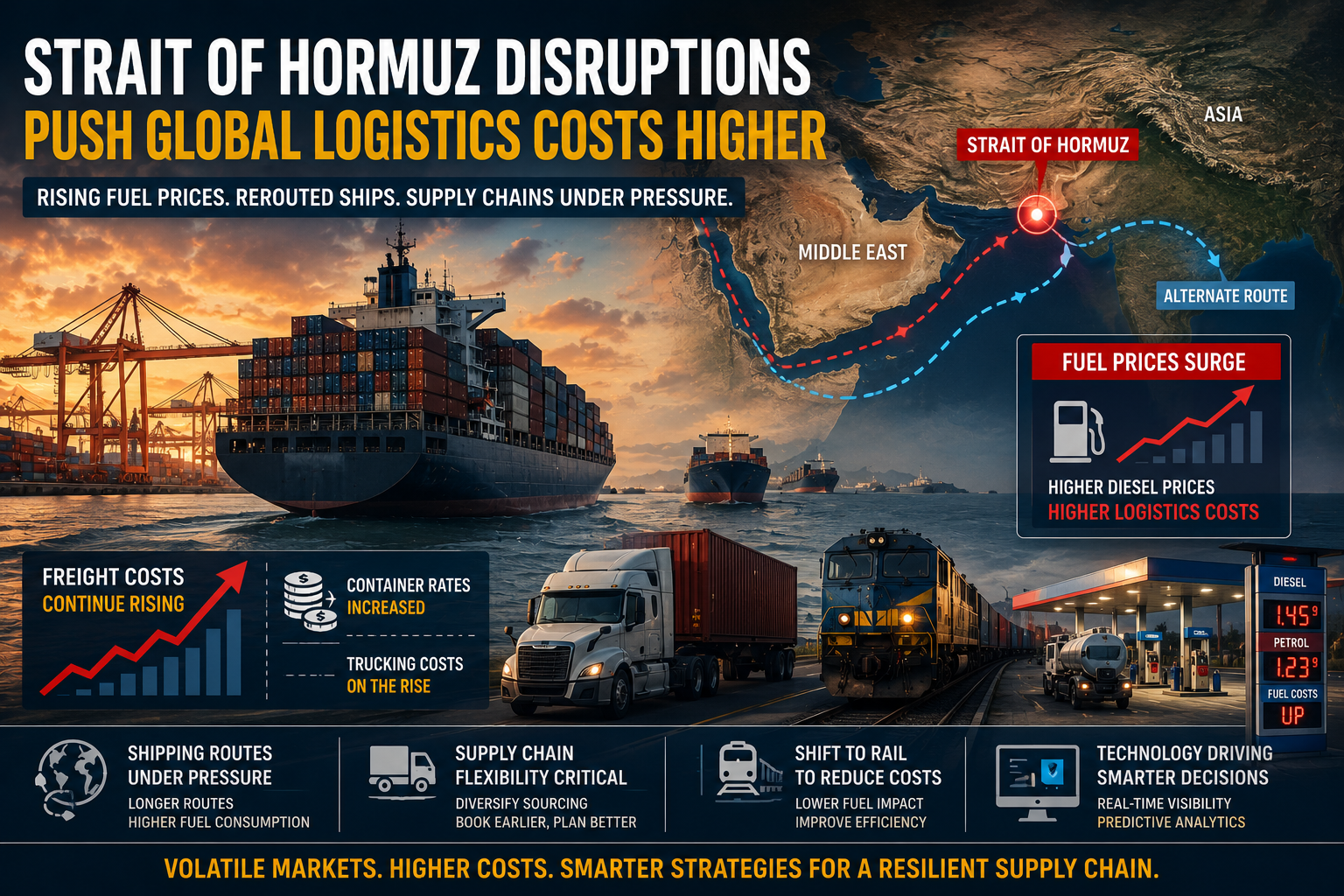
The global logistics industry is facing new operational pressure as ongoing disruptions near the Strait of Hormuz continue impacting shipping networks, freight costs, and transportation capacity.
According to the latest freight market reports, higher fuel prices and vessel rerouting are increasing logistics expenses across ocean, trucking, and rail transportation. Industry experts say supply chains are once again being tested by geopolitical uncertainty and rising transportation costs.
Shipping Routes Under Pressure
The Strait of Hormuz remains one of the world’s most important maritime trade routes, particularly for energy shipments. Continued disruption in the region is forcing some shipping carriers to adjust routes, increasing transit times and fuel consumption.
Ocean freight companies are also facing rising operational expenses as longer routes create scheduling disruptions and tighter shipping capacity.
Freight Costs Continue Rising
Logistics analysts report that container shipping rates on major trade routes have increased in recent weeks. Higher diesel prices are also affecting trucking costs, putting additional financial pressure on freight providers and cargo owners.
Many logistics businesses are now reviewing pricing strategies as transportation costs continue climbing.
Supply Chain Flexibility Becomes Critical
Businesses are increasingly focusing on supply chain flexibility to avoid disruptions. Freight forwarders and importers are adjusting sourcing strategies, booking shipments earlier, and exploring alternative transport options.
Some companies are also shifting cargo from trucking to rail services to reduce transportation expenses caused by rising fuel prices.
Technology Helping Logistics Providers Adapt
Digital logistics tools, predictive analytics, and cargo visibility platforms are helping businesses monitor shipment risks and make faster operational decisions.
Real-time tracking systems are becoming increasingly important as companies work to reduce delays and improve supply chain resilience.
Conclusion
The latest fuel price shock and shipping disruptions highlight how quickly global supply chains can be affected by geopolitical events. As freight markets remain volatile, logistics companies worldwide are being forced to strengthen planning, improve flexibility, and invest in smarter transportation strategies.
The coming months may continue bringing challenges as businesses adapt to changing freight costs and shipping conditions.

Comments
No comments yet. Be the first to share your thoughts!
Join the conversation
You need an account to comment on articles.