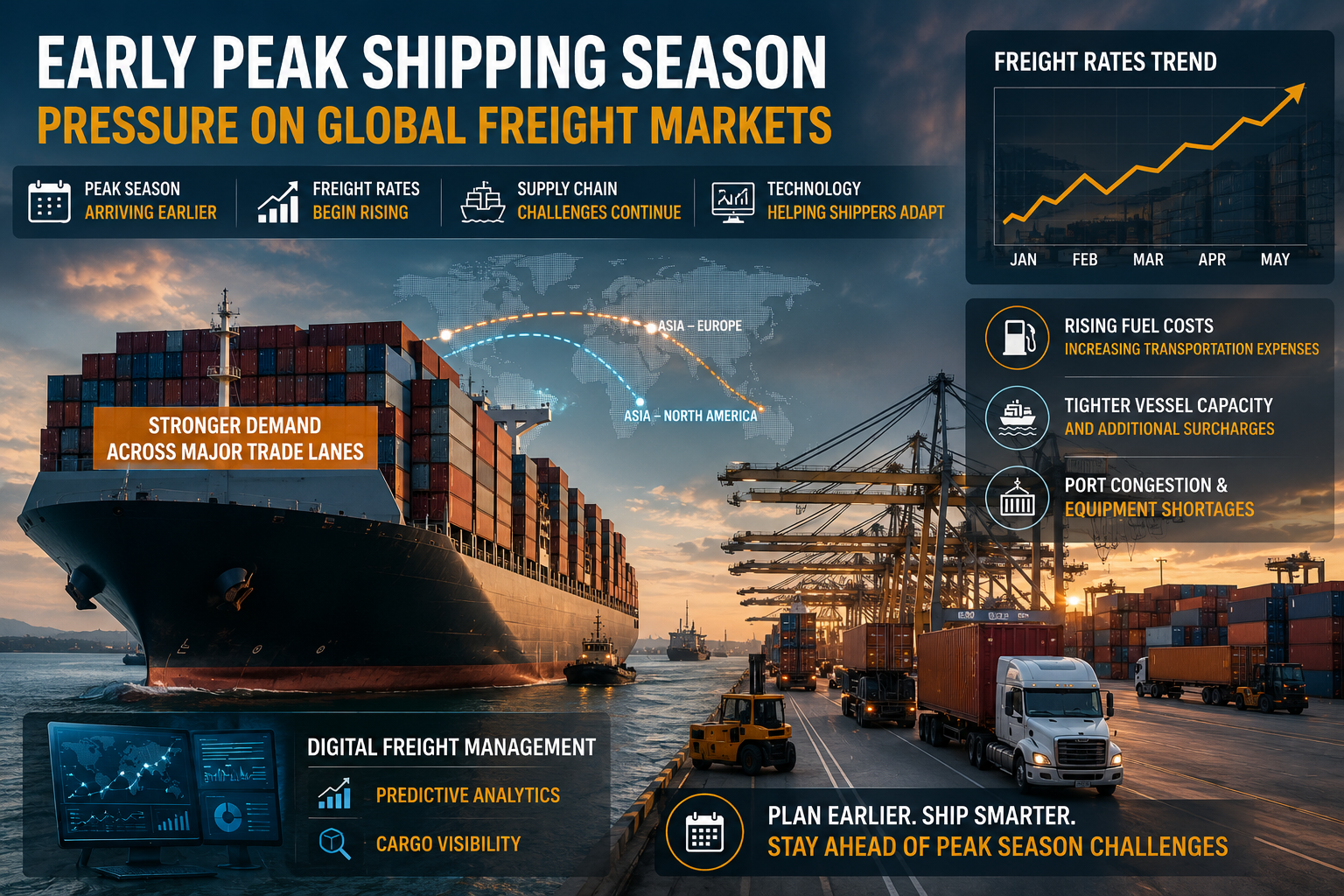
The global logistics industry is seeing signs of an earlier-than-usual peak shipping season as businesses move cargo sooner to avoid future supply chain disruptions and rising transportation costs.
According to recent freight market updates, importers are accelerating shipments across major trade lanes due to ongoing geopolitical uncertainty, increasing fuel prices, and concerns about future shipping delays. This shift is already affecting container demand and freight pricing worldwide.
Peak Season Arriving Earlier
Traditionally, global shipping demand rises during the third quarter of the year as retailers prepare inventory for major shopping periods. However, logistics analysts say the 2026 peak season is beginning earlier than expected.
Many businesses are front-loading inventory to reduce supply chain risks and secure cargo space before rates rise further. Stronger demand is being seen across major Asia–Europe and Asia–North America shipping routes.
Freight Rates Begin Rising
Shipping carriers are responding by tightening vessel capacity and introducing additional surcharges. Freight rates on several key routes have already started increasing as available shipping space becomes more limited.
At the same time, rising fuel costs linked to Middle East disruptions are increasing transportation expenses for carriers, putting additional pressure on global shipping prices.
Supply Chain Challenges Continue
Port congestion and equipment shortages remain concerns in several regions, while some logistics companies continue adjusting routes to avoid disruptions in sensitive maritime areas.
Industry experts say businesses should plan shipments earlier and strengthen supply chain flexibility to avoid delays during the coming months.
Technology Helping Shippers Adapt
Many freight forwarders and logistics providers are increasingly using digital freight management tools, predictive analytics, and cargo visibility platforms to manage market uncertainty.
Technology-driven logistics planning is helping businesses improve shipment forecasting and make faster decisions during volatile market conditions.
Conclusion
The early arrival of peak shipping season is creating fresh challenges for global logistics companies and cargo owners. As demand rises and market conditions remain uncertain, businesses may face higher freight costs and tighter shipping capacity in the months ahead.
For shippers worldwide, proactive planning and flexible logistics strategies will remain critical to avoiding costly supply chain disruptions.


Comments
No comments yet. Be the first to share your thoughts!
Join the conversation
You need an account to comment on articles.