What Just Happened — The Record Explained
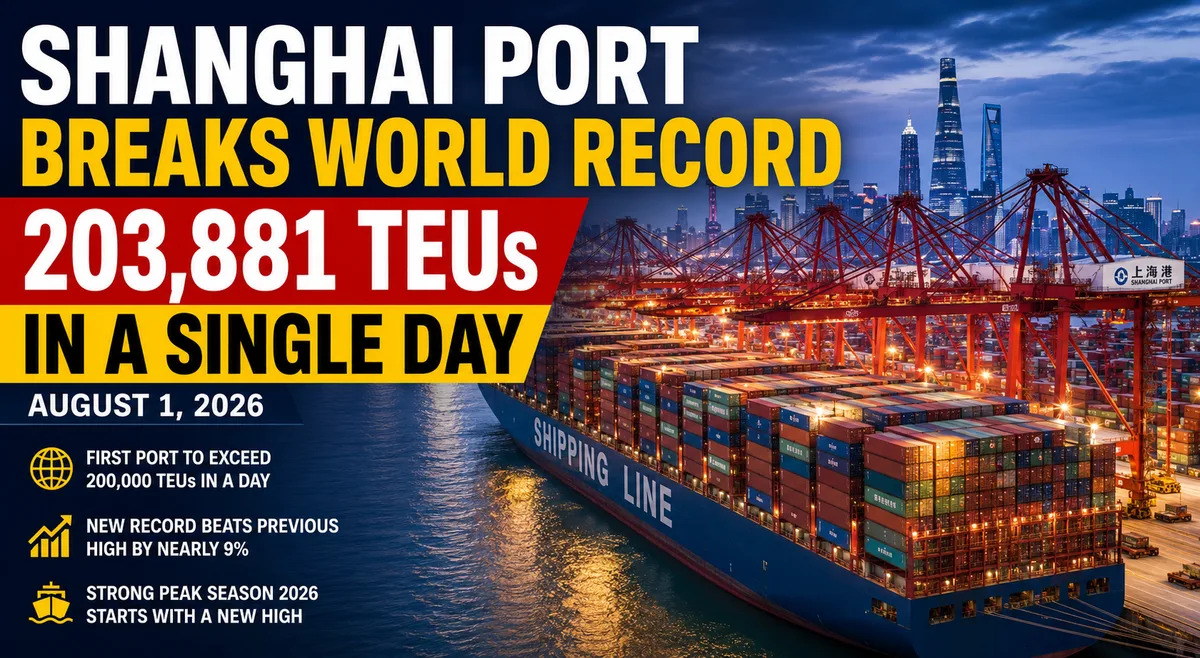
On Saturday, August 1, 2026, Shanghai Port moved 203,881 TEUs in a single day — breaking through the 200,000 TEU barrier for the first time in history.
A TEU is a Twenty-foot Equivalent Unit — the standard measurement for a shipping container. One standard 20-foot container equals one TEU. A 40-foot container equals two TEUs.
The record shows the strong resilience and coordination capabilities of the Chinese major port in dealing with unexpected disruptions such as typhoons.
The previous record was 187,312 TEUs — set earlier in 2026. The new record smashes it by nearly 9%. To put it simply: Shanghai Port handled more cargo in one day than most of the world's ports handle in an entire month.
Why Is This Record So Surprising?
The timing of this record makes it extraordinary. Just two weeks before setting this all-time high, Shanghai Port was completely disrupted by Typhoon Bavi.
In mid-July, Typhoon Bavi disrupted vessel operations at Shanghai Port for about four days. A large number of trunk and feeder vessels that had been waiting offshore for shelter arrived at the port at the same time, leading to tighter berth availability and a temporary buildup of container volumes, posing challenges for terminal operations, vessel clearance and yard turnover.
In plain English: after the typhoon passed, dozens of ships that had been waiting at sea all rushed into port at the same time. This created a massive pile-up of vessels all needing berths, cranes, trucks, and workers simultaneously. Most ports would struggle for weeks to recover from this kind of pressure.
Shanghai did not just recover — it set a world record while doing it.
How Did Shanghai Handle It?
In response, Shanghai International Port Group coordinated resources and adopted proactive measures, enabling the port to quickly clear the backlog of vessels.
Industry expert Zhao Nan from the Shanghai International Shipping Research Center explained: "Despite Typhoon Bavi causing a surge in vessel arrivals and temporary cargo backlogs, Shanghai Port quickly restored operations and improved handling efficiency, reflecting its strong capabilities in intelligent management, coordinated scheduling and infrastructure support."
What does "intelligent management" actually mean in practice? Shanghai's Yangshan Phase IV terminal — the world's largest fully automated container terminal — played a major role. The terminal uses:
- Automated Guided Vehicles (AGVs) — driverless vehicles that move containers around the terminal 24 hours a day without breaks
- Remote-controlled quay cranes — operated by workers sitting in control rooms, not on the crane itself
- AI-powered scheduling systems — that optimize which ship goes to which berth, which crane handles which container, and which truck picks up which box
- Real-time data coordination — connecting ships, terminals, customs, and inland transport in one unified system
When 129 ships arrived at once after the typhoon, these systems allowed Shanghai to scale up operations faster than any manually-run port could.
How Big Is Shanghai Port — The Numbers
For context on just how massive this port is:
- 55.06 million TEUs handled in 2025 — a full-year record, and the 16th consecutive year as the world's busiest container port
- Target: 58 million TEUs by 2030 — set in Shanghai's new 15-year shipping center development plan
- 350 international shipping services connecting over 700 ports in more than 200 countries
- Number 1 globally for port connectivity — for 13 consecutive years
- Yangshan Phase IV — the world's largest single automated terminal, contributing over 51% of Shanghai's total container throughput
The United States' busiest port — Los Angeles — handles approximately 10-11 million TEUs per year. Shanghai handles more than five times that volume.
What Does This Mean for Peak Season 2026?
The record-breaking day on August 1 is not just a headline — it tells the shipping industry something very important about where peak season 2026 stands right now.
Peak shipping season runs from July through October, when manufacturers ramp up production and retailers stock up for the holiday season. The fact that Shanghai is processing containers at record daily volumes in early August means:
- Export demand from China is extremely strong. Every container processed at Shanghai represents goods leaving China for markets around the world — mostly Europe, the US, and Southeast Asia. Record throughput means record export volumes.
- US import volumes will stay high. US imports from China were already up 27.4% year-over-year in June. If Shanghai is processing at record daily volumes in August, those goods are heading toward US ports — expect import volumes to stay elevated through September and October.
- Freight rates will remain under upward pressure. High export volumes from Shanghai tighten available container space on transpacific and Asia-Europe routes. When ships fill up fast, rates go up. Peak season surcharges from major carriers are likely to continue or increase.
- Port congestion risk at destination ports. A flood of containers leaving Shanghai in August means a flood arriving at Los Angeles, Long Beach, Rotterdam, and Felixstowe in September and October. Shippers should watch for congestion at their destination ports in the coming weeks.
What Should Shippers and Freight Forwarders Do?
- Book space now for September and October shipments. If Shanghai is processing at record volumes today, ships leaving in August will arrive at destination ports in September-October. Space on those ships is already filling up fast. Do not wait.
- Confirm your container availability at Shanghai. Record throughput also means high demand for empty containers at the port. Confirm with your freight forwarder that containers are available and confirmed for your cargo.
- Check your cargo insurance covers peak season delays. Even with Shanghai performing well, destination port congestion could cause unexpected delays. Make sure your cargo insurance and delivery contracts account for this possibility.
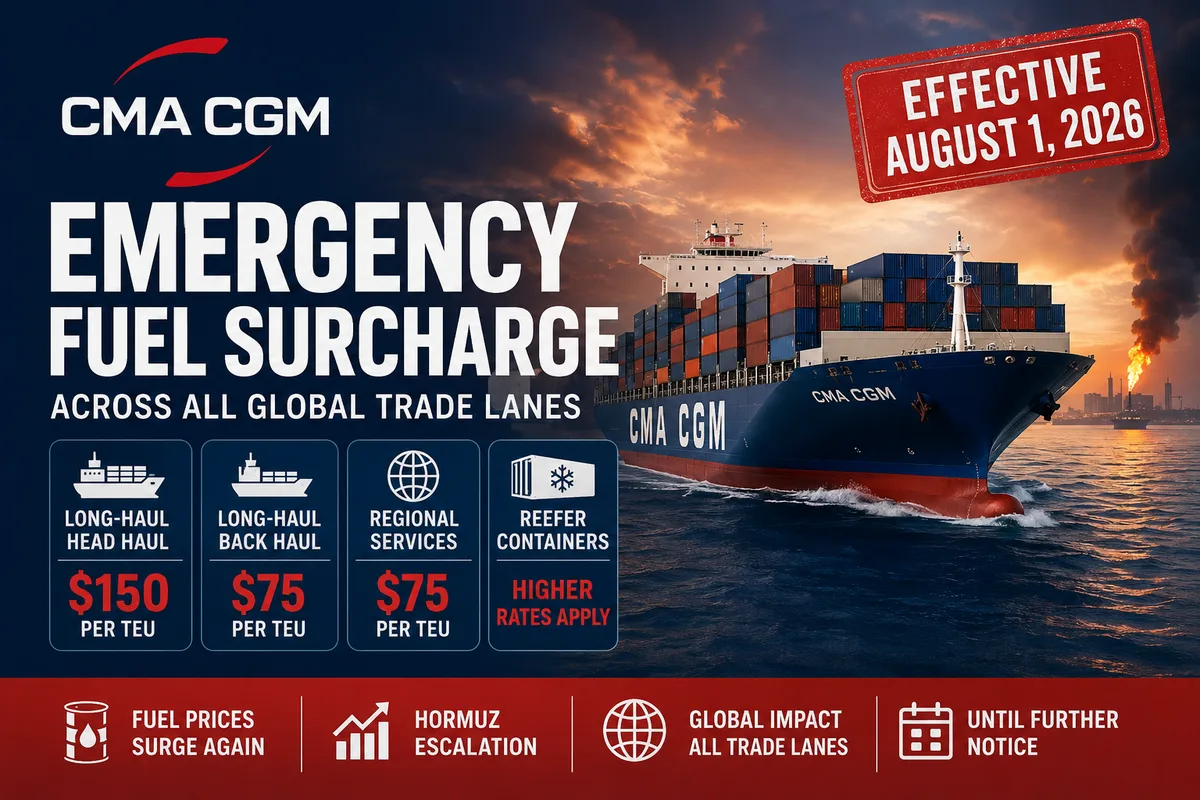
- Watch for Peak Season Surcharges (PSS). Major carriers including Maersk, MSC, and CMA CGM typically announce Peak Season Surcharges during high-volume periods. With Shanghai at record volumes, expect PSS announcements in the coming weeks.
Key Takeaways — August 3, 2026
- Shanghai Port moved 203,881 TEUs on August 1, 2026 — a new all-time world record.
- First port in history to exceed 200,000 TEUs in a single day.
- Previous record was 187,312 TEUs — new record beats it by nearly 9%.
- Record set just two weeks after Typhoon Bavi shut the port down for four days.
- Yangshan Phase IV automated terminal — AI, AGVs, remote cranes — key to the recovery.
- Shanghai handled 55.06 million TEUs in 2025 — world's busiest port for 16 consecutive years.
- Record signals extremely strong peak season 2026 export demand from China.
- US importers should prepare for continued high volumes and potential rate increases through October.
A world record broken just two weeks after a Category 5 typhoon. That is the story of Shanghai Port on August 1, 2026 — and for the global shipping industry, it is one of the clearest signs yet that peak season 2026 is not slowing down anytime soon.

Comments
No comments yet. Be the first to share your thoughts!